Hate Crimes Commission Act of 2021 This bill establishes the United States Commission on Hate Crimes. The commission must investigate and report on whether hate crimes have increased; factors that contributed to an increase in hate crimes, if one is determined to exist; policies or actions by law enforcement agencies to reduce the commission of hate crimes; the impact of underreporting on hate crimes statistics and prevention; and successful community bias prevention responses.
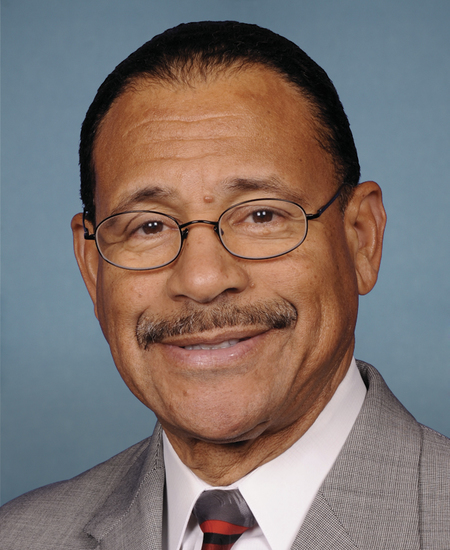
Rep. Sanford D. Bishop, Jr.
Sponsored bills
COVID - 19 Hate Crimes Act This bill requires a designated officer or employee of the Department of Justice (DOJ) to facilitate the expedited review of COVID-19 (i.e., coronavirus disease 2019) hate crimes and reports of COVID-19 hate crimes. It defines COVID-19 hate crime as a violent crime that is motivated by two things: (1) the actual or perceived characteristic (e.g., race or ethnicity) of any person, and (2) the actual or perceived relationship to the spread of COVID-19 of any person because of that characteristic. The bill requires DOJ to issue guidance for state and local law enforcement agencies on (1) the establishment of online hate crime reporting processes and the availability of online reporting in multiple languages, and (2) the expansion of culturally competent education campaigns. Additionally, DOJ and the Department of Health and Human Services must issue guidance on best practices for mitigating racially discriminatory language in describing the COVID-19 pandemic.
Journalism Competition and Preservation Act of 2021 This bill creates a four-year safe harbor from antitrust laws for print, broadcast, or digital news companies to collectively negotiate with online content distributors (e.g., social media companies) regarding the terms on which the news companies' content may be distributed by online content distributors.
Homeland and Cyber Threat Act or the HACT Act This bill allows claims in federal or state court against foreign states that conduct or participate in cyberattacks against U.S. nationals.
George Floyd Law Enforcement Trust and Integrity Act of 2021 This bill requires the Department of Justice (DOJ) to take specified steps to address accreditation standards, management operations, and misconduct of law enforcement. Specifically, it requires DOJ to develop uniform accreditation standards for law enforcement agencies and adopt policies and procedures to encourage law enforcement agencies to pursue accreditation. It authorizes DOJ to make grants to law enforcement agencies to obtain accreditation from certified organizations. The bill authorizes DOJ to make grants for studying law enforcement agency management and operations standards and developing pilot programs to address law enforcement misconduct. DOJ must study the prevalence and effect of any law, rule, or procedure that allows a law enforcement officer to delay the investigation and prosecution of complaints of law enforcement misconduct. The bill also establishes the Task Force on Law Enforcement Oversight to coordinate the detection and referral of complaints of alleged law enforcement misconduct. Law enforcement agencies must report data regarding practices on traffic violation stops, pedestrian stops, frisk and body searches, and use of deadly force. Finally, DOJ must create a medallion for survivors of each law enforcement officer killed in the line of duty and memorialized on the wall of the National Law Enforcement Officers Memorial.
Pregnant Workers Fairness Act This bill prohibits employment practices that discriminate against making reasonable accommodations for qualified employees affected by pregnancy, childbirth, or related medical conditions. A qualified employee is an employee or applicant who, with or without reasonable accommodation, can perform the essential functions of the position, with specified exceptions. Specifically, the bill declares that it is an unlawful employment practice to fail to make reasonable accommodations to known limitations of such employees unless the accommodation would impose an undue hardship on an entity's business operation; require a qualified employee affected by such condition to accept an accommodation other than any reasonable accommodation arrived at through an interactive process; deny employment opportunities based on the need of the entity to make such reasonable accommodations to a qualified employee; require such employees to take paid or unpaid leave if another reasonable accommodation can be provided; or take adverse action in terms, conditions, or privileges of employment against a qualified employee requesting or using such reasonable accommodations. The bill sets forth enforcement procedures and remedies that cover different types of employees in relation to such unlawful employment practices. The Equal Employment Opportunity Commission must provide examples of reasonable accommodations that shall be provided to affected employees unless the employer can demonstrate that doing so would impose an undue hardship. The bill prohibits state immunity under the Eleventh Amendment to the Constitution from an action for a violation of this bill.

Metastatic Breast Cancer Access to Care Act This bill expedites payment of Social Security Disability Insurance (SSDI) benefits and eligibility for Medicare coverage for those with metastatic breast cancer (i.e., breast cancer that has spread to other sites in the body). Specifically, the bill eliminates the 5-month waiting period for SSDI benefits and the subsequent 24-month waiting period for Medicare coverage for individuals with metastatic breast cancer. Under current law, individuals generally must wait five months after the onset of disability to begin receiving SSDI benefits and an additional 24 months to become eligible for Medicare.
I am Vanessa Guillén Act of 2021 This bill addresses the policies and procedures of the Department of Defense (DOD) for cases or allegations of sex-related offenses.
Homes for Every Local Protector, Educator, and Responder Act of 2021 or the HELPER Act of 2021 This bill establishes a program administered by the Department of Housing and Urban Development to provide mortgage assistance to law enforcement officers, elementary and secondary school teachers, firefighters, or other first responders. Specifically, these individuals may be eligible for a one-time mortgage on a primary family residence with no down payment and no monthly mortgage insurance premium.
Yes In My Backyard Act This bill requires certain Community Development Block Grant program recipients to submit to the Department of Housing and Urban Development information regarding their implementation of certain land-use policies, such as policies for expanding high-density single-family and multifamily zoning.