

Maddy summaryThe Educational Choice for Children Act creates tax credits for individuals and corporations that contribute to scholarship granting organizations providing education scholarships. Individuals can claim a credit up to $5,000 or 10% of their income, while corporations can claim up to 5% of taxable income. The scholarships are available to students from households with income up to 300% of the area median income, and can be used for private school tuition, tutoring, and other educational expenses at elementary and secondary schools. The bill includes strict requirements for scholarship organizations to verify income, conduct audits, and prevent misuse of funds, while also prohibiting government control over these organizations and protecting private and religious schools from discrimination in the program. It establishes a $10 billion annual cap on the total tax credits available.
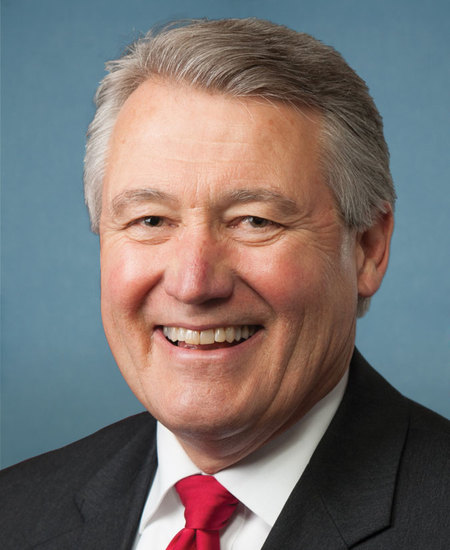
Rep. Rick W. Allen
Sponsored bills
Maddy summaryThis bill requires healthcare providers to give the same medical care to infants born alive during abortions as they would to any newborn, and to immediately admit such infants to a hospital. It mandates reporting of non-compliance to law enforcement and imposes penalties including up to 5 years in prison for violations. Women who undergo abortions can file civil lawsuits seeking money damages for injuries, three times the abortion cost, and punitive damages if care standards are not met. The bill also clarifies that abortion includes intentionally killing an unborn child or terminating pregnancy without specific exceptions (e.g., after viability to preserve life or removing a dead fetus).
Maddy summaryHR 22, the *Protecting America’s Strategic Petroleum Reserve from China Act*, blocks the U.S. government from selling petroleum from the Strategic Petroleum Reserve to entities under Chinese Communist Party control or unless sellers guarantee the oil won’t be exported to China. It directly affects the Department of Energy’s management of the reserve and any foreign entities seeking to purchase reserve petroleum. The key mechanism requires the Secretary of Energy to prohibit sales to China-linked entities or impose strict export restrictions on any sale. This policy change aims to prevent strategic petroleum resources from reaching entities tied to China’s government.
Maddy summaryHR 461, the "Protecting Individuals with Down Syndrome Act," prohibits abortions performed specifically because an unborn child has been diagnosed with Down syndrome. The bill amends Title 18 to make it a federal offense for medical providers to perform or facilitate such abortions, with criminal penalties of up to 5 years in prison or fines. It also establishes civil remedies allowing women, fathers, or maternal grandparents to sue providers for damages, including punitive damages, while protecting women from prosecution for seeking these abortions. The law requires medical professionals to report suspected violations and includes strict privacy protections for women in court proceedings. This bill directly affects abortion providers and medical professionals who perform or facilitate abortions based on Down syndrome diagnosis, without altering broader abortion laws.
Maddy summaryHR 175, the Heartbeat Protection Act of 2023, prohibits physicians from performing abortions without first checking for a detectable fetal heartbeat using standard medical practice and informing the patient of the results. It allows exceptions only for abortions necessary to save a mother’s life due to physical conditions (not psychological ones), or for pregnancies resulting from rape or incest against an adult or minor, which require specific documentation like counseling records or police reports. Physicians violating the law face up to five years in prison, while patients cannot be prosecuted. The bill defines "unborn child" as beginning at fertilization and mandates detailed medical documentation for all exceptions. It explicitly excludes psychological conditions from life-threatening exceptions and requires physicians to retain records per federal health privacy rules.
Maddy summaryHRES 51 is a non-binding House resolution expressing support for designating the week of January 22-28, 2023, as "National School Choice Week." It encourages parents to learn about K-12 education options (including public, charter, private, and homeschooling) and urges public awareness events during that week. The resolution does not create new policies, funding, or legal requirements - it solely serves as a symbolic expression of support for parental choice in education. It directly affects no individuals or entities, as it is a procedural resolution with no legislative force.
American Science First Act This bill prohibits the National Science Foundation (NSF) from providing grants or other forms of assistance to certain foreign individuals and entities. Specifically, the NSF may not support any individual or entity that is affiliated or otherwise has a relationship, including but not limited to a research partnership, joint venture, or contract, with an entity included on the entity list under the Export Administration Regulations, which identifies foreign entities subject to license requirements for the export, reexport, or transfer of certain items; a Chinese military company operating in the United States or any of its territories or possessions on the list required under the Strom Thurmond National Defense Authorization Act for Fiscal Year 1999, or required under the Mac Thornberry National Defense Authorization Act for Fiscal Year 2021, or any successor list; or any parent, subsidiary, affiliate of, or entity owned by or controlled by any such entity.
Life at Conception Act This bill declares that the right to life guaranteed by the Constitution is vested in each human being at all stages of life, including the moment of fertilization, cloning, or other moment at which an individual comes into being. Nothing in this bill shall be construed to authorize the prosecution of any woman for the death of her unborn child.
Maddy summaryThis bill prohibits the reckless disposal of fetal remains (deceased fetal tissue from abortion, excluding cremated remains) in landfills or navigable waters, with penalties of up to three years in prison or fines. It directly affects individuals or entities handling such remains, such as medical facilities or disposal services, but explicitly excludes women from prosecution for disposing of their own fetal remains. Key provisions define "fetal remains," "landfill," and "navigable waters" using existing federal terms, clarifying the scope of prohibited actions. The law aims to establish federal standards for the handling of fetal remains after abortion, focusing on disposal methods rather than abortion access. It does not alter abortion procedures or create new restrictions on abortion services.
Standardizing Thresholds Of Penalties for Fentanyl Act or the STOP Fentanyl Act This bill reduces the drug quantity thresholds that trigger a mandatory minimum prison term for a defendant who manufactures, distributes, imports, exports, or possesses with intent to distribute fentanyl. The bill also creates enhanced criminal penalties for certain violations involving fentanyl that was imported along the U.S.-Mexico border. Specifically, the bill reduces from 400 to 5 grams the fentanyl quantity and from 100 to 0.05 grams the fentanyl analogue quantity that trigger a mandatory minimum prison term for high-level first-time or repeat offenders. It also reduces from 40 to 0.5 grams the fentanyl quantity and from 10 to 0.005 grams the fentanyl analogue quantity that trigger a mandatory minimum prison term for low-level first-time or repeat offenders. Additionally, the bill creates enhanced mandatory minimum prison terms for importing or exporting fentanyl that was imported along the U.S.-Mexico border.