

This resolution condemns Iranian state-sponsored terrorist attacks against U.S. citizens and officials and Iranian dissidents. The resolution also expresses support for the people of Iran who are legitimately defending their rights for freedom against repression and condemns the killing of Iranian protesters by the Iranian regime.
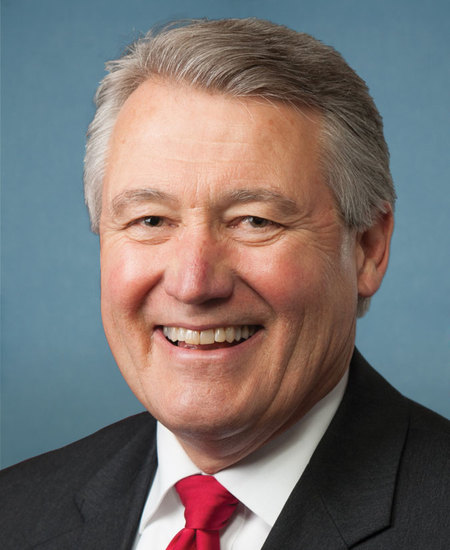
Rep. Rick W. Allen
Sponsored bills
Maddy summaryHCONRES 13 is a concurrent resolution expressing Congress's support for maintaining the current policy that prohibits imposing new fees on local radio stations for playing music. It states that Congress should not impose any performance fee, tax, royalty, or charge on local radio stations for broadcasting sound recordings over the air, or on businesses like bars and restaurants that play music publicly. The resolution argues that such fees would harm local radio stations - critical sources for emergency information and community programming - and jeopardize the economic model that has supported both radio and the music industry for decades. This resolution does not create new law but formally opposes potential legislative changes to the existing fee structure.
Child Interstate Abortion Notification Act This bill creates new federal crimes related to transporting a minor across state lines for an abortion. Specifically, the bill makes it a crime to knowingly transport a minor across a state line to obtain an abortion without satisfying the requirements of a parental involvement law in the minor's resident state. A parental involvement law requires parental consent or notification, or judicial authorization, for a minor to obtain an abortion. The bill prohibits an individual who has committed incest with a minor from knowingly transporting the minor across a state line to receive an abortion. Finally, the bill makes it a crime for a physician to knowingly perform or induce an abortion on an out-of-state minor without first notifying the minor's parent.
Maddy summaryThis bill creates a new federal crime for assaulting law enforcement officers causing serious injury or death, with penalties up to 10 years in prison for serious injury and up to life for aggravated cases involving death, kidnapping, or attempted killing. It applies when offenses involve interstate travel, commerce, or target officers engaged in law enforcement duties. Federal prosecution requires Attorney General certification that state authorities cannot or will not handle the case, or that federal action is necessary for public safety. The law covers all law enforcement officers (state, local, and federal) who enforce criminal laws or detain individuals.
Maddy summaryHR 780, the "Mobilizing Against Sanctuary Cities Act," blocks federal funding for state and local governments that refuse to share immigration information with federal authorities under existing law (8 U.S.C. 1373). It requires the Attorney General to annually identify non-compliant jurisdictions and report them to Congress, with affected areas losing all federal funding for at least one year until compliance is certified. The bill directly impacts local governments that do not cooperate with federal immigration enforcement, such as those with policies limiting information sharing. This policy change creates a direct financial penalty for non-compliance, replacing discretionary federal funding with a mandatory cutoff.
Maddy summaryHR 699 authorizes a three-year multistate study to evaluate entrepreneurial skills development programs under the Workforce Innovation and Opportunity Act. The study will examine successful practices, program outcomes, economic impacts, participant earnings, and strategies for engaging employers, with findings to help states and local communities expand access. It directly affects states and local workforce boards by requiring them to incorporate entrepreneurship-focused activities into existing programs. The bill amends WIOA to include specific provisions for identifying entrepreneurial training providers and referring participants to microenterprise services, but the core change is mandating this research study.
Disaster Reforestation Act This bill sets forth a special rule for the tax deduction for casualty losses of uncut timber (including pre-merchantable timber). It provides that in losses of any uncut timber from fire, storm, insects, invasive species, drought, or other casualty, or from theft, the basis for determining the amount of the deduction for such loss shall not be less than the excess of the value of such timber determined immediately before such loss was sustained, over the salvage value of such timber. To be eligible for the casualty loss deduction, the uncut timber subject to the loss must be reforested not later than the close of the five-year period beginning on the date of the loss.
Protecting Life and Integrity in Research Act of 2023 This bill restricts research that uses human fetal tissue from an induced abortion. Specifically, it prohibits the Department of Health and Human Services from conducting or supporting such research. Additionally, the bill applies requirements on the research of transplantation of fetal tissue for therapeutic purposes to research on fetal tissue in general. The bill also prohibits soliciting or acquiring a donation of human fetal tissue from an induced abortion, other than for purposes of an autopsy or burial.
Protecting Life and Taxpayers Act of 2023 This bill requires federally funded entities to certify that they will not, subject to certain exceptions, perform abortions or provide funding to other entities that perform abortions. The bill provides exceptions for abortions (1) in cases of rape or incest; or (2) when the life of the woman is in danger due to a physical disorder, injury, or illness.
Maddy summaryThis bill prohibits federal funding to Planned Parenthood Federation of America and its affiliates for one year unless they certify they won't perform or fund abortions (with exceptions for rape/incest or life-threatening conditions). It redirects $235 million in existing funding to community health centers for women's health services like contraception, cancer screenings, and prenatal care. The bill explicitly states that redirected funds will continue to support all women's health services previously provided by Planned Parenthood. It also requires repayment of funds if Planned Parenthood violates the certification, and clarifies that overall federal funding for women's health services remains unchanged.