

Halt All Lethal Trafficking of Fentanyl Act or the HALT Fentanyl Act This bill places fentanyl-related substances as a class into schedule I of the Controlled Substances Act. A schedule I controlled substance is a drug, substance, or chemical that has a high potential for abuse; has no currently accepted medical value; and is subject to regulatory controls and administrative, civil, and criminal penalties under the Controlled Substances Act. Additionally, the bill establishes a new, alternative registration process for schedule I research that is funded by the Department of Health and Human Services or the Department of Veterans Affairs or that is conducted under an investigative new drug exemption from the Food and Drug Administration. The bill also makes several other changes to registration requirements for conducting research with controlled substances, including permitting a single registration for related research sites in certain circumstances, waiving the requirement for a new inspection in certain situations, and allowing a registered researcher to perform certain manufacturing activities with small quantities of a substance without obtaining a manufacturing registration.
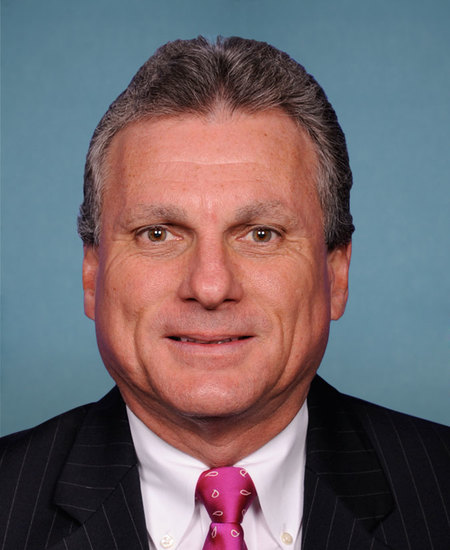
Rep. Earl L. "Buddy" Carter
Sponsored bills
Removing Waste and Protecting Medicare Act This bill makes several budgetary changes, including (1) prohibiting sequestration orders in 2022, (2) rescinding certain COVID-19 state and local relief funds, and (3) extending certain adjustments under Medicare with respect to sequestration and payments under the physician fee schedule. It also modifies requirements relating to federal programs and benefits, such as permanently requiring taxpayers to include Social Security numbers on their tax returns in order to qualify for the child tax credit.
Build Better Borders Act of 2021 This bill increases a civil penalty for improperly entering the United States and appropriates the collected funds for certain uses, including for the construction of a barrier along the U.S.-Mexico border. Specifically, the civil penalty for an alien apprehended while entering (or attempting to enter) the United States at a time or place other than as designated by immigration officers shall be $450,000, or $900,000 for an individual who has been previously subject to the penalty. Under current law, the penalty is between $50 and $250, or between $100 and $500 for an individual who has been previously subject to the penalty. The bill appropriates the funds from such penalties for use by the Department of Homeland Security, and the funds may only be used to (1) plan, design, construct, or maintain a barrier along the U.S.-Mexico border; and (2) purchase and maintain necessary vehicles and equipment for the U.S. Border Patrol.
Illegal Immigrant Payoff Prohibition Act This bill prohibits the payment of a settlement to an alien for a civil action brought against the United States in connection with the alien's inadmissibility to, or unlawful presence in, the United States.
Taliban Rare Earth Minerals Sanctions Act This bill requires the President to impose sanctions on foreign individuals and entities that knowingly engage in a significant transaction that concerns the rare earth mineral sector of Afghanistan. The President must impose property-blocking sanctions on such foreign individuals and entities, as well as visa-blocking sanctions on the individuals.
Teleabortion Prevention Act of 2021 This bill restricts the use of telehealth for chemical abortions (also known as medication abortions). Specifically, it requires a provider who dispenses or prescribes medication for a chemical abortion to physically examine the patient, be physically present at the location of the chemical abortion, and schedule a follow-up visit. The bill provides an exception for a chemical abortion that is necessary to save the life of a mother whose life is endangered by a physical disorder, illness, injury, or condition. The bill establishes criminal penalties—a fine, a prison term of up to two years, or both—for a provider who does not comply with the requirements. A patient who undergoes a chemical abortion may not be prosecuted.
Canadian Snowbird Visa Act This bill authorizes the Department of Homeland Security to admit into the United States qualifying Canadian citizens as long-term nonimmigrant visitors. A qualifying Canadian citizen is an individual who (1) is at least 50 years old, (2) maintains a Canadian residence, (3) owns a U.S. residence or has rented a U.S. accommodation for the duration of the individual's stay, (4) is not inadmissible or deportable, (5) will not engage in employment or labor for hire in the United States other than for a non-U.S.-based person or entity by whom the Canadian citizen was employed in Canada or for whom the Canadian citizen performed services in Canada, and (6) will not seek certain forms of assistance or benefits. A qualified individual may be admitted for up to 240 days during any single 365-day period. The spouse of such an individual may be admitted under the same terms, except that the spouse is not required to separately satisfy the requirement for owning or renting a residence in the United States. The bill grants an individual so admitted nonresident alien tax status.
Empowering Law Enforcement Act of 2021 This bill addresses issues relating to immigration enforcement. The bill declares that state and local law enforcement have inherent authority to investigate and arrest individuals to assist federal immigration enforcement. (Currently, state and local law enforcement may take certain immigration enforcement actions upon entering into an agreement with U.S. Immigration and Customs Enforcement.) The Department of Homeland Security (DHS) must reimburse state and local law enforcement for the costs of holding or transporting a detained alien. DHS may detain an alien beyond the removal period (generally the window in which DHS must remove an alien after a final order of removal) upon making certain certifications, such as a certification that the alien's release would threaten community safety. DHS may renew this certification every six months after giving the alien an opportunity to request reconsideration of the certification. An alien challenging such detention may only do so by filing an application for a writ of habeas corpus. Certain aliens subject to mandatory detention may be held without time limitation while removal proceedings are pending. DHS must detain an alien who is present in the United States without lawful status if the alien has been convicted for driving while intoxicated. DHS must establish a process to determine whether an alien not subject to mandatory detention and who has tried to comply with a removal order should be detained or released with conditions. The Department of Justice must include information about immigration law violations in the National Crime Information Center database.
Customs Business Fairness Act of 2021 This bill modifies the treatment of claims by customs brokers for unpaid customs duties in chapter 11 (reorganization) bankruptcy proceedings.
H-2B Returning Worker Exception Act of 2021 This bill modifies the H-2B (temporary nonagricultural workers) nonimmigrant visa program, including by exempting certain workers from an annual numerical limit on such visas and requiring civil penalties for program violations. Under this bill, if a worker seeking a H-2B visa has been counted toward the 66,000 annual cap on such visas in one of the three preceding fiscal years, that worker shall not be counted against the cap again. Furthermore, the Department of Homeland Security (DHS) must impose a civil monetary penalty on an employer for (1) failing to meet requirements related to an H-2B visa petition, or (2) making a willful misrepresentation of material fact in such a petition. DHS must also ensure the establishment of an electronic platform (1) for employers to submit and request approval of an H-2B petition, and (2) to act as a single point of access for applicants and the relevant government agencies. The Department of Labor must maintain a publicly available online database of all job orders by H-2B employers. Furthermore, Labor may take certain actions to enforce program requirements, such as imposing penalties and seeking injunctions. The bill provides statutory authority for the current practice of limiting the program to workers who are nationals of countries approved by DHS. DHS may make exceptions to this limitation in individual cases if it is in the U.S. interest to do so. DHS shall select approved countries based on various factors, such as the rate of overstay by H-2B visa holders from each country.