

Firearm Due Process Protection Act This bill expands the grounds for pursuing judicial remedies related to certain firearm transfers. Additionally, the bill establishes procedural rules applicable to actions for judicial remedies. Current law authorizes judicial remedies for an individual who is erroneously denied a firearm (e.g., an individual is denied a firearm but the individual is eligible to receive or possess a firearm). This bill authorizes remedies for an individual who experiences an extended delay (i.e., a delay of more than 60 days) on a firearm transfer. Additionally, the bill requires an expedited hearing on an action for judicial remedies and places the burden of proof on the respondent to show by clear and convincing evidence that the individual was ineligible to receive or possess a firearm.
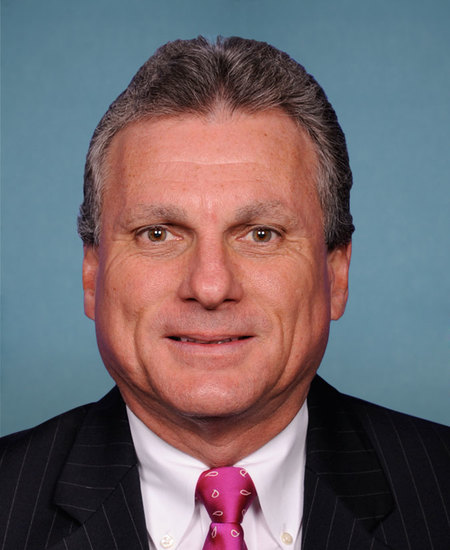
Rep. Earl L. "Buddy" Carter
Sponsored bills
States Have A Say Act This bill prohibits the Office of Refugee Resettlement from resettling a refugee in a state if that state's governor does not consent to the resettlement.
Preventing Anti-Semitic Hate Crimes Act This bill requires a designated officer or employee of the Department of Justice (DOJ) to facilitate the expedited review of anti-Semitic hate crimes and reports of anti-Semitic hate crimes. Further, the bill requires DOJ to issue guidance for state, local, and tribal law enforcement agencies on expanding public education campaigns to raise awareness of anti-Semitic hate crimes. Finally, the bill increases the statutory maximum prison term for an individual who is convicted of a federal hate crime offense after a prior conviction for a hate crime offense under federal law or a hate crime felony under state law.
Original National Domestic Violence Awareness Month Resolution of 2022 This resolution supports the goals and ideals of National Domestic Violence Awareness Month. Further, it expresses the sense of the House of Representatives that Congress should continue to raise awareness of and support programs to end domestic violence.
Government Office Realignment And Closure Act of 2022 or the GORAC Act This bill directs the Government Accountability Office (GAO) to provide for an independent evaluation of federal agencies and programs to identify duplicative, wasteful, or outdated functions and provides for congressional consideration of legislation to implement recommendations from the evaluation. Specifically, the GAO must (1) procure the services of a nonfederal auditor to evaluate each federal program carried out in the previous 20 years, make recommendations on federal agencies and programs that should be realigned or eliminated, and report on such recommendations; and (2) take steps to assure that any work performed by such auditor complies with standards established by the GAO for audits of federal establishments, programs, activities, and functions. The GAO must provide for the relocation of federal employees whose positions are eliminated as a result of the implementation of recommendations included in the report.
Protecting Access for Hunters and Anglers Act of 2022 This bill bars the Department of the Interior and the Department of Agriculture from prohibiting or regulating the use of lead ammunition or tackle on federal land or water that is under the jurisdiction of such departments and made available for hunting or fishing. The bill makes exceptions for specified existing regulations and where the applicable department determines that a decline in wildlife population at the specific unit of federal land or water is primarily caused by the use of lead in ammunition or tackle, based on the field data from such unit, and the state approves the regulations.
Major Richard Star Act This bill provides that combat-disabled uniformed services retirees with fewer than 20 years of creditable service may concurrently receive, without reduction, veterans' disability compensation and retired pay or combat-related special compensation.
This resolution calls on President Biden to stop the sale of petroleum products from the Strategic Petroleum Reserves and instead prioritize the replenishment of the Strategic Petroleum Reserves.
Presidential Budget Accountability Act This bill restricts the use of federal funds for presidential travel if the President's budget is not submitted to Congress by the first Monday in February as required by law. Specifically, if the President's budget is not submitted to Congress on or before the first Monday in February of a year, federal funds may not be used for the travel expenses of the President during the period beginning on the first Tuesday of February of that year and ending on the date the budget is submitted.
Presidential Accountability for Yearly Submission of The United States' Budget Act or the PAYSTUB Act This bill restricts the use of federal funds for the salaries or expenses of political employees if the President's budget is not submitted to Congress by the first Monday in February as required by law. Specifically, if the President's budget is not submitted to Congress on or before the first Monday in February of a year, federal funds may not be used for the salary or expenses of any political employee during the period beginning on the first Tuesday of February of that year and ending on the date the budget is submitted. On the earliest possible date after the President's budget is submitted, political employees whose salaries or expenses were not paid during a period in which the President's budget had not yet been submitted must be paid for that period.