

Maddy summaryThe American Manufacturing Revitalization Exchange Program Act of 2026 establishes a new international exchange program designed to address skilled labor shortages in the U.S. manufacturing sector by sending American workers to allied nations for training. Administered by the Assistant Secretary for Educational and Cultural Affairs within the Department of State, the program will select up to 10 participants annually who must be U.S. citizens with prior apprenticeship or higher education experience in manufacturing fields. These selected individuals will travel to allied countries for up to 12 months to gain hands-on expertise in strategic industries such as robotics, semiconductors, and aerospace, while also serving as cultural ambassadors. Upon returning to the United States, participants are expected to share their newly acquired skills and knowledge with domestic employers and training institutions, and the program will conclude two years after its enactment.
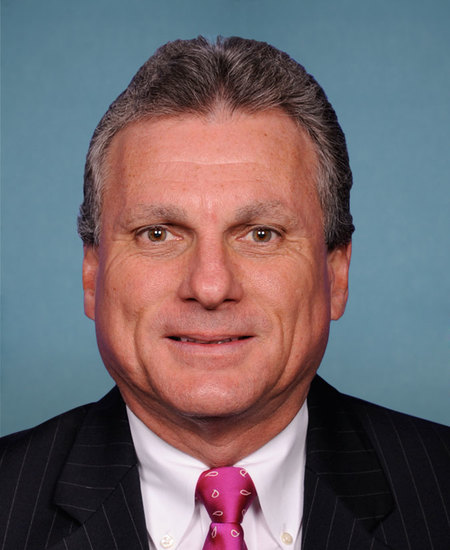
Rep. Earl L. "Buddy" Carter
Sponsored bills
Maddy summaryThis bill, known as the Sex Trafficking Demand Reduction Act, modifies how the United States evaluates foreign countries' efforts to combat human trafficking. It requires these nations to demonstrate serious and sustained actions, such as banning the purchase of commercial sex acts, educating buyers about exploitation, and reducing international sex tourism. These new criteria will be used in future annual reports to determine whether a country meets the minimum standards for eliminating trafficking. Consequently, the bill directly affects how the U.S. government assesses and categorizes the anti-trafficking progress of other nations.
Maddy summaryH.Res. 1320 is a non-binding resolution that calls on all Americans to honor military personnel who died while serving in the pursuit of freedom and peace on Memorial Day 2026. The bill does not create new laws or change any policies; instead, it serves as a formal expression of gratitude and remembrance from the House of Representatives. Because it is a commemorative resolution rather than a procedural or funding measure, it has no direct legal effect on individuals or government operations.
Maddy summaryHRES 1314, the America 250 Commemorative Flag Act, designates a special flag featuring the number 250 within the circle of stars as an official United States flag for the 250th anniversary of the Declaration of Independence. This resolution authorizes the America 250 flag to be flown alongside the national flag and POW/MIA flags at all government buildings, embassies, and official U.S. locations worldwide during the commemoration year. The bill serves as a ceremonial measure to honor the nation's history and the sacrifices made by patriots, without altering any existing laws or policies.
Maddy summaryThis resolution expresses support for the Trump administration's efforts to combat fraud, waste, and abuse in Medicare, Medicaid, and other federal health care programs. It highlights specific actions taken, such as using advanced technology to detect fraud, suspending billions of dollars in suspected fraudulent payments, and coordinating with law enforcement to prosecute offenders. The document also acknowledges the creation of a new task force designed to lead a governmentwide strategy against fraud in federal benefit programs. Ultimately, the bill serves as a formal recognition of these initiatives rather than introducing new laws or policy changes.
Maddy summaryThis bill would add pharmacist services to Medicare Part B coverage for beneficiaries, specifically covering pharmacist-led testing and treatment for illnesses like flu, COVID-19, or strep throat during public health emergencies. It defines covered services as those performed under state law, often requiring collaboration with a physician, and sets payment at 80% of the lesser of the actual charge or 85% of physician payment rates. Pharmacists would be prohibited from balance billing for these services, ensuring Medicare beneficiaries pay only their standard copayment. The changes would take effect January 1, 2026.
Maddy summaryThis bill authorizes the U.S. Mint to produce commemorative $5 gold and $1 silver coins marking the 25th anniversary of the September 11, 2001, terrorist attacks. The coins must feature designs honoring victims and first responders (including the inscription "Never Forget") and will be sold only during 2027-2028. All surcharges ($35 per gold coin, $10 per silver coin) collected from sales will fund the National September 11 Memorial and Museum at the World Trade Center, with no net cost to the federal government. The coins are legal tender but primarily intended for collectors, not circulation.
Maddy summaryThe Smithsonian American Women’s History Museum Act authorizes the creation of a new Smithsonian museum dedicated to women’s history, to be located within the National Mall Reserve in Washington, D.C. If the site is managed by another federal agency, the bill requires that agency to transfer the land after notifying Congress and relevant committees. The museum must ensure exhibits and programs accurately represent diverse women’s experiences by consulting a broad range of experts and community voices. The Smithsonian will submit biennial reports to Congress detailing how the museum meets these representation standards.
Hemp Planting Predictability Act This bill extends by two years the implementation of changes to the regulation of hemp products, which reimpose certain federal controls over some hemp products. Specifically, Congress enacted the FY2026 agriculture appropriations act (P.L. 119-37) on November 12, 2025. Effective November 12, 2026, the act modifies the statutory definition of hemp products that are considered to be lawful. This bill extends the effective date to November 12, 2028. As background, the 2018 farm bill excluded hemp from the Controlled Substances Act definition of marijuana and defined hemp . As a result, hemp and hemp-derived products at or below the 0.3% delta-9 tetrahydrocannabinol (THC, the psychoactive component of marijuana) concentration threshold were no longer regulated as Schedule I controlled substances and registration with the Drug Enforcement Administration was no longer required to cultivate or handle hemp and hemp-derived products. However, hemp remained subject to Department of Agriculture and Food and Drug Administration regulation. The 2025 changes to the definition of hemp, include changing the limit to a total THC concentration of not more than 0.3% on a dry weight basis rather than only delta-9 THC, explicitly including industrial hemp, excluding seeds from a cannabis plant that exceed a certain THC concentration, and excluding various types of hemp-derived cannabinoid products. Cannabinoids refer to unique chemical compounds that are found in hemp and marijuana (e.g., THC) and are known to exhibit a range of psychological and physiological effects.
Recognizing Community Organizations for Veteran Engagement and Recovery Act or the RECOVER Act This bill requires the Department of Veterans Affairs to implement a three-year pilot program to make grants to established non-profit mental health care providers to provide culturally competent, evidence-based mental health care for veterans.