

Maddy summaryThis bill redesignates the existing National Parks and Public Land Legacy Restoration Fund as the America's Legacy Restoration Fund to address deferred maintenance on federal lands. It directs revenue from recreation fees and a portion of energy development income into the fund, which must be used primarily for repairing critical infrastructure like roads, trails, and buildings managed by agencies such as the National Park Service and the Forest Service. The legislation establishes strict rules requiring that most funds go toward non-transportation projects, mandates transparency through public dashboards tracking project status, and sets aside a small percentage for matching private donations. Additionally, the bill increases entrance fees for foreign visitors to ensure they contribute to the fund, while prohibiting the use of these specific funds for land acquisition or employee bonuses.
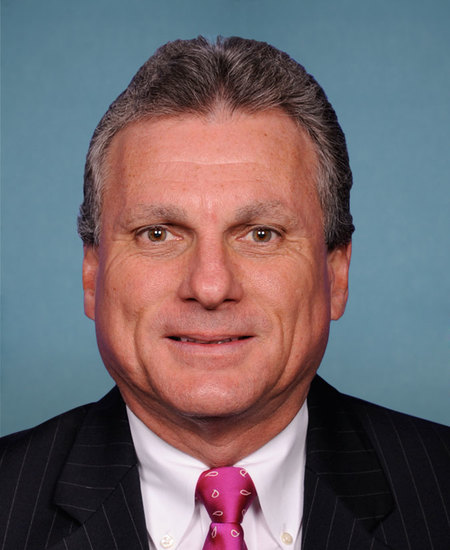
Rep. Earl L. "Buddy" Carter
Sponsored bills
Repealing Big Brother Overreach Act This bill repeals the Corporate Transparency Act. The act requires existing companies and newly created companies to report beneficial ownership information to the Department of the Treasury’s Financial Crimes Enforcement Network for purposes of addressing the financing of terrorism and money laundering.
Maddy summaryThis bill, known as the Stopping Harmful and Outrageous Torts Act, expands legal protections for firearm manufacturers and sellers by strengthening their immunity from civil lawsuits. It requires courts to immediately dismiss any pending cases against these companies that are based on the criminal or unlawful misuse of a gun by a third party, while also clarifying that sellers are not liable for negligence in entrusting products to others. The legislation further restricts who can file such suits by prohibiting foreign governments from bringing these claims and adding a specific exception for victims under the age of 17, though it maintains immunity for cases involving design or manufacturing defects. Additionally, the bill allows companies to move these cases to federal court and grants them the right to appeal dismissal orders immediately, along with the ability to recover legal fees if they win. Finally, it preempts state and local laws that attempt to impose liability on these entities for the same types of misuse-related harms.
Maddy summaryChief Chris Eddy's Law requires the Secretary of Transportation to update rules so that all refrigerated shipping containers display specific placards to warn emergency responders about potential pressurization risks. This requirement applies to every refrigerated container regardless of the cargo it carries, covering transportation within states, between states, and across borders. Additionally, the bill mandates a study to evaluate whether refrigerants should be classified as a separate hazard category and to analyze how such a change would affect existing safety regulations.
Maddy summaryThis resolution introduces articles of impeachment against U.S. District Court Judge Eleanor Louise Ross, targeting her for three specific allegations of misconduct. The first article charges her with engaging in an undisclosed extramarital affair with a law enforcement officer while on the job, which created a conflict of interest and violated judicial conduct codes. The second article accuses her of attending a partisan political event sponsored by a district attorney's campaign and admitting to drinking alcohol before presiding over a criminal case. The third article alleges that she knowingly made false statements to federal judges during an investigation into her behavior, thereby obstructing an official proceeding and violating federal law.
Maddy summaryThis resolution formally impeaches Judge Eleanor L. Ross of the U.S. District Court for the Northern District of Georgia for high crimes and misdemeanors. The bill alleges that between October 2023 and October 2025, Judge Ross engaged in sexual intercourse in her federal courthouse chambers during business hours and lied to judicial officials about these acts. An internal investigation confirmed the misconduct and the judge's false statements, leading to a recommendation that she be removed from office. The House of Representatives is using this resolution to initiate the process of trying the judge before the Senate.
Maddy summaryH.Res. 1343 is a non-binding resolution that formally recognizes World Oceans Day and celebrates the maritime heritage of the United States. It honors the contributions of fishermen, coastal communities, and maritime workers while acknowledging the ocean's economic and historical significance. The bill also marks the 50th anniversary of the Magnuson-Stevens Fishery Conservation and Management Act and the 20th anniversary of the Marine Debris Program, highlighting their roles in sustainable fisheries and ocean protection.
Maddy summaryThe Abraham Accords Expansion Act of 2026 updates the legal framework for the Special Envoy to include Central Asia and the Caucasus in normalization efforts alongside existing regions. This change formally recognizes Kazakhstan as the first Central Asian nation to join the Abraham Accords and defines specific countries within the Caucasus and Central Asia regions. The bill requires the Special Envoy to coordinate with other federal agencies like Defense and Commerce while implementing these goals using existing authorities without requesting new funding. Additionally, the act allows the Special Envoy to appoint a Deputy Special Envoy with relevant regional expertise to assist in these expanded diplomatic activities.
Maddy summaryHR 5437, the *Protection of Lawful Commerce in Stone Slab Products Act*, prohibits lawsuits against manufacturers and sellers of stone slab products (like countertops) for injuries caused by silica dust exposure during third-party fabrication (e.g., cutting or grinding by fabricators). It directly affects stone slab manufacturers and sellers by shielding them from civil liability when injuries result from fabricators violating workplace safety laws. The bill’s key provision bans such lawsuits in federal or state courts and requires dismissal of pending cases. It aims to protect this industry, which employs thousands, from claims they cannot control, emphasizing that safety regulations apply to fabricators - not the original sellers.
Maddy summaryThe Merit Restoration Act prohibits federal research agencies and grant recipients from using specific diversity, equity, and inclusion practices in their work. This law targets requirements that mandate employees or researchers sign statements or complete training asserting that certain races, sexes, or national origins are inherently superior or inferior. If a recipient is found to have violated these rules, the agency must freeze their funding and may require them to repay any money used during the violation. The restrictions apply to grants awarded on or after the bill becomes law, affecting scientific and medical research funded by the federal government.