

Maddy summaryHJRES 168 is a congressional resolution seeking to block a specific environmental regulation by the Council on Environmental Quality (CEQ). It targets the CEQ's "National Environmental Policy Act Implementing Regulations Revisions Phase 2" rule, published in the Federal Register on May 1, 2024 (89 Fed. Reg. 35442). If passed, this resolution would use a statutory process under Title 5, U.S. Code, to nullify the rule, preventing it from taking effect. The bill directly affects the CEQ's regulatory authority over federal environmental reviews under the National Environmental Policy Act (NEPA).
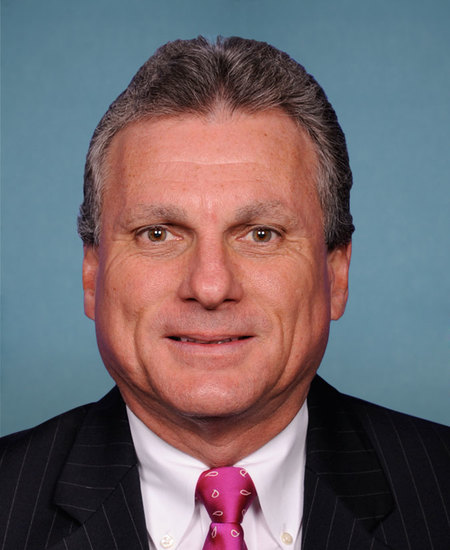
Rep. Earl L. "Buddy" Carter
Sponsored bills
Maddy summaryHRES 1438 is a symbolic resolution passed by the U.S. House of Representatives on September 11, 2024, condemning the September 4, 2024, shooting at Apalachee High School in Winder, Georgia. It honors the four victims - Christian Angulo, Richard Aspinwall II, Cristina Irimie, and Mason Schermerhorn - expresses condolences to their families and the Winder community, and acknowledges the trauma experienced by students, staff, and the broader community. The resolution has no policy changes or funding provisions; it serves solely as a formal expression of grief and support following the tragedy.
Maddy summaryHR 8282, the "Illegitimate Court Counteraction Act," imposes U.S. sanctions on foreign individuals or entities supporting the International Criminal Court (ICC) in investigating or prosecuting "protected persons." Protected persons include U.S. military personnel, officials, and allied personnel (from non-ICC member countries) who are not under ICC jurisdiction. The bill requires the President to block assets and deny visas to targeted foreign persons and their immediate family members within 60 days of the ICC attempting such actions. It mandates congressional notification of sanctions and allows termination if the ICC ceases all such efforts against protected persons. The law focuses on restricting U.S. economic and travel access to ICC supporters targeting specific U.S. and allied personnel.
Maddy summaryThe CREATE AI Act of 2023 establishes a National Artificial Intelligence Research Resource (NAIRR) to improve access to AI research tools, computational resources, data, and educational materials for researchers and students across the United States. The NAIRR will provide computational resources, curated datasets, educational tools, and access to AI testbeds, with special emphasis on supporting groups historically underrepresented in STEM fields. Governed by a Steering Subcommittee chaired by the Director of the Office of Science and Technology Policy and managed by a Program Management Office within the National Science Foundation, the NAIRR includes specific requirements for ethical AI development, privacy protections, and security measures. The resource will be accessible to researchers at U.S. institutions of higher education, nonprofits, government agencies, and certain businesses, with priority given to projects addressing privacy, ethics, civil rights, and AI safety.
Maddy summaryThis resolution symbolically designates September 15-21, 2024, as "Telehealth Awareness Week" to raise public awareness about telehealth services. It does not create new laws or change existing policies but urges efforts to promote telehealth access, highlight resources for providers and patients, and collect data on telehealth's impact. The resolution specifically references telehealth's role in healthcare access, especially for Medicare beneficiaries and underserved communities. As a non-binding symbolic measure, it focuses on awareness rather than policy action.
Maddy summaryHR 9398, the Passport Processing Efficiency Act, prioritizes processing for U.S. passport applicants who submit applications in person at passport agencies or by mail over those using third-party couriers. It requires the State Department to annually report on how many processing slots are allocated to couriers at each agency, changes to those allocations, and citations issued against couriers for violating procedures. The bill also mandates a public website section for applicants to submit complaints about couriers and for the State Department to publish aggregated complaint summaries and remediation steps. This directly affects passport applicants using third-party services and aims to increase transparency in passport agency operations.
Maddy summaryThis resolution aims to block a rule issued by the National Highway Traffic Safety Administration (NHTSA) that sets new fuel efficiency standards for passenger cars, light trucks (starting in 2027), and heavy-duty pickup trucks/vans (starting in 2030). If passed, it would prevent this specific rule from taking effect by disapproving it under a congressional review process. The rule directly affects vehicle manufacturers by requiring them to meet these updated fuel economy targets for future model years. This is a procedural resolution, not a new law, focused solely on halting the implementation of the existing NHTSA rule.
Maddy summaryHouse Resolution 1400 designates August 21, 2024, as Fentanyl Prevention and Awareness Day. It expresses the House's support for efforts to raise public awareness about the dangers of fentanyl, a highly potent synthetic opioid linked to overdose deaths. The resolution encourages Americans to promote drug prevention, support healthy lifestyles, and participate in community activities focused on fentanyl safety, without creating new laws or funding. It directly affects communities, schools, and families working to address the fentanyl crisis.
Maddy summaryThis bill (HR 9242) renames a U.S. Department of Agriculture facility in Athens, Georgia, as the "Abit Massey Poultry Research Center." It directly affects the U.S. National Poultry Research Center and all federal documents referencing it, requiring updates to official records, maps, and publications. The bill makes no policy changes; it solely updates the facility's name and all related government references to honor Abit Massey.
Maddy summaryHRES 1394 is a non-binding resolution celebrating the U.S.-India partnership based on shared democratic values, religious pluralism, and human rights, while highlighting the contributions of the Indian diaspora in the United States. It specifically recognizes the 50th anniversary of BAPS Swaminarayan Sanstha's community work, including its spiritual centers (mandirs) and volunteer efforts across the country. The resolution does not create legal obligations but formally acknowledges these ties and achievements.