

Maddy summaryThe FairTax Act of 2025 would repeal federal income tax, payroll taxes (Social Security and Medicare), and estate and gift taxes, replacing them with a national sales tax. It would impose a 23% tax on the final consumption of goods and services in 2027, with rates adjusting based on federal tax rates. The bill includes a monthly rebate for qualifying families based on the poverty level to offset the tax burden on lower-income households. It would establish a cooperative tax administration system between federal and state governments, with states collecting the tax under certain conditions. The tax would sunset if the 16th Amendment (which allows for income taxes) is not repealed within 7 years of enactment.
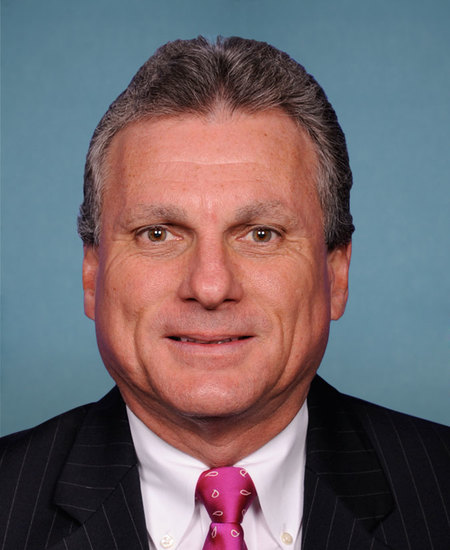
Rep. Earl L. "Buddy" Carter
Sponsored bills
Maddy summaryHR 137, the TCJA Permanency Act, makes permanent many tax provisions from the 2017 Tax Cuts and Jobs Act. It permanently increases the standard deduction for individual taxpayers, modifies income tax brackets, and makes permanent the child tax credit increase. The bill also permanently limits deductions for state and local taxes, mortgage interest, and miscellaneous itemized deductions. These changes affect most individual taxpayers who file federal income tax returns.
Maddy summaryHR 45 (FIND Act) requires federal government contractors to certify they do not discriminate against firearm businesses (including manufacturers, dealers, and trade associations) in their policies or practices. The bill mandates that contractors and subcontractors (for contracts over 10% of the prime contract value) certify they have no discriminatory policies and will not adopt them during the contract term. Violations could lead to contract termination and potential debarment. This applies to all federal procurement contracts awarded after the bill's enactment, excluding sole-source contracts. The law aims to ensure firearm businesses are treated equally in government contracting without restricting legitimate business criteria like creditworthiness or legal compliance.
Maddy summaryThis bill requires Congress to approve major federal regulations before they take effect. It would mandate that agencies submit detailed reports including cost-benefit analyses, economic impact assessments, and other information to Congress before implementing significant regulations. Major rules - defined as those with at least $100 million annual economic impact or significant effects on costs, competition, or employment - would need a joint resolution of approval from Congress within 70 session days. Nonmajor rules would follow a less stringent disapproval process. The bill aims to increase legislative oversight of the regulatory process, requiring Congress to formally review and approve rules that significantly impact the economy or public regulations.
Maddy summaryThis bill names the U.S. Postal Service facility at 15 South Valdosta Road in Lakeland, Georgia, as the "Nell Patten Roquemore Post Office." It updates all official U.S. government references - such as maps, documents, and records - to use this new name for the location. The bill does not create new policies or affect services; it only changes the facility's official designation. The name honors Nell Patten Roquemore, though the bill itself does not detail her contributions.
Maddy summaryThis resolution (HRES 1627) is a ceremonial measure honoring the late former President Jimmy Carter, Jr. It expresses the House's appreciation for his public service and deep sympathy to his family following his death on December 29, 2024. The resolution does not create new laws or policies; it simply directs the Clerk to transmit a copy to Carter's family. It commemorates his life, legacy, and work as a diplomat, Nobel Peace Prize winner, and advocate for human rights, without implementing any concrete policy changes.
Maddy summaryThis bill creates a 4-year transitional coverage period for Medicare to automatically cover "breakthrough medical devices" - new FDA-prioritized devices approved after March 2021 - as "reasonable and necessary" for treatment. During this period, these devices qualify for additional payments under Medicare's hospital and outpatient payment systems without requiring separate approval. After the 4-year period, Medicare must develop regular coverage based on additional data, with automatic coverage for all approved uses if no action is taken within two years. The bill requires Medicare to assign unique codes for these devices within three months of FDA approval and to update payment systems regularly. It also includes special provisions for "specified breakthrough devices" that lack existing Medicare benefit categories, requiring reports on their impact and cost to Congress.
Maddy summaryThe Autism CARES Act of 2024 reauthorizes and enhances federal programs supporting individuals with autism spectrum disorder. It requires the National Institutes of Health to expand research to include more fields like gerontology and psychiatry, and to ensure research reflects the full range of needs of people with autism, including those with co-occurring conditions. The bill mandates regular reports to Congress on progress, mental health needs, and transition services for young adults with autism, while increasing funding for autism-related programs from fiscal year 2025 through 2029. This legislation directly affects individuals with autism, their families, caregivers, and healthcare providers by improving access to evidence-based services and research.
Maddy summaryThis bill reauthorizes the Emergency Medical Services for Children (EMSC) program through fiscal year 2029, increasing annual funding from $22.3 million (2020-2024) to $24.3 million (2025-2029). It directly supports states and communities providing specialized emergency medical care for children, including pediatric trauma and transport services. The key provision extends and increases federal funding to maintain existing EMSC grant programs that train healthcare providers and improve pediatric emergency response systems. This ensures continued access to coordinated care for children in emergency situations across the United States.
Maddy summary# Summary of National Defense Authorization Act for Fiscal Year 2025 This extensive legislation contains numerous provisions governing U.S. defense programs, with key themes including: 1. **Aircraft Inventory Requirements & Restrictions**: - Extended prohibitions on reducing E-3 aircraft inventory through 2025 - Minimum inventory requirements for A-10 (96 aircraft), C-130 (minimum 205 aircraft), and KC-135 aircraft - Prohibition on retiring F-15E aircraft until September 2027 - Requirements for recapitalizing Air National Guard fighter fleet with a plan to maintain similar capability mix as active components 2. **F-35 Aircraft Procurement Limitations**: - Strict limits on F-35 procurement (30 F-35A, 9 F-35B, 9 F-35C maximum for FY2025) - Requires certification of multiple improvement plans before accepting additional aircraft - Mandates development of digital-twin models, test beds, and mission software integration labs 3. **Artificial Intelligence Initiatives**: - Establishment of a Chief Digital Engineering Recruitment and Management Officer - Development of AI education courses for military personnel - Requirements for identifying and planning the AI workforce - New restrictions on AI models that could pose national security risks 4. **Supply Chain Resilience**: - Comprehensive measures to increase supply chain resilience for small unmanned aerial systems (sUAS) - Disassembly and analysis of foreign drone aircraft (specifically Da Jiang Innovations) - Development of a supply chain risk framework 5. **Technology Restrictions**: - Prohibition on use of foreign-made LiDAR technology from covered foreign countries (China, Iran, North Korea, Russia) - Requires certification for any exceptions to this prohibition 6. **Defense Research & Development**: - Modifications to numerous research programs - Expansion of the Laboratory Quality Enhancement Program - Requirements for a biotechnology roadmap - Modifications to quantum information science programs The legislation contains numerous detailed requirements for military readiness, equipment maintenance, and strategic planning across all branches of the military, with significant focus on modernization, technology security, and maintaining force structure requirements.