

Maddy summaryHR 1492 amends the Social Security Act to extend the negotiation period for standard drug manufacturers under the federal drug pricing program. Specifically, it changes the timeframe from 7 years to 11 years for small-molecule drugs (like traditional pills) to negotiate prices with the government, aligning it with the existing 12-year period for complex biologic drugs (like insulin or monoclonal antibodies). This adjustment directly affects pharmaceutical companies that produce small-molecule drugs, giving them a longer window to negotiate pricing terms. The bill makes this change effective as if it had been part of the 2022 law that established the program.
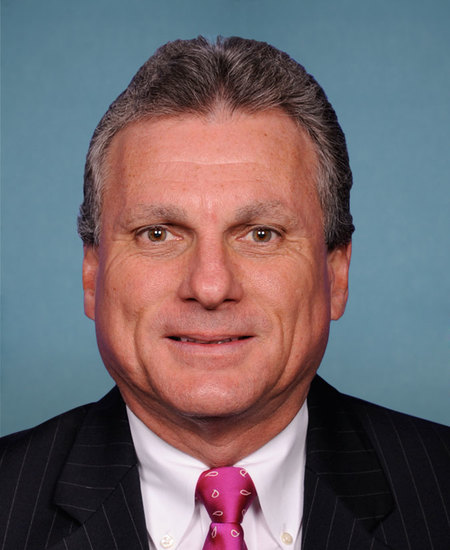
Rep. Earl L. "Buddy" Carter
Sponsored bills
Maddy summaryThis bill would require states to create a simplified process for out-of-state healthcare providers to join Medicaid and CHIP programs. Qualified providers (those already enrolled in Medicare or another state's program with low fraud risk) could enroll without excessive screening and would be approved for five years. It directly affects children under 21 enrolled in Medicaid or CHIP by expanding access to providers outside their state, particularly in underserved areas. The change applies to all states' Medicaid programs but takes effect three years after enactment.
Maddy summaryThe No IRIS Act of 2025 (HR 1415) prohibits the Environmental Protection Agency (EPA) from using scientific assessments generated by its Integrated Risk Information System (IRIS) program to develop environmental regulations, enforce laws, issue permits, or inform air toxics mapping tools. This bill directly restricts the EPA’s regulatory process by banning IRIS data from key decision-making steps in environmental rulemaking. The law requires the EPA to rely on alternative scientific data for these purposes, without altering the IRIS program itself. It does not change existing EPA authority but limits how specific assessments may be applied in regulatory actions.
Maddy summaryThis bill authorizes a ceremonial gold medal to honor former President Jimmy Carter, recognizing his service as the 39th U.S. President and his post-presidential work. It directs the Treasury to strike a gold medal bearing his name and image, to be presented posthumously to the Carter Center in Atlanta (where he and his wife Rosalynn founded the organization). Bronze duplicates may be sold to cover costs, with proceeds going to the U.S. Mint fund. The bill does not create new laws or affect any policies, as it is purely a commemorative gesture.
Maddy summaryThis bill extends a temporary tax provision for distilled spirits in Puerto Rico and the U.S. Virgin Islands. It amends the tax code to change the end date for a reduced tax coverage limit from January 2022 to January 2032. The change applies to distilled spirits imported into these territories after December 31, 2021. This directly affects businesses and consumers involved in the distilled spirits market in Puerto Rico and the Virgin Islands by maintaining the lower tax rate for a longer period.
This concurrent resolution declares that Congress should not impose any new performance fee, tax, royalty, or other charge relating to the public performance of sound recordings on a local radio station for broadcasting sound recordings over the air, or on any business for such public performance of sound recordings.
Maddy summaryHR 1303, the Protecting America’s Seniors’ Access to Care Act, would block the federal government from enforcing a 2024 rule requiring nursing homes to meet minimum staffing standards and mandating Medicaid programs to report payment transparency details. This bill directly affects long-term care facilities and Medicaid programs by preventing the implementation of these specific requirements. The legislation prohibits the Secretary of Health and Human Services from carrying out the rule published on May 10, 2024, which was designed to improve care quality and accountability in senior healthcare. It stops the rule from taking effect without creating new policies or regulations.
Maddy summaryHR 1301, the Death Tax Repeal Act, would eliminate the federal estate tax and generation-skipping transfer tax for estates of individuals dying on or after its enactment date. It directly affects individuals inheriting significant assets, as it removes taxes on estates exceeding $10 million (adjusted for inflation) and repeals taxes on large transfers between generations. The bill modifies the gift tax by establishing a $10 million lifetime exemption with annual inflation adjustments, replacing previous tax brackets. It applies to estates, gifts, and transfers occurring on or after the bill's effective date.
United States-Israel Defense Partnership Act of 2025 This bill requires or authorizes certain actions to increase defense-related cooperation between the United States and Israel. Specifically, the bill requires the Department of Defense (DOD) to establish a cooperative program, with the concurrence of Israel's Ministry of Defense (MOD), to develop and deploy advanced technologies for countering unmanned systems that threaten the United States and Israel; establish in Israel an office of the Defense Innovation Unit (an organization that focuses on rapidly fielding and scaling commercial technology across the U.S. military); and seek to engage Israel's MOD on the ascension of Israel into the national technology and industrial base (currently defined in law as the persons and organizations engaged in research, development, production, integration, services, or information technology activities conducted within the United States, the United Kingdom, Australia, New Zealand, and Canada). The bill authorizes DOD, upon request of Israel's MOD, to jointly conduct research, development, test, and evaluation (RDT&E) of emerging technologies such as artificial intelligence and robotics to meet defense challenges. Additionally, the bill extends the authority for DOD to (1) carry out RDT&E on a joint basis with Israel to establish anti-tunnel and counter unmanned aerial systems capabilities through 2028, and (2) transfer defense articles intended for use as reserve stocks for Israel through January 1, 2029.
Alternatives to Prevent Addiction In the Nation Act or the Alternatives to PAIN Act This bill reduces cost-sharing and prohibits the imposition of certain utilization requirements under the Medicare prescription drug benefit for certain non-opioid pain management drugs. Specifically, the bill requires such drugs to be covered without a deductible and to be placed on the lowest cost-sharing tier (if any). The bill also prohibits the imposition of prior authorization requirements (i.e., requiring prior approval from a plan) or step therapy requirements (i.e., requiring the use of alternative drugs before a drug is covered under a plan) with respect to such drugs.