

Maddy summaryHR 1596 renames the U.S. National Poultry Research Center in Athens, Georgia, as the "Abit Massey Poultry Research Center" for all official government references. This naming bill updates the facility's official designation without changing its operations, funding, or policies. It directly affects the center's administrative and legal documentation but does not alter its research activities or impact any individuals or groups.
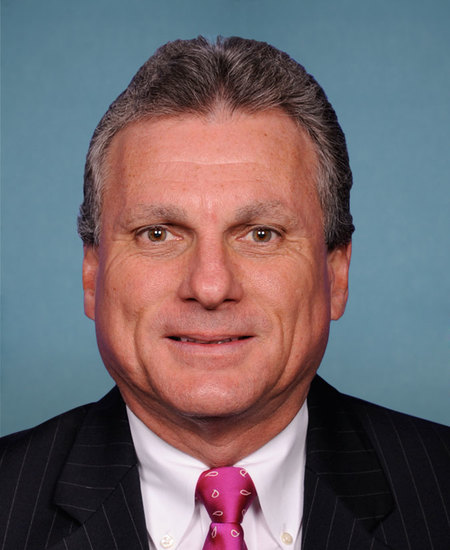
Rep. Earl L. "Buddy" Carter
Sponsored bills
Maddy summaryHRES 229 is a formal House resolution impeaching Chief Judge James E. Boasberg of the U.S. District Court for the District of Columbia. It accuses him of abusing judicial power by interfering with President Trump's enforcement of immigration policies under the Alien Enemies Act, specifically blocking efforts to remove aliens linked to the Tren de Aragua terrorist group and ordering planes to turn around midair. The resolution claims these actions violated separation of powers by second-guessing the President's constitutional authority without judicial authority. This is a procedural impeachment resolution pending Senate action, not a law affecting the public.
Maddy summaryThis bill creates a tax credit for cable, satellite, and internet-based video distributors (like streaming services) that carry content from independent video producers. Distributors can claim a credit equal to the lesser of their actual license fees paid for carrying independent programming or $0.10 per average monthly subscriber, with a maximum of $0.30 per subscriber. It also requires the Federal Communications Commission to submit biennial reports to Congress on how many independent programmers are being carried and for how long, to help assess the program's effectiveness. The credit applies to agreements where distributors carry independent content to at least 40% of their subscribers, targeting small, non-corporate video producers who aren't owned by major networks or distributors.
Maddy summaryThis bill (HR 2199) prevents private health insurance plans from discriminating against patients with end-stage kidney disease (ESRD) who require dialysis. It amends the Social Security Act to prohibit plans from treating dialysis coverage differently than other medical services or applying network restrictions that disproportionately harm ESRD patients. The law clarifies that plans cannot deny or limit benefits for dialysis based on a patient’s diagnosis, while preserving a plan’s right to choose which dialysis providers are in their network. It directly affects ESRD patients and their private health insurance coverage, ensuring dialysis is treated equally with other covered medical services. The bill does not require plans to include specific dialysis providers but stops them from unfairly restricting access to necessary care.
Maddy summaryThis bill delays two Medicare billing deadlines for ground ambulance services from 2025 to 2028. It amends the Social Security Act to extend the timeline for implementing specific billing rules under Section 1834(l). The change directly affects Medicare ambulance providers by postponing compliance deadlines for billing requirements. No new services or funding are created - only a technical extension of existing timelines.
Maddy summaryThis bill modifies Medicare's physician self-referral rules to improve access for rural communities. It creates a new exemption for "covered rural hospitals" (defined as facilities in rural areas more than 35 miles from another hospital or critical access hospital) from certain restrictions on physicians owning hospitals. The bill also removes a prohibition on expanding existing physician-owned hospitals, allowing such expansions after the law's enactment. These changes directly affect rural hospitals seeking Medicare participation and physicians who own or operate hospitals in underserved areas.
Maddy summaryThe Air America Act of 2025 authorizes one-time payments of $40,000 to individuals who worked for Air America or its affiliated companies for at least five years during 1950-1976, or to their surviving spouses, children, or dependents. Additional payments of $8,000 per full year beyond five years are allowed. The program is capped at $60 million total funding, with claims required within two years of final regulations. Payments are a single lump sum with no ongoing benefits, and the bill explicitly states it does not create new entitlements beyond this one-time award.
Maddy summaryHJRES 35 is a congressional resolution disapproving an Environmental Protection Agency (EPA) rule that established procedures for emissions charges on petroleum and natural gas systems. Specifically, it targets the EPA’s November 2024 rule titled "Waste Emissions Charge for Petroleum and Natural Gas Systems: Procedures for Facilitating Compliance, Including Netting and Exemptions," which would have required companies to pay fees based on emissions. The resolution, passed by both chambers in February 2025, nullifies the rule, preventing it from taking effect. This directly affects oil and gas companies subject to the EPA’s emissions regulations, removing a specific compliance mechanism they would have faced.
Maddy summaryHRES 226 is a ceremonial resolution commemorating Delta Air Lines' 100th anniversary, marking the centennial of its founding on March 2, 1925. It recognizes Delta's history as the first U.S. airline to reach 100 years (originally as Huff Daland Dusters, an aerial crop-dusting company) and highlights its current scale, including 100,000 employees, 5,000 daily flights, and global connectivity. The resolution contains no policy changes or binding provisions - it simply expresses the House's recognition of Delta's milestone and its role in connecting people and supporting communities. As a commemorative resolution, it does not affect any individuals, businesses, or regulations.
Maddy summaryHR 2098, the "Deliver for Democracy Act," requires the U.S. Postal Service (USPS) to meet specific on-time delivery targets for periodicals (including newspapers) to receive annual rate increases. The bill mandates that the Postal Regulatory Commission must confirm USPS achieved either a 95% on-time delivery rate for periodicals or a 2-percentage-point improvement over the prior year before authorizing new rates. It also requires the Postmaster General to submit annual public reports tracking on-time delivery performance for newspaper mail in-county and out-of-county, using stakeholder feedback and alternative data methods if needed. Additionally, the bill directs the GAO to study alternative pricing options for periodicals and submit a report within two years.