

Maddy summaryHR 3538, the Wildlife Confiscations Network Act of 2025, establishes a national network to handle the care of live wildlife seized at U.S. borders due to illegal trafficking. It creates a coordinated system where Federal wildlife law enforcement (like the U.S. Fish and Wildlife Service) can partner with qualified facilities - including zoos, sanctuaries, and rehabilitation centers - to provide immediate care, maintain evidence integrity, and manage long-term placement for confiscated animals. The bill expands a successful Southern California pilot that already placed over 4,100 animals by creating a centralized database and single point of contact for law enforcement. It authorizes $5 million annually (2026-2030) to support this network, directly affecting border agencies and participating care facilities while addressing capacity gaps at ports of entry.
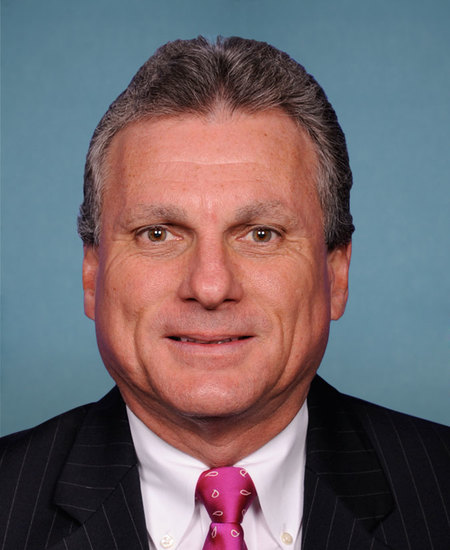
Rep. Earl L. "Buddy" Carter
Sponsored bills
Maddy summaryHR 4074, the Optimizing Postpartum Outcomes Act of 2025, requires the Health and Human Services Secretary to issue guidance within one year on improving Medicaid and CHIP coverage for pelvic health services during pregnancy and the postpartum period (defined as up to 6 months after birth or during lactation). The bill directs the GAO to study coverage gaps for these services and mandates a new CDC-led education campaign to train healthcare providers and inform postpartum women about pelvic floor exams and physical therapy. Key provisions include standardizing terminology for pelvic health conditions, sharing state best practices for payment models, and authorizing $2 million annually for the education program through 2030. This bill directly affects postpartum women covered by Medicaid or CHIP by aiming to increase access to evidence-based pelvic health care.
Maddy summaryThis House resolution congratulates St. Joseph’s Hospital in Savannah, Georgia, on its 150th anniversary. It recognizes the hospital’s founding in 1875 by the Sisters of Mercy, its role as a not-for-profit community healthcare provider, and its long-standing commitment to serving Southeast Georgia through medical care and community programs. The resolution formally honors the hospital’s history, mission, and impact on local health and wellness. As a ceremonial resolution, it does not create new policy or affect any regulations.
Maddy summaryHR 3950, the Truth in Gender Act of 2025, requires U.S. federal agencies to define and enforce "sex" based on biological characteristics at conception (male/female), replacing "gender" in all official policies and communications. It mandates government-issued IDs (like passports) to reflect biological sex, prohibits federal funding for programs promoting "gender ideology," and directs agencies to rescind policies allowing gender identity to override sex in areas like prison housing and single-sex facilities. The bill directly affects federal agencies, contractors receiving federal funds, and individuals interacting with government services, such as those applying for IDs or accessing gender-segregated spaces. Key provisions include requiring all agency forms to list "sex" (not gender), revising prison medical policies to ban procedures altering appearance to match gender identity, and directing the DOJ to clarify sex-based protections under civil rights law.
Maddy summaryH.J.Res. 88 disapproves an Environmental Protection Agency (EPA) rule that would have allowed California to enforce its "Advanced Clean Cars II" vehicle emission standards. This rule, submitted by the EPA on January 6, 2025, sought to grant California a waiver to override federal preemption for its stricter vehicle pollution controls. The resolution, passed by Congress and signed into law on June 12, 2025, formally nullifies the EPA rule, preventing California from implementing its Advanced Clean Cars II program under this specific waiver. The bill directly affects California's ability to set its own vehicle emission standards for passenger cars and light trucks.
Maddy summaryHJRES 89 is a congressional disapproval resolution that blocks an Environmental Protection Agency (EPA) rule concerning California's vehicle and engine pollution standards. The resolution specifically targets the EPA's "Omnibus Low NOX Regulation" and waiver of preemption, which would have allowed California to enforce stricter emissions rules. By disapproving this rule under Chapter 8 of Title 5 U.S. Code, Congress has nullified the EPA's action, meaning the regulation will have no legal effect. This directly affects the EPA's authority to approve California's state-level pollution control standards for motor vehicles.
Maddy summaryThis bill changes how federal Bureau of Prisons employees in the "Rest of U.S." pay locality receive compensation. It directs that employees whose official worksite is in "Rest of U.S." be treated as working in the nearest other pay locality (within 200 miles) with the highest comparability payment, rather than the default "Rest of U.S." rate. This adjustment applies to all Bureau of Prisons employees, including prevailing rate staff, and takes effect 180 days after enactment. The change directly affects federal correctional officers and staff working in remote locations currently covered by the "Rest of U.S." pay rate.
Maddy summaryThis bill prohibits male students from participating in athletic programs at the U.S. Military Academies (West Point, Annapolis, and Air Force Academy) designated exclusively for women or girls. It allows males to train with such teams only if no female athlete loses a roster spot, competition opportunity, scholarship, or other benefit. The bill defines "sex" as biological sex at birth and clarifies that "athletic programs" include all team-based activities requiring participation. It directly affects the women's sports teams at these three service academies and their eligibility rules.
Maddy summaryHRES 494 is a symbolic House resolution condemning violent protests in Los Angeles on June 6, 2025, which included assaults on law enforcement, vandalism of federal property, and destruction of personal property. It specifically targets Los Angeles Mayor Karen Bass and California Governor Gavin Newsom, accusing them of obstructing federal immigration enforcement through sanctuary policies and failing to condemn the violence. The resolution affirms the federal government's duty to enforce immigration laws and supports prosecuting individuals who commit violence against law enforcement. It does not create new laws or policies but expresses formal disapproval of the officials' actions and the rioters' conduct.
Maddy summaryHR 3860, the "No Passports for Terrorists and Traffickers Act," denies or revokes U.S. passports for individuals charged with or convicted of providing material support to terrorism under federal law (18 U.S.C. §§2339A/B) or determined by the Secretary of State to have aided designated foreign terrorist organizations. It directly affects people meeting these criteria by preventing passport issuance or requiring passport cancellation, though limited exceptions allow return travel to the U.S. or humanitarian travel. Key mechanisms include the Secretary of State’s authority to act, a 60-day appeal process for affected individuals, and mandatory reports to Congress on each denial or revocation. The bill explicitly excludes medicine and religious materials from its definition of "material support," which covers items like money, training, transportation, or weapons. This law changes passport policy for specific terrorism-related cases without altering broader constitutional rights.