

Maddy summaryHCONRES 43 is a non-binding congressional resolution expressing that public performances of "The Star-Spangled Banner" should use the original English lyrics written by Francis Scott Key. It encourages performers and event organizers to preserve the anthem's historical integrity by using its original English text, rather than translated or adapted versions, as a way to honor its 1814 origins and 1931 designation as the national anthem. The resolution does not create new law or impose legal requirements but formally states Congress's preference for maintaining the anthem's traditional English lyrics in public settings. It directly affects public events where the anthem is performed, such as sports games, ceremonies, and official gatherings.
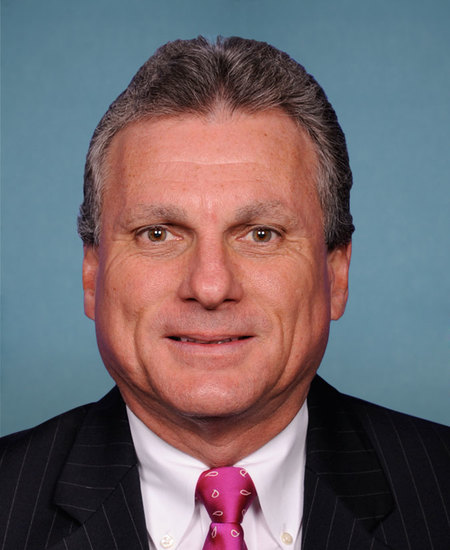
Rep. Earl L. "Buddy" Carter
Sponsored bills
Maddy summaryHRES 575 is a symbolic resolution designating July 10th as "Journeyman Lineworkers Recognition Day." It honors lineworkers who face significant risks daily - working at heights near live wires and responding to disasters like hurricanes and wildfires. The resolution specifically references Henry Miller, an early leader of the International Brotherhood of Electrical Workers, who died on July 10, 1896, while troubleshooting an outage. It encourages the public to recognize these workers' contributions but does not create new laws or allocate funding.
Maddy summaryThe Head Start for Our Future Act amends Section 441(c)(1) of the Higher Education Act of 1965 to replace "literacy training" with "child development and early learning (including Head Start programs and Early Head Start programs carried out under the Head Start Act), literacy training." This technical change formally integrates Head Start and Early Head Start programs into the federal definition of early learning initiatives under the Higher Education Act, while maintaining a separate reference to literacy training. The bill directly affects how federal grants for early childhood education are categorized and administered under the Higher Education Act. It does not alter funding levels, program requirements, or operations but updates administrative terminology to explicitly include Head Start services.
Maddy summaryThis bill requires federal agencies to provide detailed information about payments they authorize, including the purpose, funding source, and activity type. It mandates agencies to verify bank account information before payments are made and gives the Treasury Department access to the National Directory of New Hires, tax information, and Social Security data to help identify and prevent improper payments. Agencies must periodically verify payment information accuracy and report on payments exempt from these requirements due to sensitive operations. These provisions apply to all federal agencies using Treasury disbursement systems, aiming to improve government spending efficiency through better data sharing and verification processes.
Maddy summaryThe PBM Reform Act of 2025 aims to increase transparency and fairness in pharmacy benefit manager (PBM) operations within Medicare Part D and Medicaid programs. The bill requires Medicare Part D plans to allow any pharmacy meeting standard terms to join their networks, establishes "essential retail pharmacies" in underserved areas (with limited pharmacy access), and mandates detailed reporting on drug pricing, rebates, and reimbursement rates. It creates a process for pharmacies to report PBM violations of reasonable contract terms and prohibits "spread pricing" in Medicaid, where PBMs retain the difference between what they pay pharmacies and what they charge plans. These provisions aim to improve pharmacy access for Medicare beneficiaries and ensure fairer reimbursement practices for pharmacies.
Maddy summaryThis bill requires drug manufacturers to pay rebates to Medicare when their "selected drugs" (cancer and complex therapies subject to negotiated maximum fair prices) are used. Manufacturers must calculate rebates based on the difference between current Medicare payment rates (ASP+6) and new negotiated rates (MFP+6), covering the gap for beneficiaries. This lowers patient coinsurance from the current 20% of ASP+6 to 20% of MFP+6 for these specific drugs during the negotiated price period. The rebates are paid to the Medicare trust fund and apply to Medicare Part B beneficiaries using these drugs, directly affecting drug manufacturers and patients covered under Medicare Part B.
Maddy summaryHRES 565 designates the week of June 30-July 4, 2025, as "National Tire Safety Week" to promote education about tire maintenance for American motorists. The resolution supports existing safety practices like checking tire pressure monthly (when tires are cold), verifying tread depth (using the penny test), and rotating tires per manufacturer guidelines. It encourages drivers to inspect tires for damage and follow recommended maintenance to reduce risks like underinflation, hydroplaning, and premature wear. As a non-binding resolution, it expresses congressional support for public awareness efforts but does not create new legal requirements.
Maddy summaryHR 4194 would shield manufacturers of critical infrastructure equipment from lawsuits related to wildfires caused by their products, unless they intentionally caused harm through willful misconduct. This law applies to companies defined as critical infrastructure manufacturers under existing federal law (per the Cyber Incident Reporting Act of 2022). It creates legal immunity for these manufacturers against both federal and state lawsuits regarding wildfire-related losses, but requires proof of intentional wrongdoing to override the protection. The bill directly affects companies producing essential infrastructure equipment like power grid components and communication systems.
Maddy summaryThe Employee Rights Act (HR 4154) makes several significant changes to labor law. It requires secret ballot elections for union representation, prohibits employees without lawful immigration status from voting in union elections, and establishes new privacy protections for employee information used in organizing campaigns. The bill also changes the criteria for determining employee status under labor laws, creates "independent negotiating" for workers who have left union representation, and restricts what can be included in collective bargaining agreements regarding diversity initiatives. These changes would affect workers, employers, and labor organizations across the United States.
Maddy summaryThis bill makes technical corrections to the Camp Lejeune Justice Act of 2022 to streamline claims for individuals harmed by water contamination at Camp Lejeune. It clarifies the evidence required (30+ days at the base plus a link between contaminants and health harm), specifies that cases must be handled in North Carolina courts (with limited transfer options), and sets attorney fee caps (20% before suit, 25% after). These changes directly affect veterans and civilians who lived at Camp Lejeune and filed claims under the 2022 law. The bill does not create new eligibility but aims to improve the legal process for existing cases.