Sickle Cell Disease Comprehensive Care Act This bill allows state Medicaid programs to establish health homes to provide coordinated care for individuals with sickle-cell disease. (Under current law, state Medicaid programs may establish health homes to provide coordinated care for individuals with specified chronic conditions.) States must ensure that such care includes dental and vision services. The Centers for Medicare & Medicaid Services must issue best practices for states on how to design and implement such health homes.
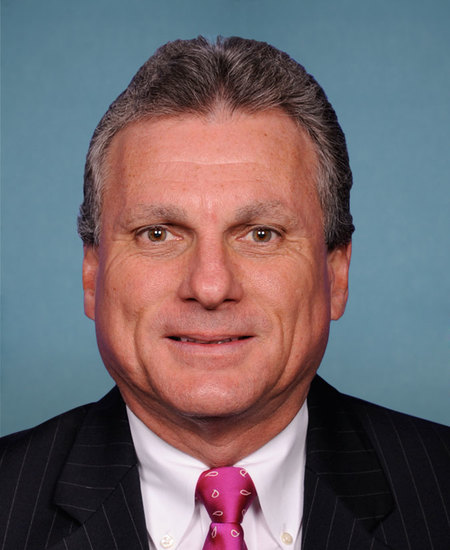
Rep. Earl L. "Buddy" Carter
Sponsored bills
Maddy summaryHR 5133, the Patients’ Right to Know Their Medication Act of 2025, requires drug manufacturers to provide standardized printed patient medication information (PMI) with each prescription dispensed in non-hospital settings. This PMI must include clear, plain-language details on drug name, usage instructions, warnings, side effects, storage, disposal, and interactions - formatted consistently with readable text and graphics. The bill directly affects patients receiving prescriptions, ensuring they get accessible, non-promotional printed information to improve safety and reduce errors. The FDA would establish regulations within one year of enactment, mandating that manufacturers include this standardized PMI on prescription drug packaging.
Maddy summaryHR 5142, the Home Health Stabilization Act of 2025, prevents payment cuts to Medicare home health providers for 2026 and 2027. It requires the Medicare Secretary to adjust payment rates to fully offset two planned negative adjustments (-4.059% and -5.0%) that would have reduced payments under the 2026 rate update rule. This ensures home health agencies receive full reimbursement for services during those years without further reductions based on prior payment formulas. The bill directly affects home health providers who rely on Medicare payments for patient care.
Maddy summaryThis resolution (HRES 674) formally condemns Representative Rashida Tlaib for attending the People’s Conference for Palestine, alleging she promoted terrorism and antisemitism there. The resolution cites specific speakers at the event who called for disrupting U.S. military supply chains, praised the October 7 Hamas attacks as "natural," advocated assassinating politicians, and honored terrorists. It claims Tlaib’s participation and rhetoric - such as labeling support for Israel as "sellout" - violated House standards by promoting extremism. The bill seeks a formal censure, a non-binding disciplinary action by the House. This is a procedural resolution addressing conduct, not creating new law.
Maddy summary# Summary of Proposed FEMA Reform Legislation (FEMA Act of 2025) This comprehensive legislative document proposes significant reforms to the Robert T. Stafford Disaster Relief and Emergency Assistance Act, with four main sections addressing: ## 1. Disaster Assistance Reforms - **Expanded eligibility** for assistance, including clarifying that absence of a fixed address doesn't disqualify individuals from sheltering assistance - **Improved rental assistance** with consideration of local post-disaster rent increases - **Direct assistance** for those unable to use financial assistance, with no requirement to show other assistance can cover costs (except insurance) - **Enhanced notices** for applicants, including documentation of denial decisions - **Clarification of displacement assistance** eligibility, stating insurance shouldn't be considered a duplication of benefits ## 2. Mitigation Program Enhancements - **Preapproved project mitigation plans** requiring states to develop plans with peer review processes - **Improved allocation of funds** with formulas prioritizing vulnerable communities, high-risk areas, and rural/economically distressed communities - **Resilient buildings** requirements for housing retrofits using the latest building codes - **Streamlined application processes** for hazard mitigation funds across multiple programs - **Study on mitigation benefits** to evaluate cost savings and effectiveness ## 3. Transparency and Accountability Measures - **Public dashboards** for both individual assistance (431) and public assistance (432) showing application status, approvals, denials, and funding - **Transparency requirements** for disaster declarations with detailed justifications for approvals/denials - **GAO studies** on numerous topics including: - Identity theft in disaster assistance (409) - Insurance utilization for public assistance facilities (410) - Wildfire management plans (411) - Effectiveness of alerting systems (412) - Cost savings of repair/rebuilding reforms (415) - **Prohibition on political discrimination** in assistance distribution ## 4. Workforce and Operational Improvements - **Study on workforce retention** in noncontiguous communities - **Pilot program** for preliminary damage assessments in remote communities - **Fast-moving disasters working group** to develop best practices for rapid response The legislation focuses on improving efficiency, transparency, and effectiveness of disaster relief programs while prioritizing vulnerable populations and communities with higher risk of disasters. It also emphasizes data-driven decision making through required studies and reports to continuously improve disaster management policies.

Maddy summaryThis bill is a congressional resolution expressing U.S. policy priorities regarding Xinjiang. It urges China to open Xinjiang to international access, cease repression of Uyghurs and other minorities, release specific detained individuals (including Ekper Asat, Dr. Gulshan Abbas, and Kamile Wayit), and stop transnational repression against Uyghur families abroad. The bill directs the State Department to coordinate U.S. policy on Uyghur issues, prioritize support for Uyghur communities, establish reporting mechanisms for transnational repression, and develop strategies to pressure China on detention facilities. It also requires U.S. diplomatic posts in China to have Uyghur-language capabilities and directs U.S. advocacy at the United Nations to address human rights concerns.
Maddy summaryH.J.Res. 118 is a symbolic resolution proposing that September 12, 2025, be designated as "The Day of the Bible" in the U.S. It does not create new laws or affect specific groups. The resolution asks Congress to express support for the designation and encourages schools, civic groups, and communities to hold educational activities about the Bible's historical role. It also requires the President to issue an annual proclamation for this day, recognizing the 1782 approval of the Aitken Bible as a milestone in American history. The bill is purely ceremonial with no legal obligations.
Maddy summaryThe Telehealth Modernization Act extends key Medicare telehealth flexibilities through 2027, removing geographic restrictions and allowing audio-only visits. It expands who can provide telehealth services (including nurse practitioners and rural health clinics) and requires new guidance for serving patients with limited English proficiency. The bill also extends certain hospice care provisions and includes virtual diabetes prevention program options. These changes directly affect Medicare beneficiaries, healthcare providers, and telehealth technology companies.
Maddy summaryThis bill requires all Department of Defense military personnel decisions - including promotions, assignments, and training - to be based solely on individual merit, fitness, capability, and performance. It prohibits considering race, ethnicity, or national origin in these decisions. A limited exception allows race-based tasking for specific unconventional foreign missions only if approved by a combatant commander and reported to Congress with detailed demographic and mission data within 60 days. The bill directly affects all military personnel actions across the Department of Defense.
Maddy summaryHR 5031, the *Preserving Patient Access to Long-Term Care Pharmacies Act*, requires Medicare Part D plans and Medicare Advantage plans with drug coverage (MA-PD) to pay long-term care pharmacies an additional supply fee for each specified prescription dispensed to eligible beneficiaries during 2026 ($30) and 2027 (adjusted for inflation). This fee must be paid alongside existing reimbursements for drug costs and dispensing, with a $10,000 penalty for non-payment. The bill also directs the GAO to study long-term care pharmacy payment sustainability under Medicare, analyzing historical payments for brand/generic drugs and dispensing fees. It aims to ensure uninterrupted pharmacy access for Medicare beneficiaries in long-term care settings, particularly in rural areas.