

Maddy summaryHRES 716 is a symbolic resolution designating September 15-19, 2025, as "National Clean Energy Week" to raise awareness about clean energy. It encourages voluntary actions like investing in clean energy technologies but does not create new laws, funding, or requirements. The resolution cites the clean energy sector's economic role (noting 8.5 million U.S. jobs in 2024 per the Department of Energy) and applauds national laboratories. As a non-binding gesture, it directly affects no individuals or entities but aims to promote existing clean energy initiatives.
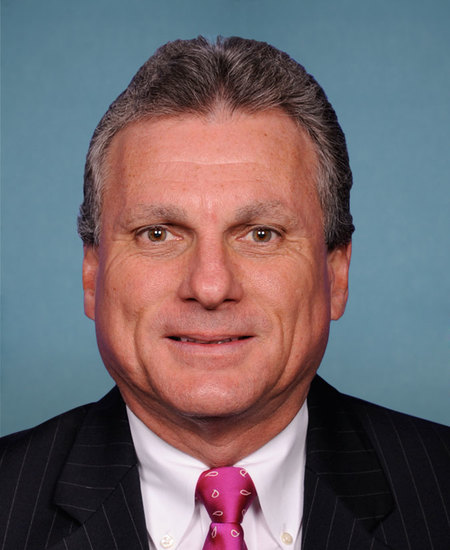
Rep. Earl L. "Buddy" Carter
Sponsored bills
Maddy summaryHRES 706 is a procedural resolution that, if passed, would remove Ms. Omar from the House Committees on the Budget and Education and Workforce. It directly affects her committee assignments for the current congressional term, changing her role in those committees. The resolution was introduced by Rep. Carter and others and referred to the Committee on Ethics for review. This is a purely administrative change to committee membership, not a policy or law.
Maddy summaryThis bill would withhold 50% of federal highway funding from states that issue driver's licenses to people without proof of U.S. citizenship or legal residency status, starting in 2027. To comply, states must ban such licenses and allow local/state officials to share immigration status information with U.S. Customs and Border Protection. The Transportation Secretary would maintain a public database tracking each state's compliance with these requirements. The law directly affects state governments and their access to federal transportation funds, not individual drivers.
Maddy summaryThis symbolic resolution (HRES 700) condemns the assassination of Charlie Kirk, a conservative campus advocate and founder of Turning Point USA, who was killed on September 10, 2025, at Utah Valley University. It expresses the House's deepest condolences to Kirk’s family, including his wife and children, and honors his work promoting civil discourse among college students. The resolution does not create new laws or policies but serves as a formal expression of the House’s stance on the incident. It directly affects no individuals or groups through legislative action, as it is purely a ceremonial statement.
Maddy summaryHRES 702 is a symbolic resolution condemning the September 10, 2025, assassination of Charlie Kirk, founder of Turning Point USA and a conservative political activist. It expresses condolences to his family, praises first responders, and reaffirms the right to peaceful assembly. As a non-binding resolution, it does not create new laws or policies but serves as a formal statement of condemnation. The resolution directly addresses the House of Representatives' stance on this event, with no direct impact on constituents or legislation.
Maddy summaryHR 5316 allows pharmacists and physicians to compound drugs for urgent hospital use during shortages when commercially available alternatives are unavailable. It requires the drug to have appeared on the FDA’s shortage list within 60 days, prescriber certification of failed attempts to obtain alternatives, and specific labeling stating the drug is not FDA-approved. Hospitals must track patient administration records within 7 days and report adverse events to the FDA within 15 days. The bill also expands drug shortage reporting to include sudden demand spikes, not just manufacturing interruptions.
Maddy summaryThe RESULTS Act (HR 5269) changes how Medicare calculates payment rates for clinical diagnostic laboratory tests. It requires Medicare to collect data on private payor rates for widely available non-Advanced Diagnostic Laboratory Tests (non-ADLTs) from a qualifying independent claims data entity (a national nonprofit organization meeting specific criteria) rather than relying on data reported directly by laboratories. For tests where data is unavailable, the bill establishes default payment rates based on previous years' rates adjusted for inflation. The law also requires Medicare to publicly explain payment rates with supporting data, affecting Medicare beneficiaries, clinical laboratories, and private payors that provide services covered by Medicare.
Maddy summaryThe 340B ACCESS Act strengthens oversight of the 340B Drug Pricing Program, which allows safety-net hospitals and clinics to purchase outpatient drugs at discounted prices. The bill clarifies who qualifies as a "patient" for 340B discounts, establishes new requirements for hospital child sites and contract pharmacies, and mandates that covered entities implement sliding fee scales to ensure patient affordability based on income. It creates a claims data clearinghouse to prevent duplicate Medicaid discounts and requires covered entities to report detailed data about drug dispensing. These changes aim to ensure 340B discounts reach intended patients while preventing program misuse and ensuring transparency.
Maddy summaryThis bill directs the U.S. President to identify Pakistani officials responsible for undermining democracy and human rights within 180 days of enactment, then impose Global Magnitsky sanctions on them. It targets senior government, military, or security officials found to have committed gross human rights violations or interfered with democratic processes, such as during Pakistan’s 2024 elections or through constitutional changes. Sanctions would include asset freezes and travel bans, with exceptions for humanitarian aid, UN obligations, and national security activities. The bill expires on September 30, 2030, and aims to pressure Pakistan to uphold democratic norms, human rights, and judicial independence.
Maddy summaryThis resolution (HRES 686) is a symbolic, non-binding measure supporting the designation of September 14-20, 2025, as "Telehealth Awareness Week." It does not create new laws or policies but urges continued telehealth flexibilities beyond September 30, 2025, and promotes awareness of telehealth benefits. The resolution directly affects no specific group, as it serves only to raise public and stakeholder awareness about telehealth access. It references existing Medicare telehealth usage data (e.g., 6.7 million beneficiaries using telehealth in 2024) but does not alter any regulations or funding.