

Maddy summaryHR 7423, the "No Sanctuary Cities Act of 2026," requires states and localities to share immigration status information with federal authorities and prohibits policies that block such sharing. It mandates that jurisdictions notify U.S. Customs and Border Protection 48 hours before releasing individuals in custody (or hold them for 48 hours if release is unscheduled) and obligates DHS to respond to status verification requests. Violating these provisions could result in loss of federal law enforcement grants, with immunity granted to local officers cooperating under the law. The bill directly affects state and local law enforcement agencies by altering information-sharing requirements with federal immigration authorities.
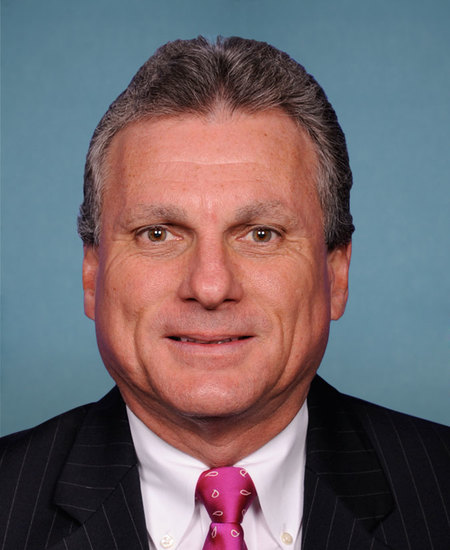
Rep. Earl L. "Buddy" Carter
Sponsored bills
Maddy summaryThe PASTEUR Act of 2026 creates a new government contracting program to incentivize development of new antimicrobial drugs for treating drug-resistant infections. The Health and Human Services Secretary would award contracts to pharmaceutical sponsors meeting specific criteria on clinical benefits, innovation, and public health impact, with annual payments ranging from $75 million to $300 million (adjusted for inflation). Contract requirements include ensuring drug availability, tracking resistance data, promoting appropriate use, and maintaining supply chains. The bill also establishes antimicrobial stewardship programs for hospitals and outpatient facilities and improves surveillance of antimicrobial use and resistance. This legislation aims to address antibiotic resistance by creating financial incentives for new treatments and improving how antimicrobials are used and monitored.
Maddy summaryThis bill modifies federal budget rules for unspent agency funds. It requires federal agencies to allocate 49% of unused funds to the next fiscal year, 49% toward paying the national debt, and 2% for retention bonuses (capped at 10% of an employee's base pay). Agencies must also limit future budget requests to the previous year's amount adjusted for inflation. The bill directly affects all executive branch agencies (excluding the Red Cross), altering how they manage leftover budget authority. It does not create new savings programs for individuals but changes government fiscal management procedures.
Maddy summaryThis bill prevents state or local governments from banning or restricting energy connections (like installation, modification, or access) based on the type or source of energy, such as electricity, natural gas, or renewable fuels. It directly affects consumers choosing energy providers and energy companies seeking to offer services. The key provision prohibits local laws, regulations, or policies that limit energy services sold in interstate commerce, covering all energy types listed in the bill’s definitions. It does not create new programs but limits regulatory authority at the state or local level. The law aims to ensure open access to diverse energy sources without source-based restrictions.
Maddy summaryHR 6410, the Atlantic Coast Shipping Safety Act, requires the Coast Guard to establish minimum width standards for nearshore and offshore shipping lanes along the Atlantic Coast by December 31, 2026. The regulation must follow a specific proposed rule from January 2024, setting a minimum width for designated fairways while excluding certain areas like Traffic Separation Schemes. This rule applies to the geographic region covered in the January 2024 proposal and directly affects commercial shipping vessels operating in those Atlantic Coast waterways. The bill mandates a specific regulatory timeline but does not change existing navigation practices for the excluded waterway types.
Maddy summaryHRES 1026 condemns the violent disruption of a January 18, 2026, worship service at Cities Church in St. Paul, Minnesota, where protesters physically obstructed the service, intimidated congregants, and created a threatening environment. The resolution reaffirms the constitutional right to religious freedom, declares targeting houses of worship an attack on religious liberty, and specifically condemns media figure Don Lemon for participating in the disruption. It commends the Department of Justice for its prompt investigation and urges authorities to protect Americans’ right to worship safely without intimidation. The resolution does not create new law but formally expresses the House’s position on this incident and its alignment with existing federal protections against interference with religious exercise.
Safeguard American Voter Eligibility Act or the SAVE America Act This bill requires individuals to provide documentary proof of U.S. citizenship when registering to vote, and requires photo identification to vote, in federal elections. Specifically, the bill prohibits states from accepting and processing an application to register to vote in a federal election unless the applicant presents documentary proof of U.S. citizenship. The bill specifies what documents are considered acceptable proof of U.S. citizenship, such as identification that complies with the REAL ID Act of 2005 that indicates U.S. citizenship. Further, the bill (1) prohibits states from registering an individual to vote in a federal election unless, at the time the individual applies to register to vote, the individual provides documentary proof of U.S. citizenship; and (2) requires states to establish an alternative process to demonstrate U.S. citizenship. Each state must take affirmative steps on an ongoing basis to ensure that only U.S. citizens are registered to vote, which shall include establishing a program to identify individuals who are not U.S. citizens using information supplied by certain sources. Additionally, states must remove noncitizens from their official lists of eligible voters. The bill (1) provides for a private right of action for certain violations, and (2) establishes criminal penalties for certain offenses. Individuals voting in federal elections must present an eligible photo identification document. An individual who votes by absentee ballot must submit a copy of their identification document with both the request for, and the submission of, the absentee ballot.
Maddy summaryThe Trafficking Survivors Relief Act (HR 4323) allows victims of human trafficking to petition courts to vacate convictions for non-violent federal crimes (level A offenses) or expunge arrest records if those offenses were directly related to their trafficking victimization. The bill establishes clear procedures for filing these motions, requires courts to consider testimony from anti-trafficking service providers, and ensures confidentiality for petitioners. It also adds a new "human trafficking defense" that permits defendants to claim duress due to trafficking victimization in criminal cases. The law mandates reports to Congress on implementation, including the number of petitions filed and outcomes, to assess its impact on trafficking survivors.
Maddy summaryThis bill creates a tax credit for businesses selling products made with U.S.-grown cotton. The credit equals 24% of the cotton's market value if processed only in the U.S. or in countries with U.S. trade deals, or 18% for other processing locations. To qualify, cotton must be digitally traced from U.S. farms to finished products and certified by the USDA as meeting origin requirements. It directly affects clothing and textile manufacturers selling qualifying products in the U.S. market.
Maddy summaryHR 7186, the American Family Housing Act, restricts large investment firms from purchasing single-family homes or gaining controlling ownership in companies that own many homes. Specifically, it prohibits any "large-scale company" (defined as an investment firm or private fund with over $100 billion in assets under management) from buying single-family residences or holding more than 49% equity in a company owning over 100 such homes, beginning 100 days after enactment. The bill defines "single-family residence" as a standalone home without shared walls or utilities, excluding condos and co-ops. This directly affects major institutional investors in the housing market, limiting their ability to expand ownership of single-family properties. The law aims to curb institutional investment in residential real estate through these specific financial and ownership restrictions.