

National Nuclear University Research Infrastructure Reinvestment Act of 2021 This bill reauthorizes through FY2026 and expands the Nuclear Energy University Program within the Department of Energy (DOE) that supports university research and training in nuclear science and engineering. For example, the bill expands the program to provide support to universities for revitalizing and upgrading existing nuclear science and engineering infrastructure that support the development of advanced nuclear technologies and applications. In addition, the bill establishes an Advanced Nuclear Research Infrastructure Enhancement Subprogram under which DOE must establish four new research reactors as well as new nuclear science and engineering facilities.
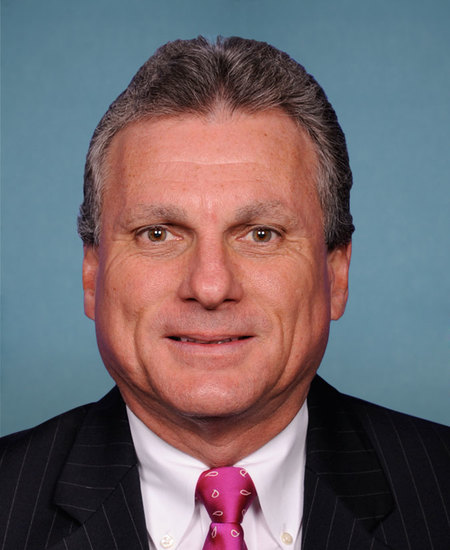
Rep. Earl L. "Buddy" Carter
Sponsored bills
IRS Reduction Act This bill rescinds all unobligated amounts appropriated by the Inflation Reduction Act of 2022 for the improvement of the Internal Revenue Service (IRS). The Department of the Treasury must report on how the IRS plans to improve the efficiency of its services, including the processing of tax returns.
Harriet Tubman Bicentennial Commemorative Coin Act This bill directs the Department of the Treasury to mint and issue 50,000 $5 gold coins, 400,000 $1 silver coins, and 750,000 half-dollar clad coins emblematic of the legacy of Harriet Tubman as an abolitionist. The Secretary may issue coins under this bill only during the period of January 1, 2024, through December 31, 2024. All surcharges received by Treasury from the sale of such coins must be paid equally to the National Underground Railroad Freedom Center in Cincinnati, Ohio, and The Harriet Tubman Home, Inc. in Auburn, New York, for the purpose of accomplishing and advancing their missions.
National World War II Memorial Commemorative Coin Act This bill directs the Department of the Treasury to mint and issue up to 50,000 $5 coins, 400,000 $1 silver coins, and 750,000 half-dollar clad coins in commemoration of the National World War II Memorial in the District of Columbia. The design of the coins shall be emblematic of the memorial and the service and sacrifice of American soldiers and civilians during World War II. All surcharges received from the sale of such coins shall be paid to the Friends of the National World War II Memorial to support the National Park Service in maintaining and repairing the memorial, and for educational and commemorative programs.
This resolution expresses the sense of the House of Representatives that it is necessary to expand the use of nuclear energy in order to (1) meet the growing energy demands of the United States, and (2) promote American nuclear energy leadership while retaining U.S. economic viability in the worldwide nuclear energy marketplace.
National Strategy to Utilize Microreactors for Natural Disaster Response Efforts Act This bill directs the President to develop a national strategy to utilize microreactors to assist with natural disaster response efforts. A microreactor is a nuclear reactor with at most 20 megawatts of thermal energy generating capacity. Specifically, such strategy must include an assessment of the effectiveness of utilizing diesel generators to assist with natural disaster response efforts; a comprehensive, research-based, and long-term discussion of goals, objectives, and priorities for utilizing microreactors instead of diesel generators to assist with such efforts; a Department of Defense analysis regarding the use of such microreactors to assist with such efforts; recommendations on how the Nuclear Regulatory Commission may expedite the approval of designs for microreactors and issuing licenses; an assessment of the challenges and barriers to deploying microreactors to assist with such efforts and solutions; and recommendations on how to utilize microreactors as charging stations for electric vehicles in the event of a mass evacuation resulting from a natural disaster.
Restore Protections for Dialysis Patients Act This bill specifies that private health insurers may not limit, restrict, or condition benefits for renal dialysis services for individuals with end-stage renal disease as compared to other types of benefits for other medical conditions under Medicare secondary payer rules.
Maddy summaryHRES 1297 is a non-binding House resolution designating the week beginning November 7, 2022, as "National Pregnancy Center Week." It recognizes community-supported pregnancy centers - nonprofit organizations providing free services like pregnancy tests, counseling, ultrasounds, and material support - to individuals facing pregnancy decisions. The resolution highlights these centers' role in serving over 2 million people annually through local, volunteer-driven support. As a symbolic gesture, it does not create new policies or alter funding, focusing solely on acknowledging their work.
Preserving Access to Home Health Act of 2022 This bill restricts the Centers for Medicare & Medicaid Services (CMS) from decreasing payments for Medicare home health services based on certain adjustments until 2026. Current law requires the CMS to make certain permanent and temporary payment adjustments under the Medicare prospective payment system for home health services based on behavioral assumptions for 2020 through 2026. The bill restricts the CMS from making adjustments that decrease payments until 2026; the CMS must also ensure that any such necessary decreases are made before 2032.
Spectrum Innovation Act of 2022 This bill addresses auctions of, and other matters related to, portions of the electromagnetic spectrum allocated for federal use. The bill also establishes grants for and otherwise modifies provisions concerning next generation 9-1-1 systems (i.e., interoperable Internet Protocol-based systems for receiving 9-1-1 calls). The bill extends to March 31, 2024, the authority of the Federal Communications Commission (FCC) to auction and license electromagnetic spectrum. (Under current law, the authority expires on September 30, 2022.) Additionally, the bill establishes a process for auctioning specified parts of the spectrum currently allocated for federal use. The Office of Management and Budget must transfer certain funding to federal entities for planning activities related to reallocating and auctioning spectrum while the National Telecommunications and Information Administration (NTIA) and the Executive Office of the President must oversee the planning. The Department of Commerce must, informed by the planning, identify the spectrum to auction. Further, the bill addresses shared use of spectrum bands by federal and nonfederal users. For example, the NTIA must implement an incumbent informing capability system to manage harmful interference when nonfederal users and incumbent federal entities share spectrum. The bill also establishes the Public Safety and Secure Networks Fund and directs a portion of spectrum auction proceeds to the fund for, among other purposes, reimbursing telecommunications providers for replacing equipment that poses risks to national security and safety.