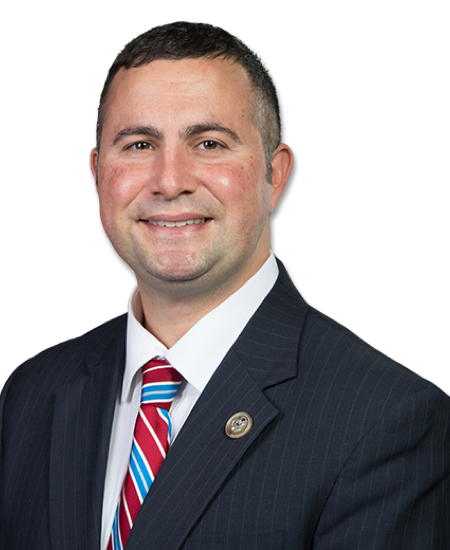
Photo of Darren Soto
D United States House · District 9 · Florida On the 2026 ballot

Rep. Darren Soto

Compare
Total votes
2,837
all sessions
Attendance
100%
10 missed
Higher than 96% of chamber peers
With party
96%
of cast votes
Lower than 84% of chamber peers
Bipartisan score
2%
crosses aisle rarely
Higher than 83% of chamber peers
Sponsored
1,951
bills & resolutions
Higher than 84% of chamber peers
Committees
6
assignments
1,951 bills and resolutions

Sponsored bills

Total
1,951
Primary
75
Co-sponsor
1,876
This page
1,951
matching current filters
Primary HR 1348
In committee · Indiana House · Lead sponsor
Venezuelan Adjustment Act

Maddy summaryHR 1348, the Venezuelan Adjustment Act, allows certain Venezuelans already in the U.S. to apply for permanent residency. It directly affects Venezuelans who entered the U.S. before December 31, 2021, and have lived there continuously for at least one year, plus their spouses and children. Key provisions include waiving specific inadmissibility grounds (like some criminal convictions), granting work authorization after 180 days of pending applications, and halting removal proceedings during processing. The bill also ensures no reduction in available immigrant visas and establishes a record of permanent residence upon approval.

In committee Feb 13, 2025 0 co-sponsors
Co-sponsor HR 1251
In committee · Indiana House · Co-sponsor
All Access Act of 2025

Maddy summaryHR 1251, the All Access Act of 2025, requires Members of Congress (House members and Senators) to present official identification to enter federal public buildings during regular business hours. For access outside these hours, Members must notify the building head at least 12 hours in advance. The bill establishes clear, procedural access rules for congressional members but does not create new policies or affect the public. It is a straightforward procedural measure governing Member access to federal facilities.

In committee Feb 13, 2025 1 co-sponsor
Co-sponsor HR 1229
In committee · Indiana House · Co-sponsor
United States-Israel Defense Partnership Act of 2025

United States-Israel Defense Partnership Act of 2025 This bill requires or authorizes certain actions to increase defense-related cooperation between the United States and Israel. Specifically, the bill requires the Department of Defense (DOD) to establish a cooperative program, with the concurrence of Israel's Ministry of Defense (MOD), to develop and deploy advanced technologies for countering unmanned systems that threaten the United States and Israel; establish in Israel an office of the Defense Innovation Unit (an organization that focuses on rapidly fielding and scaling commercial technology across the U.S. military); and seek to engage Israel's MOD on the ascension of Israel into the national technology and industrial base (currently defined in law as the persons and organizations engaged in research, development, production, integration, services, or information technology activities conducted within the United States, the United Kingdom, Australia, New Zealand, and Canada). The bill authorizes DOD, upon request of Israel's MOD, to jointly conduct research, development, test, and evaluation (RDT&E) of emerging technologies such as artificial intelligence and robotics to meet defense challenges. Additionally, the bill extends the authority for DOD to (1) carry out RDT&E on a joint basis with Israel to establish anti-tunnel and counter unmanned aerial systems capabilities through 2028, and (2) transfer defense articles intended for use as reserve stocks for Israel through January 1, 2029.

In committee Feb 12, 2025 1 co-sponsor
Co-sponsor HR 1196
In committee · Indiana House · Co-sponsor
Protect U.S. National Security Act

Maddy summaryHR 1196 prohibits using federal funds to eliminate the U.S. Agency for International Development (USAID) as an independent agency, as defined by law. It requires the Secretary of State to certify annual compliance with this restriction to the House Foreign Affairs and Senate Foreign Relations committees. The bill directly affects USAID's operational status and U.S. foreign aid programs by preventing congressional or executive actions that would dismantle or merge the agency, maintaining its role in U.S. international development efforts.

In committee Feb 11, 2025 1 co-sponsor
Co-sponsor HR 1189
In committee · Indiana House · Co-sponsor
National Plan for Epilepsy Act

Maddy summaryHR 1189, the National Plan for Epilepsy Act, creates a coordinated federal strategy to address epilepsy through a National Plan for Epilepsy. The plan requires the Secretary of Health and Human Services to establish an annual assessment, maintain a diverse Advisory Council (including people with epilepsy, caregivers, and experts), and coordinate research and care across federal agencies. Key provisions include annual progress reports to Congress, data sharing between agencies, and recommendations to improve diagnosis, treatment access, and reduce epilepsy-related disparities. The plan expires December 31, 2035, and directly affects the estimated 3.4 million people in the U.S. living with epilepsy and their caregivers.

In committee Feb 11, 2025 1 co-sponsor
Co-sponsor HR 1197
In committee · Indiana House · Co-sponsor
PREEMIE Reauthorization Act of 2025

Maddy summaryThe PREEMIE Reauthorization Act of 2025 extends federal research funding for preterm birth prevention and care through fiscal years 2025-2029, replacing the prior 2019-2023 period. It requires the HHS Secretary to establish an interagency working group within 18 months and mandates a National Academies study on preterm birth costs, risk factors, and prevention strategies. The study must assess neonatal intensive care costs, long-term family expenses, and opportunities for early detection and support. It also analyzes targeted research for at-risk pregnancies, state program best practices, and precision medicine approaches starting in pregnancy. This bill directly affects preterm infants, their families, and federal health agencies through these research and coordination mechanisms.

In committee Feb 11, 2025 1 co-sponsor
Co-sponsor HR 1101
In committee · Indiana House · Co-sponsor
Taxpayer Data Protection Act

Maddy summaryThis bill restricts access to Treasury payment systems (including the Bureau of the Fiscal Service) to only Treasury employees with a "fully successful" performance rating and at least one year of civil service, or contractors/outsiders with security clearances, required privacy/cybersecurity training, ethics agreements, and no conflicts of interest. It treats non-government users accessing these systems as government employees for ethics rules and defines specific actions (like stopping payments) as "personal and substantial participation" in government matters. The Treasury Inspector General must investigate any unauthorized access within 30 days and report to Congress, detailing the breach, security risks, and any halted payments. The bill directly affects Treasury staff, contractors, and any external entities accessing federal payment systems.

In committee Feb 11, 2025 1 co-sponsor
Co-sponsor HR 220
In committee · Indiana House · Co-sponsor
Veterans Infertility Treatment Act of 2025

Maddy summaryThis proposed bill (HR 220) would expand VA healthcare benefits to cover infertility treatments like in vitro fertilization (IVF) and fertility preservation services for veterans with infertility or at risk of infertility (e.g., due to medical treatments), and their partners. It limits VA coverage to three successful IVF cycles or ten attempts, requires consent from veterans, partners, and donors, and allows use of donated eggs or embryos. Partners would receive travel reimbursement as if they were veterans, and temporary rules during implementation will immediately allow partners to access care without marriage requirements. The bill clarifies VA isn’t required to cover maternity care beyond existing rules and defers full implementation until VA issues final regulations within one year of enactment.

In committee Feb 11, 2025 1 co-sponsor
Co-sponsor HRES 124
In committee · Indiana House · Co-sponsor
Expressing continued support for the people of Puerto Rico, and urging the Federal Government to expedite the rebuilding of Puerto Rico's electrical grid.

Maddy summaryHRES 124 is a non-binding House resolution expressing support for Puerto Rico and urging federal agencies to accelerate rebuilding the island's electrical grid. It highlights ongoing power outages, high costs, and slow progress since Hurricane Maria (2017), despite billions in allocated funding. The resolution calls on the President and federal agencies to take immediate action to address the grid crisis, which affects over 3 million residents and hinders economic growth. It does not provide new funding or create legal requirements, but serves as a symbolic call for prioritized federal action on this infrastructure need.

In committee Feb 10, 2025 1 co-sponsor
Co-sponsor HR 1175
In committee · Indiana House · Co-sponsor
Blind Americans Return to Work Act of 2025

Blind Americans Return to Work Act of 2025 This bill requires the Social Security Administration to carry out a demonstration project during which blind Social Security Disability Insurance (SSDI) beneficiaries receive reduced benefits commensurate with income above certain thresholds. Under current law, only individuals who earn under a specified monthly income, known as the substantial gainful activity (SGA) threshold, are considered disabled and thereby eligible for SSDI benefits. For blind workers, this limit is $2,700 per month in 2025. SSDI beneficiaries may earn beyond the SGA threshold for a limited period of time, known as the trial work period , before their benefits are suspended and ultimately terminate. The bill establishes a 20-year demonstration project during which individuals who are entitled to SSDI benefits by reason of blindness and who earn above the SGA threshold continue to receive benefits at an amount gradually reduced commensurate with their earnings beyond a specified amount. During this period, blind workers’ SSDI benefits must be reduced by $1 for every $2 that a worker earns above the sum of (1) the SGA threshold, and (2) the worker’s expenses reasonably attributable to their work. The SGA threshold may not be used to determine whether an individual is disabled during this period, and blind workers’ SSDI benefits may not be terminated due to work-related earnings. The trial work period also must not apply.  After 10 years, affected beneficiaries may opt out of the modified benefits structure.

In committee Feb 10, 2025 1 co-sponsor
Showing 481 to 490 of 1,951 bills
Previous 1 … 48 49 50 … 196 Next