

Maddy summaryHR 7122, the Ensuring Consistency in Nutrition Labels Act, requires food manufacturers to ensure their product labels accurately reflect nutrient content within a 5% tolerance. If actual nutrient levels exceed the declared amount by more than 5% for specific nutrients (like calories or fat), the food would be considered "misbranded" under federal law. The bill mandates the FDA to update its labeling regulations within 60 days of enactment to implement this 5% deviation rule. This directly affects food producers who must comply with stricter labeling accuracy standards for nutrient declarations on packaging.
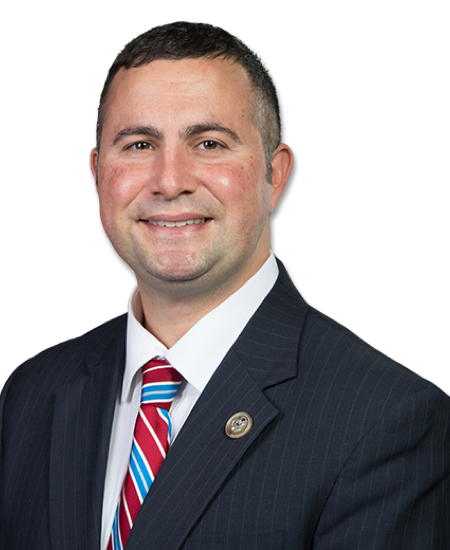
Rep. Darren Soto
Sponsored bills
Maddy summaryThe Healthcare Reinvestment Act repeals and rescinds funds previously allocated for healthcare under a prior law, redirecting them to extend federal tax credits that help people afford health insurance. This extension ensures eligible individuals can continue receiving these credits without annual budget constraints, maintaining access to financial assistance for health coverage. The bill also requires the Treasury to publish annual reports on fund usage and undergo audits to ensure transparency and accountability in how the funds are applied.
Maddy summaryThe Find It Early Act requires most health insurance plans, Medicare, Medicaid, TRICARE, and VA benefits to cover certain breast cancer screenings without cost-sharing for specific at-risk groups. It affects individuals at increased breast cancer risk (as determined by medical guidelines), those with dense breast tissue (as defined by the American College of Radiology), and others requiring screening due to factors like age, race, ethnicity, or family history. The bill mandates coverage for various screening methods including mammograms, ultrasounds, MRI, and other technologies at frequencies recommended by the National Comprehensive Cancer Network. This requirement takes effect for plan years beginning January 1, 2026, removing financial barriers to early detection.
Maddy summaryHRES 996 is a resolution introduced by multiple House members to impeach Kristi Lynn Arnold Noem, the Secretary of Homeland Security, for alleged violations of law and the Constitution. It outlines three articles of impeachment: obstructing congressional oversight by denying access to detention facilities and withholding funds, violating public trust through warrantless arrests and excessive force (including tear gas on children), and self-dealing by awarding federal contracts to associates without competitive bidding. If approved by the House, this resolution would formally charge Noem, triggering a Senate trial to determine her removal from office. The resolution itself does not enact new policy but initiates the constitutional impeachment process against a sitting Cabinet official.
Maddy summaryThis symbolic House resolution expresses U.S. congressional support for Iranian protesters demanding democracy and human rights. It condemns the Iranian regime's violent suppression of protests, including killings, mass arrests, and internet restrictions, while urging the regime to release political prisoners and restore communication access. The resolution reaffirms the Iranian people's right to self-determination through free elections and echoes a 2023 resolution (HCR 7) that similarly praised protesters. As a non-binding expression of support, it does not impose new policies or alter U.S. government actions.
Maddy summaryThis resolution (HRES 985) expresses the House of Representatives' opposition to declawing cats for cosmetic or convenience reasons, not for medical necessity. It defines "declawing" broadly to include any procedure that disables a cat’s claws (such as surgical removal or tendon cutting), emphasizing that these practices cause long-term pain and behavioral issues. The resolution specifically supports banning elective declawing while allowing medically necessary procedures to address existing health conditions. It urges states without such bans to consider legislation, citing widespread support from veterinary organizations and existing bans in 7 U.S. states and numerous municipalities.
Maddy summaryThis bill would increase the base pay for Federal Bureau of Prisons correctional officers by 35 percent, replacing their current base rate for all pay calculations (including retirement and locality adjustments). It applies to officers whose duties involve inmate custody, control, or direct custodial contact, including certain supervisory staff and lower-grade Bureau of Prisons employees with similar duties. The pay increase is capped at the Executive Schedule level V rate and would expire after five years unless a Department of Justice Inspector General review finds progress in reducing non-custodial staff use for custodial duties and excessive overtime. The review, required 180 days before expiration, would assess impacts on recruitment, retention, and institutional safety.
Maddy summaryHR 6088, the *Restoring Food Security for American Families and Farmers Act of 2025*, repeals specific sections (10101-10108) from a prior reconciliation law. This action revives previous provisions related to food security programs that were modified by those repealed sections. The bill directly affects federal food assistance and agricultural support programs by restoring their prior legal framework. It does not create new policies but reverses recent changes to existing food security measures.
Maddy summaryThis bill updates federal nutrition law to include Puerto Rico in the Supplemental Nutrition Assistance Program (SNAP), allowing it to transition from its current funding method to the same SNAP benefits available to U.S. states. Puerto Rico must submit a 180-day plan to the USDA detailing its transition to SNAP, with approval required within another 180 days. The transition period lasts up to 5 years from the bill's effective date, during which Puerto Rico would continue receiving block grants while preparing for full SNAP participation. This change directly affects Puerto Rico's 1.4 million residents who currently receive nutrition assistance under a separate funding structure.
Maddy summaryHR 909, the Crime Victims Fund Stabilization Act of 2025, modifies how funds from the False Claims Act are deposited into the Crime Victims Fund. It specifies that from 2025 through 2029, certain False Claims Act proceeds (specifically those for qui tam plaintiff payments and government damage reimbursements) cannot be deposited into the fund. This change directly affects the composition of the Crime Victims Fund by excluding these specific revenue streams during the specified period. The bill does not create new benefits or alter victim services; it only adjusts fund allocation rules for existing False Claims Act revenues.