

Maddy summaryThis bill (HR 7313) designates the U.S. Postal Service facility at 3135 1st Avenue North in St. Petersburg, Florida, as the "Poul Hornsleth Post Office." It updates all federal references - such as maps, documents, and regulations - to use the new name for this specific location. The bill has no policy impact beyond renaming the post office and does not affect any individuals or create new requirements. It is a procedural measure to honor Poul Hornsleth through official designation.
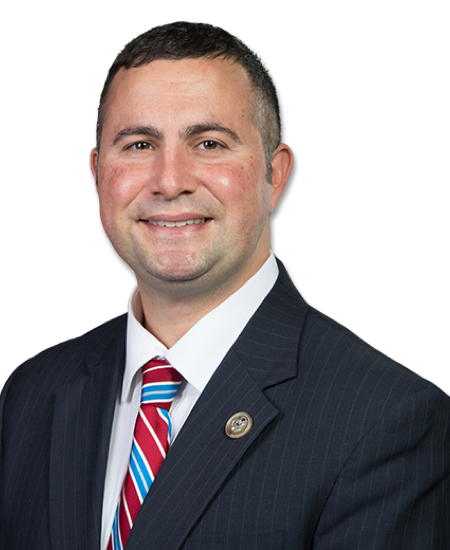
Rep. Darren Soto
Sponsored bills
Maddy summaryHR 7299 designates the U.S. Postal Service facility at 2600 Michigan Avenue in Kissimmee, Florida, as the "Robert Guevara Post Office Building." This bill directly affects the postal facility by changing its official name in all federal references. The key provision updates all federal documents, maps, and records to reflect the new name. It is a procedural bill with no policy changes or funding impacts.
Maddy summaryHJRES 144 is a congressional disapproval resolution targeting a specific rule issued by the Department of Veterans Affairs (VA) on December 31, 2025, which addressed "Reproductive Health Services" (90 Fed. Reg. 61310). This resolution directs Congress to disapprove the VA rule under Chapter 8 of Title 5, U.S. Code, meaning the rule would have no legal effect if passed. The bill directly affects the VA's implementation of reproductive health services for veterans, as it seeks to nullify the agency's existing policy. This is a procedural measure, not a substantive policy change, aimed solely at blocking the VA's rule through congressional action.
Maddy summaryHR 659, the Veterans Law Judge Experience Act of 2025, changes how the Board of Veterans’ Appeals appoints new judges. It requires the Board’s Chairman to prioritize candidates with at least three years of legal experience in areas related to veterans' laws when recommending people to the Secretary. This directly affects individuals applying for Veterans Law Judge positions by making specific legal experience a key factor in appointments. The bill does not alter veterans' benefits but aims to ensure judges have relevant legal expertise in handling veterans' cases.
Maddy summaryHR 7233, the QR Act, requires U.S. Immigration and Customs Enforcement (ICE) and U.S. Customs and Border Protection (CBP) officers engaged in enforcement activities to wear a scannable QR code on their uniform. When scanned, the code directs to a public DHS website displaying the officer’s name, badge number, agency, unit, active status with timestamp, and a secure complaint portal for public use. The website may optionally show a photo but cannot display personal contact information, and must also show aggregated, non-identifiable complaint data for each officer. This bill directly affects ICE and CBP officers during enforcement interactions and aims to provide the public with immediate, verifiable information about officers they encounter.
Maddy summaryHRES 1018 is a resolution calling for the U.S. government and international partners to prioritize women's rights in Haiti's crisis response. It specifically demands ensuring at least 30% of Haiti's leadership positions (including security, humanitarian, and election roles) are held by women, funding services for gender-based violence survivors, and requiring gender-disaggregated data collection in all aid programs. The resolution also urges rebuilding U.S. Women, Peace, and Security programs and mandates that all policies address women's distinct needs in Haiti's transition. This resolution directly affects U.S. foreign policy implementation and Haiti's transitional government, emphasizing that women's inclusion is critical for stability.
Maddy summaryHR 7179, the Historic Infrastructure Management and Jobs Training Act, creates a competitive grant program to fund workforce training in historic preservation. The program provides grants to states, tribes, nonprofits, and educational institutions for projects developing specialized skills like historic masonry, timber framing, and archival conservation for preserving culturally significant properties. Priority is given to projects serving high-unemployment areas and underserved communities, with grantees required to track participants and certification completions. The bill directly supports workers entering preservation trades and organizations managing historic resources.
Maddy summaryThis bill amends the Department of Defense's Transition Assistance Program (TAP) and the Department of Veterans Affairs' Solid Start Program to enhance mental health support during military-to-civilian transitions. It requires TAP to provide specific information on suicide risk factors (including depression, homelessness, and relationship strain), treatment options for conditions like PTSD and substance abuse, and the impact of losing social support systems. The Solid Start Program must now assist veterans in enrolling in VA healthcare and educate them about available mental health resources. The Secretaries of Defense and Veterans Affairs must jointly report to Congress within one year on the materials developed under these changes.
Maddy summaryHR 7137, the Shutdown Fairness Act, requires federal agencies to pay covered employees (including most federal workers and military personnel) and covered contractors their regular pay during government shutdowns. It appropriates funds from the Treasury to cover standard employee compensation and contractor payments for work performed during a lapse in regular appropriations, ensuring pay continues without delay (within 7 days if a shutdown is ongoing at enactment) and aligns with regular pay schedules. The bill applies only to individuals employed or with accepted offers before the shutdown began and mandates that these payments be charged to future appropriations. It does not change agency obligations under existing contracts or authorize new spending beyond the specified shutdown period.
Maddy summaryHR 7145 defines "essential health systems" as hospitals serving large numbers of Medicaid and low-income patients, specifically targeting non-Federal, nonprofit, or government-run hospitals that meet one of three criteria for at least two of the past three years (e.g., high Medicaid patient percentage, high uncompensated care, or top 16th percentile in state rankings for low-income care). The bill requires MACPAC to annually publish an "essential health system index" ranking qualifying hospitals nationally, by state, and within local areas, using data from Medicare reporting. Hospitals designated as essential health systems receive a five-year designation, renewable if they maintain eligibility. This framework aims to identify facilities providing critical community care for vulnerable populations through standardized metrics.