

Beaches Environmental Assessment and Coastal Health Act of 2025 or the BEACH Act of 2025 This bill reauthorizes through FY2029 and expands an existing program of the Environmental Protection Agency (EPA) that awards grants to states and local governments to (1) monitor the water quality of coastal recreational waters adjacent to beaches or similar points of access that are used by the public; and (2) notify the public, local governments, and the EPA when the water is not safe for recreational activities. Specifically, the bill expands the program to allow the EPA to award grants for identifying sources of contamination (i.e., pathogens) for coastal recreation waters. It also allows grants to be used for monitoring and notification of contamination in (1) shallow waters upstream from recreational waters, and (2) recreational waters on beaches.
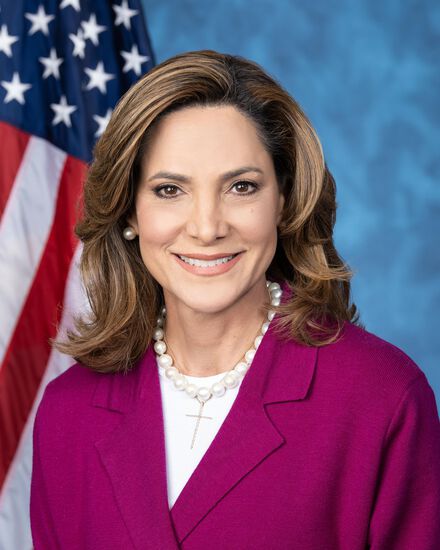
Rep. Maria Elvira Salazar
Sponsored bills
Maddy summaryHR 578, "Sarah’s Law," requires mandatory detention for certain non-citizens (aliens) charged with crimes resulting in death or serious bodily injury. It directly affects non-citizens facing such charges and their victims' families. Key provisions mandate that the Department of Homeland Security detain these individuals immediately and notify victims or their closest living relatives (like parents or spouses) about the alien’s identity, immigration status, custody details, and removal efforts. The bill adds specific categories of non-citizens to the mandatory detention list, including those whose visas were revoked or who are deportable for prior immigration violations. This creates a formal process for victim notification while expanding detention requirements under immigration law.
Maddy summaryThe HONDURAS Act would authorize the U.S. President to suspend all U.S. financial assistance to Honduras, including military aid under the 1954 bilateral agreement, if Honduras refuses to host U.S. military and civilian personnel at Soto Cano Air Base. This suspension would take effect after the redeployment of U.S. personnel due to Honduras' refusal or unwillingness to host them. The bill directly affects the Honduran government by potentially cutting off all U.S. aid, including military support. The key mechanism is a conditional trigger based on Honduras' refusal to host U.S. personnel, leading to automatic aid suspension.
Maddy summaryHR 520 allows law enforcement agencies to use Byrne JAG funds for programs specifically targeting the demand behind sex trafficking, such as initiatives aimed at reducing the market for commercial sex acts involving trafficked individuals. This bill amends existing federal funding rules to explicitly authorize these funds for "programs to combat human trafficking (including programs to reduce the demand for trafficked persons)." It directly affects state and local law enforcement agencies that receive Byrne JAG grants by expanding how they can allocate those resources. The key change is creating a dedicated funding category for demand reduction efforts, moving beyond solely supporting victim services or investigations.
Maddy summaryHR 470, the Red Snapper Act of 2025, blocks the U.S. Secretary of Commerce from implementing area or bottom closures in the South Atlantic for snapper-grouper fisheries until two conditions are met: the completion of the South Atlantic Great Red Snapper Count survey and integration of its data into the next official stock assessment. This directly affects recreational and commercial fishermen in the South Atlantic region, particularly in Florida, where red snapper fishing supports significant economic activity ($14 billion annually). The bill aims to delay management changes pending new scientific data to avoid potential economic harm during a period of record fish stock abundance. It does not alter fishing seasons or quotas but specifically targets the timing of area closure decisions.
Maddy summaryHR 485, the Muhammad Ali Congressional Gold Medal Act, authorizes Congress to award a gold medal in recognition of Muhammad Ali's lifetime contributions to sports, civil rights, and humanitarian causes. The bill directs the Treasury Secretary to strike the medal and present it to Ali's widow, Lonnie Ali, following his death in 2016. It also permits the sale of bronze duplicates to cover costs, with proceeds going to the U.S. Mint. This is a commemorative measure with no policy impact, solely honoring Ali's legacy through a symbolic medal.
Maddy summaryHR 506, the "Security First Act," allocates $110 million annually (2025-2028) for border security grants to state/local law enforcement through the Operation Stonegarden program, funded by a new trust fund using seized monetary instruments at the border. It requires the State Department to assess whether major Mexican cartels (like Sinaloa and Jalisco New Generation) and gangs (like Tren de Aragua) meet criteria for foreign terrorist organization designation. The bill mandates a detailed technology needs analysis by DHS within one year, evaluating border security tech gaps, new surveillance systems, and infrastructure to address threats like drug trafficking and human smuggling. This analysis must be updated biannually and includes assessing privacy impacts, staffing needs, and coordination with Mexican law enforcement.
Maddy summaryHR 450, the FORCE Act, prevents the U.S. government from removing Cuba from the State Sponsors of Terrorism list. It requires the President to make a specific determination under the 1996 LIBERTAD Act before Cuba can be removed. The bill directly affects Cuba's international designation status and U.S. foreign policy actions toward the country. It does not change existing law but blocks any removal until the specified determination is made. The provision applies to both the President and the Secretary of State.
Maddy summaryThe Combating Global Corruption Act of 2025 requires the State Department to annually rank all foreign countries into three tiers based on anti-corruption efforts: Tier 1 (full compliance with minimum standards), Tier 2 (making progress), and Tier 3 (minimal or no efforts). Countries ranked Tier 3 trigger potential sanctions under the Global Magnitsky Act against corrupt foreign officials and entities. The bill also mandates U.S. embassies in Tier 2 and Tier 3 countries to appoint anti-corruption liaisons to coordinate U.S. anti-corruption programs. This directly affects foreign governments' international standing and targets specific individuals for sanctions based on documented corruption.
Maddy summaryThe REVOCAR Act of 2025 prohibits U.S. persons (including citizens, companies, and individuals in the U.S.) from investing in or conducting business with Venezuela's energy sector - specifically targeting Petroleos de Venezuela, S.A. (PDVSA) and the Maduro regime - until the regime publicly recognizes the results of Venezuela's July 28, 2024, presidential election. The bill bars transactions involving energy sector goods, services, or finance and requires the Treasury Secretary to implement it using existing sanctions authorities. Prohibitions end automatically by December 31, 2027, or sooner if the President certifies Maduro has accepted the election outcome. The President may grant limited 90-day waivers for national security reasons, but must submit detailed reports to Congress explaining the rationale and impact on Venezuela's democratic transition.