

Sustainable Skies Act This bill allows a business-related tax credit through 2031 for each gallon of sustainable aviation fuel used by a taxpayer in the production of a qualified mixture (i.e., a mixture of sustainable aviation fuel and kerosene that is sold for use in certain U.S. aircraft). The bill generally defines sustainable aviation fuel as liquid fuel that consists of synthesized hydrocarbons, meets certain recognized international standards, is derived from biomass, waste streams, renewable energy sources, or gaseous carbon oxides, is not derived from palm fatty acid distillates, and achieves at least a 50% life cycle greenhouse gas emissions reduction in comparison with petroleum-based jet fuel. To be eligible for such credit, a taxpayer must meet certification requirements showing that the sustainable aviation fuel conforms with one of the life cycle greenhouse gas emissions reduction tests set forth in this bill.
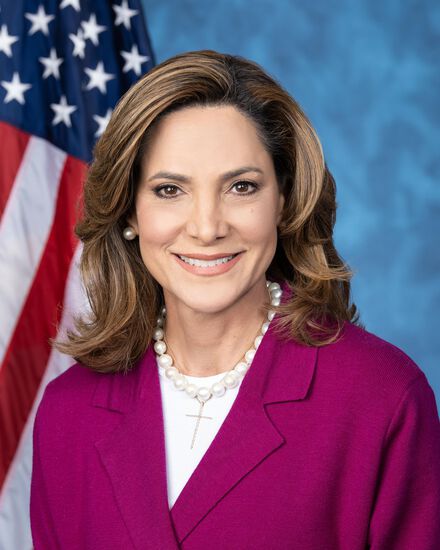
Rep. Maria Elvira Salazar
Sponsored bills
Shark Fin Sales Elimination Act of 20 21 This bill addresses the sale of shark fins and the inclusion of rays and skates in the Seafood Traceability Program. The Seafood Traceability Program has data reporting and recordkeeping requirements at the time of entry for imported fish or fish products entered into U.S. commerce. The bill makes it illegal to possess, buy, or sell shark fins or any product containing shark fins, except for certain dogfish fins. A person may possess a shark fin that was lawfully taken consistent with a license or permit under certain circumstances. Penalties are imposed for violations under the Magnuson-Stevens Fishery Conservation and Management Act. The Department of Commerce must revise its regulations to include rays and skates as species that are subject to the Seafood Traceability Program.
Toxic Exposure in the American Military Act or the TEAM Act This bill requires the Department of Veterans Affairs (VA) to expand health care, benefits, and resources for veterans with conditions related to exposure to toxic substances. Specifically, the bill expands eligibility for VA hospital care, medical services, and nursing home care to include veterans who (1) were exposed to toxic substances, radiation, or other conditions, and were awarded certain medals (e.g., the Armed Forces Service Medal); (2) are eligible for inclusion in the Airborne Hazards and Open Burn Pit Registry; or (3) have been identified by the Department of Defense to have been possibly exposed during service to an open burn pit, toxic substance, or specified hazardous sites. (A burn pit is an area used for burning solid waste in open air without equipment.) The bill establishes a presumption of service-connection for diseases associated with exposure to certain toxic substances and that become manifest within a certain time period; the VA must specify such diseases and requirements through regulations. Under a presumption of service-connection, specific conditions diagnosed in certain veterans are presumed to have been caused by the circumstances of their military service. Health care benefits and disability compensation may then be awarded. The bill also requires the VA to take specified actions to (1) evaluate scientific evidence regarding associations between diseases and exposure to toxic substances; (2) train its health care personnel on identifying, treating, and assessing illnesses related to such exposure; and (3) provide resources to veterans exposed to toxic substances.
This bill designates the community-based outpatient clinic of the Department of Veterans Affairs in Middleburg, Florida, as the A.K. Baker VA Clinic.
Puerto Rico Statehood Admission Act This bill establishes a process for the admission of Puerto Rico into the union as a state, on an equal footing with all other states, based on a majority vote of the people of Puerto Rico.
Trillion Trees Act This bills establishes a variety of requirements and incentives to plant trees and conduct other land management practices for the purposes of capturing and storing carbon in domestic and international trees and forests. Additionally, the bill provides incentives to research or develop other carbon sequestration tools. Specifically, the bill directs the Department of Agriculture (USDA) to set targets to increase forest carbon stock through January 1, 2100, for the purposes of sequestering and storing carbon in U.S. forests. It also establishes and provides funding for the Trillion Trees Challenge Fund to provide grants to nonfederal entities for activities related to reforestation efforts on public or private lands. In addition, it raises the cap on the Reforestation Trust Fund to enhance forest health in the National Forest System and requires the USDA to establish a Tree City USA Grant Program. The bill also allows the U.S. Agency for International Development to enter into an agreement with a nonprofit organization to establish an International Forest Foundation to promote reforestation and prevent deforestation. Additionally, it establishes requirements and incentives to address seedling shortages and support nurseries. Finally, the bill provides market incentives to research or develop other carbon sequestration tools relating to biochar, sustainable building practices, biochemical and bioplastic products, and biomass energy.
This resolution expresses support for the goals and ideals of PCOS Awareness Month. Polycystic ovary syndrome (PCOS) is caused by a hormone imbalance. Symptoms can include infertility, weight gain, excess hair growth, and acne.
This bill authorizes the Department of Education to provide grants for public awareness education programs on the history of the treatment of Italian Americans during World War II. In awarding such grants, priority shall be given to Italian American historical and cultural organizations.
Interagency Committee on Women's Business Enterprise Act of 2021 This bill revises the duties, membership, and reporting requirements of the Interagency Committee on Women's Business Enterprise. These changes include striking a requirement that the committee develop and promote new public sector programs and plans to foster women's business enterprise and, instead, requiring it to monitor the plans, programs, and operations of federal government departments and agencies to identify barriers to new business formation by women entrepreneurs.
This resolution requires an analytical statement to be included in committee reports on whether, and the extent to which, the increased budget authority, outlays, or revenue produced by the enactment of a bill or joint resolution may have an inflationary impact on prices and costs in the operation of the national economy and the purchasing power of low- and middle-income families.