

Maddy summaryThe International Human Rights Defense Act of 2023 creates a permanent Special Envoy at the State Department to coordinate U.S. efforts against discrimination and violence targeting LGBTQI+ people globally. The bill requires the development of an annual global strategy to address criminalization, discrimination, and violence based on sexual orientation, gender identity, or sex characteristics. It also mandates that U.S. country reports on human rights practices include detailed information about laws and practices affecting LGBTQI+ communities. The legislation authorizes U.S. foreign assistance programs to support LGBTQI+ rights through health services, legal protections, and community capacity building. This bill aims to strengthen U.S. diplomatic engagement on LGBTQI+ rights as part of broader human rights policy.
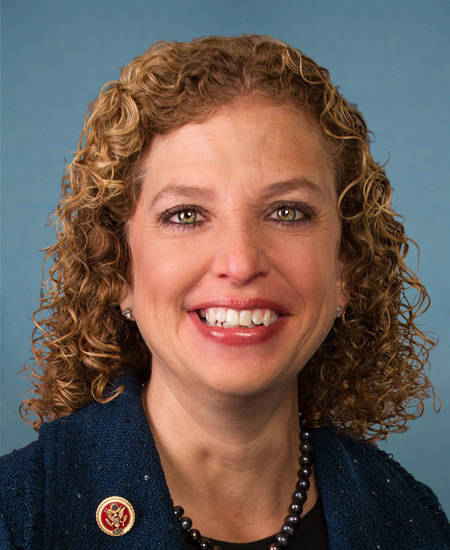
Rep. Debbie Wasserman Schultz
Sponsored bills
Protect Our Workers from Exploitation and Retaliation Act or the POWER Act This bill expands protections for non-U.S. nationals ( aliens under federal law) who are victims of crimes or serious workplace violations. U visas (nonimmigrant visas for certain crime victims) shall be available to individuals who have suffered substantial harm related to workplace claims. The Department of Homeland Security (DHS) may allow a non-U.S. national to work and temporarily remain in the United States if the individual (1) has filed for a U visa or T visa (nonimmigrant visas for victims of human trafficking), or (2) has filed or is a material witness to a workplace claim or civil claim arising from criminal activity and is helpful to authorities investigating the claim. The bill removes direct numerical limitations on U visas. A notice to an individual to appear at removal proceedings must contain specified certifications, if the individual was taken (1) at a facility where a workplace claim has been filed, or (2) as a result of information provided in retaliation against individuals exercising their legal rights. Specifically, the notice must state that (1) an adverse immigration determination may not be based solely on information furnished by the party engaged in the unlawful activity, and (2) the individual's information may not be disclosed. Such an individual may not be removed until law enforcement has had a chance to interview the individual. Removal proceedings against an individual who has filed or is a witness to a workplace claim must be stayed until the resolution of the claim, with limited exceptions.
Maddy summaryHR 1831 would award Billie Jean King a Congressional Gold Medal to honor her lifelong advocacy for equal rights in sports and society. The bill directs the Secretary of the Treasury to strike the medal and have it presented by congressional leaders, recognizing her pivotal role in advancing women's equality through tennis (including founding the Women’s Tennis Association and securing equal prize money) and her broader impact on society through initiatives like Title IX advocacy.
Maddy summaryThis bill changes how U.S. foreign aid is provided to international health organizations. It prevents U.S. agencies from denying aid to foreign non-governmental organizations (NGOs) solely because they offer health services (like counseling or referrals) using their own funds, as long as those services follow local laws. It also stops applying stricter rules about how foreign NGOs can use their own funds for advocacy compared to U.S. NGOs receiving similar aid. The bill directly affects foreign health-focused NGOs that rely on U.S. foreign assistance funding.
Maddy summaryThe SAFEGUARD Act of 2023 restricts U.S. arms sales to countries committing genocide or war crimes. It prohibits defense exports to countries with credible evidence of such violations, with exceptions only if the government has punished perpetrators, prevented recurrence, and provided compensation. The bill requires recipient countries to agree not to use U.S. weapons to violate human rights, mandates end-use monitoring to ensure proper weapon use, and enhances congressional oversight for arms sales to countries with serious human rights concerns. These changes apply to all defense articles and services sold, exported, or transferred by the United States.
Maddy summaryHR 1777 establishes a $50 million annual fund (2024-2028) for collaborative defense research between the U.S. and Israel in emerging technologies like artificial intelligence, cybersecurity, directed energy, and automation. The bill directly supports U.S. and Israeli military forces by enabling joint development of new warfare capabilities to address current and future defense challenges. Key provisions include authorizing $50 million per year for collaborative projects, building on existing U.S.-Israel defense partnerships like counter-tunnel and counter-drone systems. This funding aims to strengthen bilateral defense innovation without altering existing military aid structures.
Maddy summaryHR 1637 establishes a Medicare pilot program called the Dementia Care Management Model to improve care for beneficiaries with Alzheimer's disease or related dementia. It requires participating providers to offer comprehensive services - including continuous monitoring, personalized care plans, medication management, and caregiver support - while excluding hospice care. Payments are made monthly based on patient needs (with pathways for uncomplicated vs. complex cases) and include quality-based bonuses, with no cost-sharing for beneficiaries. The model tests whether this approach improves health outcomes, care quality, and caregiver support while reducing Medicare spending, targeting Medicare beneficiaries not in nursing homes or hospice who meet specific diagnosis and enrollment criteria.
Maddy summaryThe Office of Gun Violence Prevention Act of 2023 establishes a new office within the Department of Justice to coordinate federal efforts on gun violence prevention. The office, led by a Director appointed by the Attorney General, will evaluate existing programs, identify data gaps, and make evidence-based policy recommendations to Congress and the President. It will work with an advisory council including DOJ officials and external members like gun violence survivors, community service providers, and public health experts. The office must produce an annual report to Congress on gun violence trends and policy recommendations, and the bill authorizes funding to support these activities.
Maddy summaryHR 1723, the Abortion is Health Care Everywhere Act of 2023, amends the Foreign Assistance Act to remove restrictions on using U.S. foreign aid funds for abortion services. It explicitly allows U.S. foreign assistance programs to fund comprehensive reproductive health care, including abortion services, training, and equipment. This change directly affects U.S. international health programs and recipient countries, enabling them to integrate safe abortion care into broader reproductive health services. The bill aims to align U.S. policy with global health guidelines by making abortion services a standard part of reproductive health care funded through foreign assistance.
Maddy summaryHR 1443, the Florida Coastal Protection Act, prohibits the federal government from offering new oil and gas leasing, preleasing, or related activities in specific offshore areas near Florida. It directly affects oil and gas companies seeking to explore or develop resources in three defined zones: the Eastern Gulf of Mexico (as specified in the 2006 Gulf Act), the South Atlantic Planning Area south of 30°43'N latitude, and the Straits of Florida. The bill amends the Outer Continental Shelf Lands Act to block these activities, while existing leases issued before the law's enactment remain unaffected. This is a policy change focused on restricting new offshore energy development in these Florida coastal waters.