

Maddy summaryThis bill amends the Family and Medical Leave Act (FMLA) and federal employee leave rules to clarify that recovery from organ donation surgery qualifies as a "serious health condition." It directly affects private-sector workers covered by the FMLA and federal civil service employees. The key change adds "including recovery from surgery related to organ donation" to the definitions of serious health conditions in both the FMLA and federal leave statutes. This ensures eligible employees can use their existing family and medical leave benefits to recover after donating an organ, without requiring new leave entitlements.
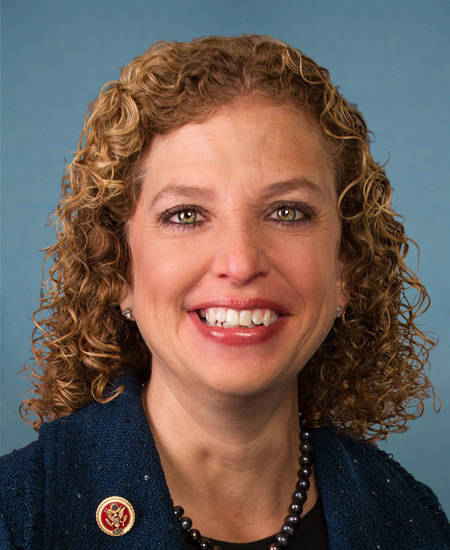
Rep. Debbie Wasserman Schultz
Sponsored bills
Maddy summaryHR 1522, the Federal Retirement Fairness Act, changes federal retirement rules to include temporary employees' service after January 1, 1988, in retirement benefit calculations. It directly affects temporary federal employees (including U.S. Postal Service workers) and Members of Congress who served after that date. The bill removes a previous cutoff date in retirement law, allowing their temporary service to count toward retirement eligibility. This means eligible temporary workers can now have their full service period considered when calculating retirement benefits.
Maddy summaryHR 672 directs the United States Postal Service to assign a single unique ZIP Code to 14 specific communities within 270 days of enactment. These communities include Eastvale (CA), Scotland (CT), Castle Pines and Silver Cliff (CO), Hollywood, Miami Lakes, and Ocoee (FL), Urbandale (IA), Franklin, Greenfield, Caledonia, Mount Pleasant, and Somers (WI), and Mills (WY). This change will update mail delivery systems and address identifiers for residents and businesses in these areas, streamlining postal operations.
Maddy summaryThis bill (HR 4558) renames a specific street segment in Washington, D.C., between 16th Street Northwest and Fuller Street Northwest, and between 16th Street Northwest and Euclid Street Northwest, to "Oswaldo Payá Way." It also redesignates the address 2630 16th Street Northwest as 2630 Oswaldo Payá Way. The bill requires the District of Columbia to install two new street signs matching the city's standard Metro station sign design at the intersections. This is a purely ceremonial designation with no policy changes or new requirements for citizens or government agencies.
Maddy summaryHR 4482, the Stop NOAA Closures Act, imposes a temporary moratorium on closing, suspending, or limiting access to National Oceanic and Atmospheric Administration (NOAA) facilities, effective until a report is submitted to Congress by January 21, 2029. The bill requires NOAA and the General Services Administration to submit detailed reports to specific congressional committees before any future facility closure, suspension, lease termination, or consolidation - outlining cost-benefit analyses, service impacts, and justification. Exceptions apply only for emergencies posing immediate threats to personnel safety. This bill directly affects NOAA's facility management decisions and mandates congressional oversight for future closures.
Maddy summaryHR 4542, the "No Cages in the Everglades Act," bans federal funding for any immigration detention facility within or adjacent to Florida's Everglades ecosystem - including construction, operation, or maintenance. It directly affects U.S. Immigration and Customs Enforcement (ICE) and any state/local governments operating such facilities. Key provisions include requiring DHS to submit a detailed report within 90 days on facility costs, construction history, compliance with detention standards, and ecological risks, while also granting Congress unannounced access to inspect all DHS detention facilities. The bill aims to prevent new immigration detention operations in the protected Everglades area and enhance oversight of existing facilities.
Maddy summaryHRES 597 is a congressional resolution condemning the 1994 bombing of Argentina's AMIA Jewish Community Center in Buenos Aires, which killed 85 people and injured over 300. The resolution expresses support for Argentina's recent court ruling (April 2024) that declared Iran responsible for the attack as a crime against humanity, and urges accountability for Iranian officials and Hezbollah operatives involved. It calls on the U.S. government to support Argentina's efforts to hold perpetrators accountable, including through INTERPOL arrest requests, and commends Argentina for designating Hezbollah as a terrorist organization. The resolution primarily addresses the victims' families, the Argentine government's legal actions, and international efforts to pursue justice for this historic attack.
Maddy summaryThis bill requires Medicaid programs to cover specific treatments for individuals with breast or cervical cancer. It adds a new provision to Medicaid rules that explicitly includes these patients in mandatory coverage, ensuring states must provide necessary care. The bill also mandates that Medicaid cover breast reconstruction surgery following a medically necessary mastectomy. These changes directly affect Medicaid beneficiaries diagnosed with breast or cervical cancer who need these specific treatments. The policy update removes gaps in existing coverage for these critical cancer care services.
Maddy summaryHR 4545, the Medicare Breast Reconstruction Access and Information Act, requires healthcare providers to inform Medicare patients about coverage for breast reconstruction surgery before performing a mastectomy. The bill amends the Social Security Act to mandate that suppliers providing a mastectomy must explain that reconstruction is covered under Medicare's national coverage determination 140.2 and document this discussion in the patient's medical record. This applies specifically to Medicare beneficiaries undergoing medically necessary mastectomies. The law ensures patients receive clear information about existing coverage options prior to surgery, without changing Medicare's benefit structure.
Maddy summaryThe INSURE Act establishes a federal reinsurance program to help property insurers cover losses from natural disasters like hurricanes, wildfires, and floods. Participating insurers must offer "all-perils" property insurance policies covering these perils and develop loss prevention partnerships with policyholders to reduce disaster risks. The program will be phased in over several years, starting with wind and hurricane coverage, and will be funded by quarterly premiums from participating insurers based on expected losses. This aims to stabilize property insurance markets and ensure coverage remains available in high-risk areas.