

Time Off to Vote Act This bill requires an employer, upon the request of an employee, to provide the employee with a minimum of two consecutive hours of paid leave in order to vote in a federal election. The employer may determine the two-hour period, excluding any lunch break or other break. Taking such leave shall not result in the employee losing accrued employment benefits. The bill makes it unlawful for an employer to interfere with the right to take such leave or for an employer to discriminate against an employee for taking such leave. Further, the bill makes it unlawful for any employer to retaliate against an employee for (1) opposing any practice made unlawful by this bill; (2) filing a charge, or instituting or causing to be instituted any proceeding, under or related to this bill; or (3) testifying or preparing to testify in an inquiry or proceeding relating to such leave. The bill specifies penalties for employers who violate these provisions.
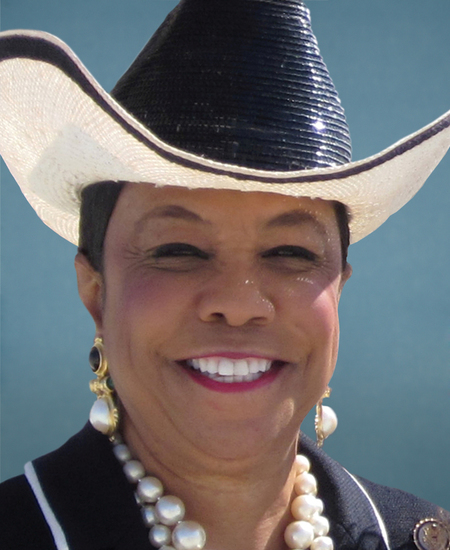
Rep. Frederica S. Wilson
Sponsored bills
Educators Expense Deduction Modernization Act of 2022 This bill increases the tax deduction for the expenses of eligible educators from $250 to $1,000, An eligible educator is, with respect to any taxable year, an individual who is a kindergarten through grade 12 teacher, instructor, counselor, principal, or aide in a school for at least 900 hours during a school year.
Strengthening Job Corps Act of 2022 This bill reauthorizes through FY2028 and modifies the Job Corps program, including expanding eligibility and requiring each Job Corps campus to develop and implement a plan for student standards of conduct and behavioral interventions. Job Corps is a national program that operates with state and local partners to provide education and training, primarily in a residential setting, for low-income youths.
Marijuana Opportunity Reinvestment and Expungement Act or the MORE Act This bill decriminalizes marijuana. Specifically, it removes marijuana from the list of scheduled substances under the Controlled Substances Act and eliminates criminal penalties for an individual who manufactures, distributes, or possesses marijuana. The bill also makes other changes, including the following: replaces statutory references to marijuana and marihuana with cannabis , requires the Bureau of Labor Statistics to regularly publish demographic data on cannabis business owners and employees, establishes a trust fund to support various programs and services for individuals and businesses in communities impacted by the war on drugs, imposes an excise tax on cannabis products produced in or imported into the United States and an occupational tax on cannabis production facilities and export warehouses, makes Small Business Administration loans and services available to entities that are cannabis-related legitimate businesses or service providers, prohibits the denial of federal public benefits to a person on the basis of certain cannabis-related conduct or convictions, prohibits the denial of benefits and protections under immigration laws on the basis of a cannabis-related event (e.g., conduct or a conviction), establishes a process to expunge convictions and conduct sentencing review hearings related to federal cannabis offenses, directs the Government Accountability Office to study the societal impact of state legalization of recreational cannabis, directs the National Highway Traffic Safety Administration to study methods for determining whether a driver is impaired by marijuana, directs the National Institute for Occupational Safety and Health to study the impact of state legalization of recreational cannabis on the workplace, and directs the Department of Education to study the impact of state legalization of recreational cannabis on schools and school-aged children.
Children's Act for Responsible Employment and Farm Safety of 2022 or the CARE Act of 20 22 This bill revises labor provisions for protecting child workers, including those employed in agriculture, and increases the civil penalties for violations of such provisions and imposes new criminal penalties for violations resulting in the death or serious injury or illness of a child worker. Specifically, the bill revises the definition of oppressive child labor to prohibit the employment of children under 14 years of age and imposes new employer reporting requirements for work-related injuries or deaths of agricultural employees under the age of 18. The Department of Labor must analyze, collect, and report on data concerning children under the age of 18 who are employed in agriculture and each work-related injury, illness, or death of any such child. Labor must also revise regulations to prohibit the employment of a child under the age of 18 as a pesticide handler.
Veteran Deportation Prevention and Reform Act This bill provides protections from deportation for noncitizen veterans and contains other related provisions. U.S. Immigration and Customs Enforcement (ICE) must identify each individual in removal proceedings who is a member of the Armed Forces, a veteran, or a noncitizen spouse or minor child of such an individual. That individual may not be removed until (1) ICE has transferred that individual's case files to an advisory committee created under this bill, and (2) that committee has provided recommendations as to the outcome of the case. The Department of Homeland Security (DHS) shall create a system to share information across various agencies about noncitizen veterans who may be subject to removal to ensure that such a veteran's military service is taken into consideration in immigration-related cases. DHS shall also create a system for (1) identifying noncitizens who are or may be veterans, and (2) collecting data relating to such noncitizens who are in removal proceedings or may have been removed. DHS and the Department of Defense must jointly carry out a program to naturalize a noncitizen (and the noncitizen's spouse and minor children) who serves on active duty in the Armed Forces and is not otherwise ineligible for citizenship if that noncitizen submits an application. DHS shall also establish a program for eligible noncitizen veterans (generally those not convicted for certain serious crimes) to obtain permanent resident status. Similarly, the Department of Justice shall provide permanent resident status to such an eligible veteran in removal proceedings or subject to a final order of removal.
Emmett Till Antilynching Act This bill makes lynching a federal hate crime offense. Specifically, the bill imposes criminal penalties—a fine, a prison term of up to 30 years, or both—on an individual who conspires to commit a hate crime offense that results in death or serious bodily injury or that includes kidnapping or an attempt to kidnap, aggravated sexual abuse or an attempt to commit aggravated sexual abuse, or an attempt to kill.
This resolution supports the goals and ideals of National Women's History Month and recognizes the women and organizations that continue to promote the teaching of women's history.
Creating a Respectful and Open World for Natural Hair Act of 2022 or the CROWN Act of 2022 This bill prohibits discrimination based on a person's hair texture or hairstyle if that style or texture is commonly associated with a particular race or national origin. Specifically, the bill prohibits this type of discrimination against those participating in federally assisted programs, housing programs, public accommodations, and employment. Persons shall not be deprived of equal rights under the law and shall not be subjected to prohibited practices based on their hair texture or style. The bill provides for enforcement procedures under the applicable laws.
Forced Arbitration Injustice Repeal Act of 2022 or the FAIR Act of 2022 This bill prohibits a predispute arbitration agreement from being valid or enforceable if it requires arbitration of an employment, consumer, antitrust, or civil rights dispute.