

Maddy summaryHRES 1100 is a non-binding resolution supporting National Nurses Week (May 6-12, 2022). It symbolically recognizes nurses' contributions to healthcare without creating new laws or affecting anyone legally. The resolution encourages the public to observe the week through recognition and activities, highlighting nurses' roles in patient care and health system leadership. It does not change policy, funding, or regulations.
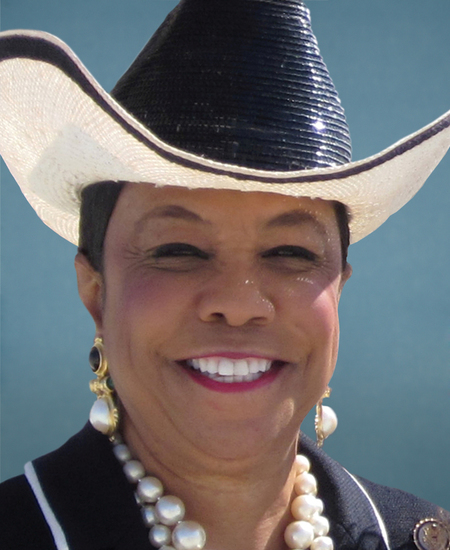
Rep. Frederica S. Wilson
Sponsored bills
This resolution extends collective bargaining rights prescribed in the Congressional Accountability Act of 1995 to employees of the House of Representatives.
Maddy summaryHRES 1093 is a symbolic House resolution designating May 2022 as "Mental Health Awareness Month." It expresses support for raising public awareness about mental health, emphasizes that mental well-being is as important as physical health, and encourages efforts to reduce stigma and improve access to services. The resolution does not create new laws or allocate funding but calls for recognizing mental health as a national priority and applauds existing efforts by organizations. It was introduced by multiple representatives and passed in the House on May 6, 2022, as a non-binding gesture.
School Shooting Safety and Preparedness Act This bill requires the Department of Education (ED) to publish an annual report on indicators of school crime and safety. The report must collect specified information, including the number of school shootings that have taken place nationwide and the number of those that were mass shootings; the number of people killed or injured in each school shooting; the age, gender, race, ethnicity, and nationality of each victim; the motivation of the shooter; how the shooting was stopped; the number and type of firearms and ammunition used in each shooting; and the response time of law enforcement. ED must direct the National Center for Education Statistics to collect and publish specified data on school shootings. The center must collect information on the existence or absence of specified measures at the time of the shooting, including physical and other types of security measures, a communication plan with local law enforcement, a response plan that includes coordination with local agencies, an active shooter response plan, and a trauma response plan.
United States Innovation and Competition Act of 2021 This bill addresses U.S. technology and communications, foreign relations and national security, domestic manufacturing, education, trade, and other matters. Among other provisions, the bill provides funding for FY2022-FY2026 to support U.S. semiconductor manufacturing, research and development, and supply chain security; provides funding for wireless supply chain innovation; establishes a Directorate for Technology and Innovation in the National Science Foundation; extends through 2025 the authority of the National Aeronautics and Space Administration (NASA) to lease its non-excess real property and related personal property; authorizes various programs and policies related to space exploration; authorizes various international affairs programs and activities, including foreign assistance for the Indo-Pacific region; requires federal infrastructure programs to provide for the use of materials produced in the United States; imposes sanctions on China for cybersecurity and human rights abuses; requires the Department of Health and Human Services to consider national security risks associated with sensitive genetic information; includes initiatives related to elementary and secondary education, including those to increase computer science education; contains provisions related to higher education, including those reauthorizing through FY2027 international education programs and addressing China's influence on institutions of higher education; modifies and expands the schedule for graduated merger filing fees; prohibits federal funding for the Wuhan Institute of Virology; requires the U.S. Trade Representative to take certain actions related to digital trade and censorship practices; and extends through 2027 the Generalized System of Preferences.
Respect, Advancement, and Increasing Support for Educators Act of 2022 or the RAISE Act of 2022 This bill allows eligible educators (i.e., any elementary or secondary teacher and any early childhood educator) a refundable tax credit of $1,000 plus an additional amount (based upon a specified student poverty ratio) for eligible educators employed at a qualifying school (i.e., a public elementary or secondary school that is eligible for certain federal assistance or is funded by the Bureau of Indian Education), or an early childhood education program for children receiving certain federal assistance. The bill also increases the amount of the tax deduction for the expenses of elementary and secondary school teachers and expands such credit to include early childhood educators. The bill provides additional funding to local educational agencies that maintain or increase the salaries of their teachers.
Pride in Mental Health Act This bill expands programs that prevent and treat child abuse and neglect to address issues facing youth who are lesbian, gay, bisexual, transgender, queer or questioning, nonbinary, or gender-variant members of indigenous communities (e.g., Two Spirit). Specifically, these programs include (1) research and reporting requirements, (2) providing technical assistance, (3) grants to states and local agencies to train child-welfare personnel, and (4) community-based prevention-service grants. The bill also establishes a grant program to provide mental and behavioral health resources for such youth, including trauma-informed care.
This resolution thanks the teachers of the United States and promotes the teaching profession by encouraging students, parents, school administrators, and public officials to recognize National Teacher Appreciation Week.
This resolution recognizes that Black women are experiencing high, disproportionate rates of maternal mortality and morbidity in the United States and that Black Maternal Health Week is an opportunity to deepen the national conversation about Black maternal health.
Student Loan Borrower Relief Act This bill revises income-driven repayment plans for federal student loans, including by reducing from 25 years to 15 years the maximum repayment period under these plans. Additionally, the bill makes changes to the Public Service Loan Forgiveness program, including by cancelling a portion of a borrower's student loans after every 12 months of eligible public service employment.