

Break the Cycle of Violence Act This bill establishes federal grant programs and related entities to support violence intervention initiatives. Specifically, the bill directs the Department of Health and Human Services (HHS) to award grants for coordinated community violence intervention initiatives in communities disproportionately impacted by homicides and community violence. HHS must also establish several related entities, including an Office of Community Violence Intervention to administer programs and activities related to violence intervention; the Community Violence Intervention Advisory Committee to advise and assist the office and HHS; and the National Community Violence Response Center to provide training and technical assistance, coordinate research, and develop data collection policies. Additionally, the bill directs the Department of Labor to award grants for job training and workforce programs in communities disproportionately affected by gun violence to connect youth ages 16 to 24 to in-demand occupations.
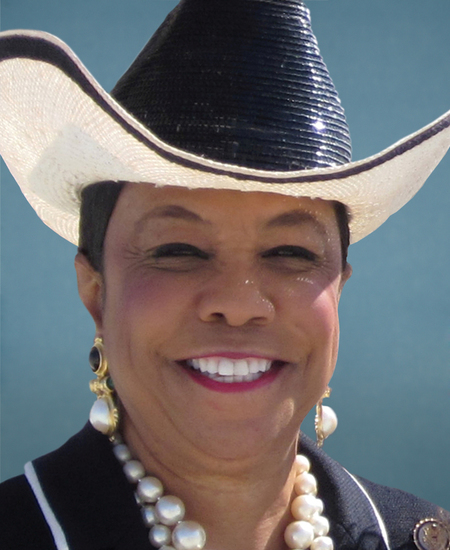
Rep. Frederica S. Wilson
Sponsored bills
This concurrent resolution recognizes the disparity in wages paid to Black women and its impact on women, families, and the nation, and reaffirms Congress' support for ensuring equal pay and closing the gender wage gap.
Maddy summaryHRES 1383 is a symbolic House resolution designating September 2022 as "National Workforce Development Month." It expresses congressional support for workforce development initiatives but does not create new laws or allocate funding. The resolution acknowledges the importance of programs that train workers for jobs requiring postsecondary education (like community college or apprenticeships) and highlights challenges such as high unemployment among Black and Hispanic workers and pandemic job losses. It directly affects no specific group, as it is a non-binding expression of support for existing federal workforce programs like the Workforce Innovation and Opportunity Act.
National Council on African American History and Culture Act of 2022 This bill establishes a National Council on African American History and Culture in the National Endowment for the Humanities (NEH). The duties of the council shall include gathering timely and authoritative information concerning historical developments and cultural trends in African-American history and culture; evaluating the various programs and activities of the NEH to determine the extent to which such programs and activities are contributing, or not contributing, to the successful preservation and celebration of African-American history and culture; and developing and recommending to the NEH national policies to foster and promote the understanding of African-American history, the preservation of African-American culture, and the celebration of African Americans as contributors to the country's economic, cultural, and political success.
Social Security Fairness Act of 2021 This bill repeals provisions that reduce Social Security benefits for individuals who receive other benefits, such as a pension from a state or local government. The bill eliminates the government pension offset , which in various instances reduces Social Security benefits for spouses, widows, and widowers who also receive government pensions of their own. The bill also eliminates the windfall elimination provision , which in some instances reduces Social Security benefits for individuals who also receive a pension or disability benefit from an employer that did not withhold Social Security taxes. These changes are effective for benefits payable after December 2021.
Maddy summaryHRES 1371 designates the week of September 19-25, 2022, as "Rail Safety Week" in the U.S. to support efforts reducing rail-related incidents. The resolution expresses congressional backing for existing safety initiatives, like Operation Lifesaver’s public education programs, which focus on preventing highway-rail crossing accidents and trespassing. It encourages the public to participate in safety activities and learn about staying safe near train tracks. This symbolic resolution does not create new laws or funding but aims to raise awareness around a recurring safety issue.
This bill retroactively applies the Generalized System of Preferences (a U.S. trade preference program that provides duty-free access to imports on products from certain developing countries) for the period after December 31, 2020, and before September 1, 2022. These covered articles shall be liquidated or reliquidated as though entry occurred on December 31, 2020. A request for liquidation or reliquidation must be filed with U.S. Customs and Border Protection (CBP) and such request must contain sufficient information for CBP to locate the entry or, if the entry cannot be located, reconstruct the entry. Any amounts owed by the United States pursuant to liquidation or reliquidation of an entry of a covered article shall be paid without interest.
Lowering Obstacles to Achievement Now Act or the LOAN Act This bill makes various changes to federal student aid programs, including by providing funding to increase the maximum Pell Grant award for each eligible student and reducing the number of monthly loan payments required for loan forgiveness under the Public Service Loan Forgiveness (PSLF) program.
Improving Seniors' Timely Access to Care Act of 2022 This bill establishes several requirements and standards relating to prior authorization processes under Medicare Advantage (MA) plans. Specifically, MA plans must (1) establish an electronic prior authorization program that meets specified standards, including the ability to provide real-time decisions in response to requests for items and services that are routinely approved; (2) annually publish specified prior authorization information, including the percentage of requests approved and the average response time; and (3) meet other standards, as set by the Centers for Medicare & Medicaid Services, relating to the quality and timeliness of prior authorization determinations.
Drone Infrastructure Inspection Grant Act This bill establishes programs within the Department of Transportation (DOT) to support the use of drones and other small, unmanned aircraft systems when inspecting, repairing, or constructing road infrastructure, electric grid infrastructure, water infrastructure, or other critical infrastructure. Specifically, DOT must award grants to state, tribal, and local governments; metropolitan planning organizations; or groups of those entities to purchase or otherwise use drones to increase efficiency, reduce costs, improve worker and community safety, reduce carbon emissions, or meet other priorities related to critical infrastructure projects. Grant recipients must use domestically manufactured drones that are made by companies not subject to influence or control from certain foreign entities, including China and Russia. DOT must also award grants to certain institutions of higher education for training students for careers using drones and related technologies.