

No Stolen Trademarks Honored in America Act This bill modifies the bar against U.S. courts enforcing or validating trademarks that were confiscated by the Cuban government. The bill prohibits U.S. courts from enforcing or validating such confiscated trademarks if the mark had been used in connection with a confiscated business or asset. Currently, the prohibition applies only if the confiscated trademark is being asserted in the United States by a Cuban national. Under the bill, the prohibition shall not apply if the original trademark owner, or a successor, has expressly consented to the enforcement action. The prohibition shall apply only if the entity asserting the trademark rights knew or should have known, when it acquired the rights, that the mark was the same or substantially similar to one connected to a confiscated business or asset.
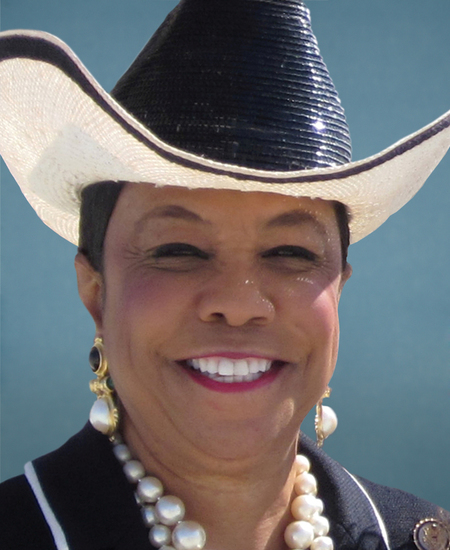
Rep. Frederica S. Wilson
Sponsored bills
Original National Domestic Violence Awareness Month Resolution of 2022 This resolution supports the goals and ideals of National Domestic Violence Awareness Month. Further, it expresses the sense of the House of Representatives that Congress should continue to raise awareness of and support programs to end domestic violence.
Protecting Wages of Essential Workers Act of 2022 This bill expands the federal restriction on the garnishment of wages to protect from any garnishment the first $1,000 of an individual's weekly disposable earnings.
Keep Americans Safe Act This bill establishes a new criminal offense for the import, sale, manufacture, transfer, or possession of a large capacity ammunition feeding device (LCAFD). The bill does not prohibit certain conduct with respect to an LCAFD, including the following: importation, sale, manufacture, transfer, or possession related to certain law enforcement efforts, or authorized tests or experiments; importation, sale, transfer, or possession related to securing nuclear materials; and possession by a retired law enforcement officer. The bill permits continued possession of, but prohibits sale or transfer of, a grandfathered LCAFD. Newly manufactured LCAFDs must display serial number identification and the date of manufacture. Additionally, the bill allows a state or local government to use Edward Byrne Memorial Justice Assistance Grant Program funds to compensate individuals who surrender an LCAFD under a buy-back program.
Ralph David Abernathy, Sr. National Historic Site Act This bill establishes the Ralph David Abernathy, Sr. National Historic Site in Georgia as a unit of the National Park System. The site shall preserve, protect, and interpret the area where the Reverend Dr. Abernathy served as pastor during the height of the modern civil rights movement and his role as an internationally recognized civil rights leader.
John Lewis Civil Rights Fellowship Act of 2022 This bill establishes the John Lewis Civil Rights Fellowship Program within the J. William Fulbright Educational Exchange Program (commonly referred to as the Fulbright Program). The fellowship program shall honor the legacy of Representative John Lewis and advance U.S. foreign policy priorities by promoting studies, research, and international exchange in the subject of nonviolent civil rights movements around the world. The Fulbright Foreign Scholarship Board shall annually select qualified individuals to serve as fellows in the fellowship program. The Bureau of Educational and Cultural Affairs may determine the number of fellows for each year, with at least 25 fellows each year whenever feasible. Each fellow shall (1) work in an internship or research position with an approved organization in a country with an operational Fulbright U.S. Student Program, and (2) receive an award sufficient to cover the fellow's reasonable costs during the fellowship period and certain travel and lodging expenses related to the program.
Wage Theft Prevention and Wage Recovery Act of 2022 This bill requires employers to make initial and modified disclosures to employees of the terms of their employment, provide such employees with regular paystubs, and make a final payment to an employee for uncompensated work hours within 14 days of the employee's termination. Employers must also allow employees access to wage records. An employer must compensate an employee at the rate specified in an employment contract, including a collective bargaining agreement, that specifies a rate of pay higher than the minimum wage rate. The bill makes all of such unpaid wages recoverable through civil enforcement. The bill establishes new and increased civil and criminal penalties for violations of overtime or minimum wage requirements, including referral to the Department of Justice for criminal prosecution of employers who engage in wage theft, falsification of wage records, or retaliation against employees. The Wage and Hour Division of the Department of Labor must provide grants to specified organizations, including nonprofits and educational institutions, to support efforts to prevent and reduce violations of wage and hour laws.
This bill designates the facility of the United States Postal Service located at 3900 Crown Road Southwest in Atlanta, Georgia, as the John R. Lewis Post Office Building.
Longshore and Harbor Workers' COVID-19 Compensation Act of 2022 This bill establishes a conclusive presumption that certain workers diagnosed with COVID-19 are entitled to workers' compensation benefits under the Longshore and Harbor Workers' Compensation Act (LHWCA). It also provides funding to reimburse employers for costs associated with LHWCA benefits related to COVID-19. The LHWCA provides for medical, disability, and survivor benefits for specified private-sector maritime workers. The presumption applies to workers who were diagnosed with COVID-19 between January 27, 2020, and January 27, 2024, and who, during the incubation period, faced a risk of COVID-19 exposure while carrying out job duties. In addition, the bill establishes and provides funding for the Longshore COVID-19 Fund to reimburse employers for costs related to such COVID-19 claims. To be reimbursed, employers must comply with applicable safety and health guidance to prevent occupational exposure to COVID-19.
Maximizing Outcomes through Better Investments in Lifesaving Equipment for (MOBILE) Health Care Act This bill allows a health center that currently receives funding through a Health Resources & Services Administration Health Center Program grant to use a New Access Point grant to set up a mobile unit regardless of whether the health center also establishes a permanent health care delivery site. New Access Point grants help health centers establish new delivery sites to provide comprehensive primary care to medically underserved populations. Under current law, health centers may only use the grants to set up a mobile unit if they also establish a permanent site.