

Maddy summaryHRES 160 designates January 2025 as "National Mentoring Month" to highlight the positive impact of mentoring relationships on young people. The resolution emphasizes how mentoring improves academic performance, mental health, career readiness, and social skills - particularly for underserved youth - and addresses the "mentoring gap" where one in three young people lacks a supportive adult outside their family. It calls for expanding mentoring programs in schools, communities, and workplaces without creating new laws or funding. As a symbolic resolution, it aims to raise public awareness and encourage participation in existing mentoring initiatives.
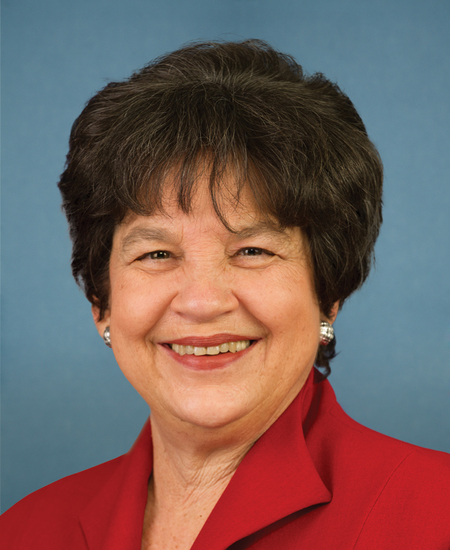
Rep. Lois Frankel
Sponsored bills
Maddy summaryHRES 159 is a symbolic resolution expressing the U.S. House of Representatives' support for designating February 24-28, 2025, as "Public Schools Week." It does not create new laws or allocate funds but aims to highlight the importance of public schools in communities. The resolution cites reasons such as public schools serving 90% of U.S. students, fostering critical thinking, and requiring equitable funding - though these are context, not policy changes. It directly affects public schools and their communities by raising awareness of their role in education. As a non-binding resolution, it has no direct impact on school operations or funding.
Maddy summaryThis bill requires the Comptroller General to produce a report analyzing actions taken by the Department of Government Efficiency (created by an executive order). The report must evaluate how those actions - like reducing civil service staff, ending or pausing federal programs - affect the U.S.'s long-term financial, public health, and safety interests. It also must check if the department followed privacy laws (Privacy Act of 1974) and federal program rules. The report must be submitted to Congress by December 31, 2025. The bill directly affects the Department of Government Efficiency and Congress through this mandated oversight.
Maddy summaryHR 1544, the LEASH DOGE Act, requires the Department of Government Efficiency (DOGE) to report detailed information about its employees and operations to Congress. Specifically, it mandates a report listing all DOGE employees with their roles, background check results, security clearances, and conflict of interest disclosures; appearances before congressional committees; and a public website updated weekly with employee data, funding reductions, and contact information for public inquiries. The bill sets a March 31, 2025, deadline for compliance, with penalties including restrictions on using federal funds for DOGE activities or new DOGE Agency Teams until requirements are met. It directly affects DOGE leadership, its employees, and congressional oversight committees. The law focuses on transparency about DOGE’s staffing and budget decisions, not policy outcomes.
Maddy summaryHR 1477 creates a new Animal Cruelty Crimes Section within the Justice Department's Environment and Natural Resources Division to enforce federal animal cruelty laws. This unit will coordinate with agencies like the FBI, USDA, and U.S. Marshals to investigate and prosecute cases, addressing current gaps in enforcement. The bill requires the unit to submit annual reports to Congress detailing prosecutions, convictions, and investigations where charges weren't filed. It does not change existing animal cruelty laws but establishes a dedicated federal unit to improve enforcement of current statutes.
Maddy summaryThis bill would require states to create a simplified process for out-of-state healthcare providers to join Medicaid and CHIP programs. Qualified providers (those already enrolled in Medicare or another state's program with low fraud risk) could enroll without excessive screening and would be approved for five years. It directly affects children under 21 enrolled in Medicaid or CHIP by expanding access to providers outside their state, particularly in underserved areas. The change applies to all states' Medicaid programs but takes effect three years after enactment.
Maddy summaryHR 1306, the Tax Fairness for Survivors Act, exempts certain payments received by survivors of sexual assault or harassment from federal income taxation. Specifically, it excludes from gross income any judgment, award, or settlement (including backpay, frontpay, punitive damages, and attorney fees) related to these claims, as defined under federal, tribal, state, or local law. The bill amends multiple tax codes (including income tax, Social Security, railroad retirement, unemployment, and wage withholding) to ensure these excluded payments are not subject to those taxes. This directly affects survivors who receive such compensation through legal settlements or court awards. The exemption applies to taxable years beginning after the bill's enactment.
Maddy summaryThis bill requires the Pension Benefit Guaranty Corporation (PBGC) to recalculate monthly pension benefits for retirees in six specific Delphi-related pension plans to reflect the full vested amount they would have received without prior benefit limits. It mandates lump-sum payments for past underpayments, including 6% annual interest, to eligible retirees and beneficiaries who received lower benefits than guaranteed under ERISA. The PBGC must fund these payments through a new Delphi Full Vested Plan Benefit Trust Fund established in the Treasury. This directly affects retirees in the Delphi Hourly-Rate, Delphi Retirement Program for Salaried Employees, PHI Non-Bargaining, ASEC Manufacturing, PHI Bargaining, and Delphi Mechatronic Systems pension plans. The law does not alter existing PBGC rules for other plans or change how the agency administers benefits generally.
Maddy summaryThe Black History Matters Act directs the National Museum of African American History and Culture to study how public elementary and secondary schools teach Black history across the U.S. The study will identify which schools require this education, assess teaching quality through classroom discussions and materials, and examine how schools measure student learning. It requires the Director to complete the study within three years of the bill’s passage and submit a report to Congress within 180 days of completion. The bill does not change school curricula but aims to gather data on existing practices to inform future education policies. This study directly affects all public schools covered under the Elementary and Secondary Education Act.
Maddy summaryHR 1330 establishes the Smithsonian National Museum of the American Latino, authorizing its location within the National Mall's "Reserve" area. The bill requires the Smithsonian Board to coordinate with federal agencies managing potential museum sites, including notifying relevant congressional committees before land transfers. It mandates that the museum's exhibits and programs accurately represent the diverse cultures, histories, and viewpoints of Hispanic and Latino communities in the U.S., seeking input from a broad range of community experts. The Smithsonian must also submit regular reports to Congress detailing compliance with these representation requirements.