

Driftnet Modernization and Bycatch Reduction Act This bill addresses certain driftnet fishing. Driftnet fishing is a method of fishing in which a gillnet composed of a panel or panels of webbing, or a series of such gillnets, is placed in the water and allowed to drift with the currents and winds for the purpose of entangling fish in the webbing. Currently, the use of large-scale drift gillnets with a total length of 2.5 kilometers or more is prohibited in the United States.The bill expands the definition of large-scale driftnet fishing to prohibit the use of gillnets with a mesh size of 14 inches or greater. This expanded prohibition does not apply within the U.S. exclusive economic zone for five years. The Department of Commerce must conduct a transition program to facilitate the phase out of large-scale driftnet fishing and to promote the adoption of alternative fishing practices that minimize the incidental catch of living marine resources. Commerce must award grants to program participants. Further, the North Pacific Fishery Management Council may recommend and Commerce may approve regulations to collect fees from charter vessel operators that guide recreational anglers who harvest Pacific halibut.
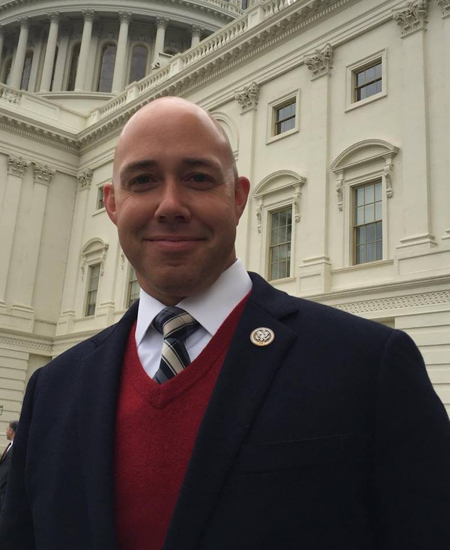
Rep. Brian J. Mast
Sponsored bills
Maddy summaryHRES 1459 is a symbolic House resolution formally acknowledging the service and sacrifices of veterans who served during the Korean War (1950-1953) and current Korean Defense Veterans stationed in South Korea. It recognizes the contributions of approximately 1.8 million U.S. military personnel who served under the UN Command, including the 36,574 U.S. service members who died. The resolution specifically honors the ongoing service of nearly 25,000 U.S. personnel currently stationed in South Korea to maintain the armistice. As a non-binding resolution, it does not create new benefits or policy changes but serves as a formal statement of congressional recognition.
Maddy summaryHRES 1183 is a non-binding House resolution condemning domestic terrorist violence targeting religious organizations and pregnancy support groups. It specifically references multiple recent incidents of vandalism and arson against such facilities - including pregnancy centers and churches - occurring after the leak of a Supreme Court abortion decision. The resolution urges the Department of Justice, FBI, and National Security Council to investigate and prosecute these attacks and update domestic terrorism strategies to prevent future violence. As a symbolic measure, it does not create new laws but formally expresses the House’s stance against targeting these groups.
This resolution urges the Biden Administration to expeditiously restore the Migrant Protection Protocols, a policy requiring many asylum seekers arriving at the southern border to wait in Mexico while their cases are being adjudicated. It also urges the Administration to use certain public health powers, commonly referred to as Title 42 authority, to promptly expel migrants.
Stop Harassing Owners of Rifles Today Act or the SHORT Act This bill removes certain short-barreled rifles, short-barreled shotguns, and other weapons from the definition of a firearm for purposes of regulation under the National Firearms Act (NFA). The bill also eliminates certain restrictions that apply to the sale or transportation of such rifles and shotguns in interstate commerce. If a state or local registration or licensing requirement is determined by reference to the NFA, the bill treats persons who acquire or possess a short-barreled rifle, short-barreled shotgun, or other weapon in accordance with the Gun Control Act of 1968 as meeting the registration and licensing requirements. The bill preempts certain state or local laws that tax or regulate these rifles and shotguns. The Bureau of Alcohol, Tobacco, Firearms and Explosives must destroy records relating to the registration, transfer, or manufacture of applicable weapons described by this bill within one year after the enactment of this bill.
Preventing Underhanded and Nefarious Iranian Supported Homicides Act of 2022 or the PUNISH Act of 2022 This bill extends sanctions and national emergencies related to Iran established by specified executive orders and limits the authority of the President to waive sanctions related to Iran. The bill requires the Department of State to periodically report whether Iran or any foreign person has supported specified activities, including murder or politically motivated detention in Iran of a U.S. citizen.
Felony Murder for Deadly Fentanyl Distribution Act This bill makes the distribution of fentanyl resulting in death a first degree murder. An individual who is guilty of first degree murder by distributing fentanyl is subject to death or life in prison.
Protecting Pain-Capable Unborn Children from Late-Term Abortions Act This bill establishes a new criminal offense for performing or attempting to perform an abortion if the probable gestational age of the fetus is 15 weeks or more. A violator is subject to criminal penalties—a fine, a prison term of up to five years, or both. The bill provides exceptions for an abortion (1) that is necessary to save the life of the pregnant woman, or (2) when the pregnancy is the result of rape or incest. A physician who performs or attempts to perform an abortion under an exception must comply with specified requirements. A woman who undergoes a prohibited abortion may not be prosecuted for violating or conspiring to violate the provisions of this bill.
National Education Association Charter Repeal Act This bill repeals the federal charter granted to the National Education Association of the United States.
Preparing Regulators Effectively for a Post-prohibition Adult-use Regulated Environment Act of 2022 or the PREPARE Act of 2022 This bill directs the Department of Justice to establish the Commission on the Federal Regulation of Cannabis to study a plausible and prompt pathway to cannabis regulation.