

Maddy summaryHR 734, the Protection of Women and Girls in Sports Act of 2023, amends Title IX to prohibit federally funded schools and athletic programs from allowing individuals assigned male at birth to participate in women's or girls' sports teams. The bill defines "sex" for this purpose as "reproductive biology and genetics at birth," making it a violation of federal law to permit such participation in designated women's or girls' programs. It allows males to train with women's teams only if no female is deprived of a roster spot, competition opportunity, scholarship, or other benefit tied to the team. This law directly affects public and private schools receiving federal financial assistance that operate athletic programs.
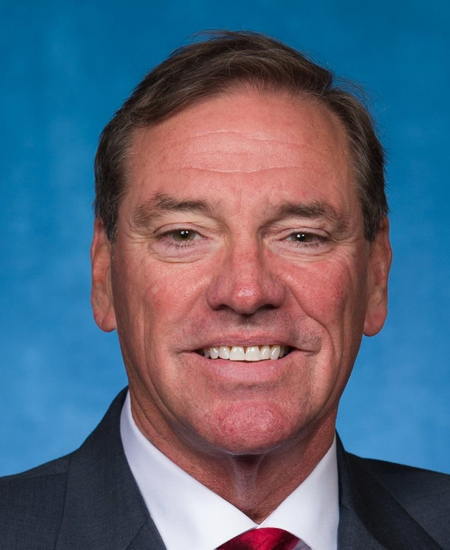
Rep. Neal P. Dunn
Sponsored bills
Maddy summaryHR 2743 prohibits large financial institutions (over $100 billion in assets) from denying banking services to lawful businesses based on subjective political reasons, industry type, or reputational concerns. It requires these institutions to use objective, risk-based assessments for service decisions and provide written justifications for denials. The law applies to banks, credit unions, and payment networks, with civil penalties for violations including fines up to $10,000 per incident. It specifically ensures businesses operating legally under federal law receive fair access to financial services without discrimination. The bill mandates that denials be based on documented risk factors, not political bias or category-based exclusion.
American Innovation and R&D Competitiveness Act of 2023 This bill eliminates the five-year amortization requirement for research and experimental expenditures, thus allowing continued expensing of such expenditures in the taxable years in which they are incurred.
Maddy summaryHJRES 27 is a congressional resolution seeking to block a federal rule that redefined which waterways fall under the Clean Water Act's protections. It targets a rule submitted by the Army Corps of Engineers, Department of Defense, and Environmental Protection Agency (EPA) on January 18, 2023, which aimed to revise the "Waters of the United States" definition. The resolution would formally disapprove this rule under a specific federal procedure (Chapter 8 of Title 5), preventing it from taking effect. This would directly affect how federal agencies regulate pollution and development near water bodies, including wetlands and smaller streams.
Maddy summaryHRES 305 is a symbolic resolution (not a law) that expresses the U.S. House of Representatives' support for designating April 18, 2024, as "National Amateur Radio Operators Day." It recognizes amateur radio operators' role in community communication, emergency response (like during hurricanes), and promoting technological skills, without creating any new legal requirements or affecting specific groups. The resolution has no binding effect and serves solely to honor the hobby's contributions, citing its historical significance and community value. It was introduced by multiple House members in April 2023.
Maddy summaryHR 2647, the Restore Public Health Institution Trust Act of 2023, requires the U.S. Comptroller General to produce a report within 120 days of enactment examining the Centers for Disease Control and Prevention's (CDC) public health messaging and guidance during the pandemic. The report must analyze the data used by the CDC, assess how inconsistent messaging affected public trust and vaccine uptake (including for school-age children), and evaluate potential influence from outside groups like teachers unions. It will also provide recommendations to improve the CDC's future communication and decision-making processes. This bill does not change CDC policies but mandates an independent review to address concerns about public health communication. The report will be submitted to specific congressional committees focused on health, education, and oversight.
Maddy summaryThis resolution expresses congressional support for designating April 5, 2023, as "Barth Syndrome Awareness Day" in the United States. It does not create new laws, allocate funding, or change policies - it solely recognizes the importance of raising public awareness about Barth syndrome, a rare genetic disorder affecting primarily males. The resolution highlights the condition's severity (with high infant mortality and limited treatment options) and emphasizes the need for improved diagnosis, research, and patient support. It directly affects individuals with Barth syndrome, their families, and advocacy groups like the Barth Syndrome Foundation, which organizes this awareness day. The resolution serves as a symbolic gesture to promote understanding of this ultrarare condition.
Maddy summaryHR 2584, the SAVE Act, creates a new federal criminal offense for assaulting or intimidating hospital employees while they're performing their duties, punishable by up to 10 years in prison, with enhanced penalties for using weapons, causing injury, or during public emergencies. The bill authorizes $25 million annually in federal grants to hospitals for violence prevention programs, including staff training, security technologies like panic buttons and video surveillance, and coordination with law enforcement. It defines "hospital" broadly to include various medical facilities such as long-term care hospitals, rehabilitation facilities, and critical access hospitals. The legislation directly affects hospital workers and medical facilities by establishing federal criminal penalties for violence against employees and providing funding to improve workplace safety. The law aims to address the rising problem of workplace violence against healthcare workers, which the bill states has increased since 2011.
Maddy summaryHR 2630, the Safe Step Act, requires group health plans and health insurance issuers to establish a clear, transparent process for patients or their doctors to request exceptions to medication step therapy protocols. These protocols typically force patients to try cheaper drugs first before covering more expensive alternatives. The bill mandates that plans must approve exceptions when prior treatments failed, delay would cause serious harm, a treatment is unsafe, or a patient is stable on a previously approved drug, with strict 72-hour (or 24-hour in emergencies) decision timelines. It also requires plans to publish the exception process online and limit documentation requests to only necessary medical information. This law directly affects health insurers, employers offering health plans, and patients using step therapy for prescription drugs.
Maddy summaryHR 2620, the Federal Firearms Licensee Protection Act of 2023, increases penalties for crimes targeting firearms licensees. It amends Section 924 of Title 18 to impose mandatory minimum sentences of 3 years for burglaries or 5 years for robberies committed at the business premises of licensed firearms dealers, manufacturers, or importers. The bill specifically targets violations of Section 922(u), which prohibits unauthorized access to these premises, and adds "attempts to do so" to the penalties. This directly affects licensed firearms businesses by strengthening legal protections against theft or violence at their locations. The law creates clearer, harsher consequences for crimes committed during burglaries or robberies at these specific business sites.