

Maddy summaryHR 8737, the "Free Market Drives Itself Act," repeals a working group established under the Infrastructure and Investment and Jobs Act to coordinate electric vehicle infrastructure efforts and prohibits the Departments of Energy and Transportation from continuing or creating any similar advisory group. This bill directly affects these federal agencies by eliminating an existing advisory body focused on electric vehicle policy and banning its replacement. The key mechanism is the explicit repeal of Section 25006 of the Infrastructure and Investment and Jobs Act and a binding prohibition on reestablishing comparable structures. The policy change removes a specific coordination mechanism without altering broader electric vehicle funding or regulations.
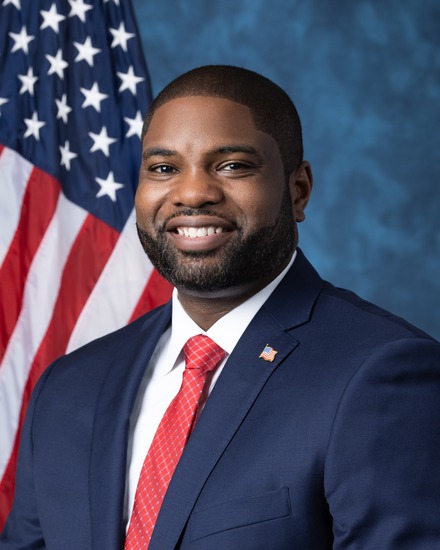
Rep. Byron Donalds
Sponsored bills
Maddy summaryHRES 1300 is a non-binding House resolution condemning campus protests and the groups organizing them. It specifically targets protesters at universities like Columbia and George Washington for actions including blocking classes, using antisemitic rhetoric, and defacing U.S. flags with Palestinian flags. The resolution condemns organizations like Students for Justice in Palestine and George Soros for funding these protests, and calls for an investigation into foreign adversaries involved. It also urges politicians to reject contributions from groups supporting anti-American or antisemitic demonstrations. The resolution does not create new laws but expresses the House's position on campus protests.
Maddy summaryThis concurrent resolution (HCONRES 113) is a symbolic congressional tribute honoring former President George H.W. Bush on the occasion of his 100th birthday. It recognizes his life, public service, and legacy without creating any new laws or affecting specific individuals or groups. The resolution formally acknowledges his career achievements, including his military service, presidency, and contributions to policy like the Americans with Disabilities Act, while expressing Congress's gratitude to him and his family. As a commemorative resolution, it has no binding effect or policy impact.
Maddy summaryThis resolution formally honors the Florida Everblades hockey team for winning the 2024 East Coast Hockey League (ECHL) Patrick J. Kelly Cup championship, recognizing their record-breaking fourth title and first three-peat in league history. It specifically commends the team’s on-ice achievements, including their overtime victory in the championship game, and acknowledges the contributions of players, coaches, and staff. The resolution is directed to the team’s owner and head coach as a symbolic gesture of appreciation for their community impact and athletic success. As a commemorative resolution, it has no legal effect and serves solely to recognize the team’s accomplishment.
Maddy summaryHR 537 authorizes a Congressional Gold Medal to honor 60 diplomats who saved Jewish lives during the Holocaust by issuing visas and passports against their governments' orders, risking expulsion and personal danger. The medal will be presented to the next of kin of these diplomats, alongside representatives from their home countries, and permanently displayed at the United States Holocaust Memorial Museum. The bill also permits the sale of bronze duplicates to cover production costs, with proceeds going to the U.S. Mint. This legislation recognizes the diplomats' humanitarian actions without creating new government programs or altering existing laws.
Maddy summaryHR 8693, the "No American Land for Communist China Act," prohibits U.S. citizens or entities from purchasing real estate adjacent to specific federal lands if owned by the Chinese government or businesses with 25%+ Chinese government ownership. It directly affects Chinese government entities and Chinese-owned businesses operating in the U.S., restricting their ability to buy land near protected federal areas. The bill requires the President to take necessary actions to block such purchases, covering lands managed by Interior, Defense, Agriculture (Forest Service), or designated Indian country. This is a policy restriction, not a funding measure, targeting land transactions near sensitive federal properties.
Maddy summaryThis bill updates financial reporting thresholds to reflect inflation, primarily affecting banks and other financial institutions that file currency transaction reports and suspicious activity reports. It raises the $10,000 threshold for large cash transactions to $60,000, the $5,000 threshold for suspicious activity reports to $10,000, and the $1,000 threshold for money services businesses to $3,000. All thresholds will now automatically adjust annually based on the Consumer Price Index to prevent future inflation-related outdated values. The changes aim to modernize reporting requirements while reducing unnecessary paperwork for institutions handling routine transactions.
Maddy summaryThis bill requires the Attorney General and multiple federal agencies to compile detailed reports on all federal criminal offenses, including penalties, prosecution rates, and mental state requirements for each offense. It mandates creating public online indexes of these offenses, making the data freely accessible on government websites. The bill affects government agencies by requiring them to gather and publish this information but does not change any existing laws or penalties. It is a transparency measure focused on providing clear, factual data about federal criminal enforcement.
Maddy summaryHJRES 166 is a joint resolution seeking congressional disapproval of a Department of Labor rule that would have changed overtime exemption standards for certain salaried workers. The rule, published in April 2024, aimed to redefine how executive, administrative, professional, outside sales, and computer employees are classified for overtime pay under federal law. If enacted, this resolution would block the rule from taking effect, preserving the existing classification system for these workers.
Maddy summaryHR 8628, the Examining Consumer Choice in Digital Payments Act, prohibits the Consumer Financial Protection Bureau (CFPB) from creating new rules or guidance about "buy now, pay later" (BNPL) payment services until two specific studies are completed and reviewed. The bill requires the CFPB to study BNPL services - including their market size, consumer demographics, benefits, risks, and fraud potential - and the GAO to compare BNPL features to other credit products like credit cards. Both reports must be submitted to Congress within one year of the bill's enactment, after which the CFPB may proceed with new regulations. The bill also immediately withdraws an existing CFPB interpretive rule about BNPL services issued in May 2024.