Maddy summaryHRES 984 is a symbolic resolution designating January 9, 2026, as "National Law Enforcement Appreciation Day." It directly honors all federal, state, local, and tribal law enforcement officers across the United States for their service and sacrifices. The resolution expresses the House's support and gratitude, encourages public observance through ceremonies, and recognizes officers who have made the ultimate sacrifice. As a non-binding resolution, it does not create new laws or policies but serves as a formal expression of appreciation.
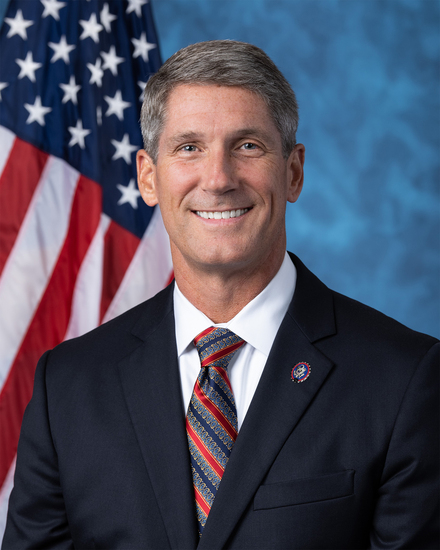
Rep. Scott Franklin
Sponsored bills
Maddy summaryHR 6709 establishes a dedicated Office of Fusion within the Department of Energy to accelerate the development and commercial deployment of fusion energy technology. The bill consolidates existing fusion programs under this new office, requires a detailed commercial deployment roadmap for Congress within one year, and mandates coordination with private industry, national labs, and other agencies to overcome barriers. It directly affects the Department of Energy, the U.S. fusion industry, and regulators by streamlining efforts to meet a goal of starting construction on multiple private fusion power plants by 2028. Key mechanisms include centralizing fusion research, managing public-private partnerships, and ensuring supply chain development to advance fusion energy as a clean power source.
Miracle on Ice Congressional Gold Medal Act This act provides for the award of Congressional Gold Medals to the members of the 1980 U.S. Olympic men's ice hockey team in recognition of the team's achievement at the 1980 Winter Olympic Games.
Maddy summaryHR 1676, the "Make SWAPs Efficient Act of 2025," requires the federal government to approve or deny state wildlife conservation plans within 180 days of receiving them. This directly affects states that submit comprehensive wildlife conservation plans under the Pittman-Robertson Wildlife Restoration Act. If the Secretary fails to act within that timeframe, the state's plan is automatically approved as of the 180th day. The bill streamlines the approval process to prevent federal delays from blocking state conservation funding.
Maddy summaryHRES 932 is a symbolic resolution passed by the House of Representatives that condemns six specific members of Congress (including Senators Kelly and Slotkin and Representatives Crow, Deluzio, Goodlander, and Houlahan) for allegedly making statements that encouraged military and intelligence personnel to disobey orders from the President. The resolution claims these lawmakers falsely suggested the administration issued "illegal orders" and undermined the military chain of command, violating the Uniform Code of Military Justice (UCMJ). It does not create new laws or policies but formally denounces the lawmakers' statements as "dangerous and seditious rhetoric." As a procedural resolution, it has no binding effect on military conduct or policy.
Maddy summaryThis bill (HR 6469) requires the U.S. State Department, in coordination with the FCC and Treasury, to submit a report within 120 days of enactment assessing internet access options in Iran. The report must evaluate the feasibility of using direct-to-cell wireless technology to expand internet access there, including technical, security, and regulatory considerations. It also analyzes how drone-based systems and signal jamming could affect such technology, surveys Iranian telecom providers (including state ownership and foreign investment), and examines broader implications for communications freedom. The bill does not enact new policy but mandates a government review of potential technological solutions.
Give Kids a Chance Act of 2025 This bill expands the Food and Drug Administration’s (FDA’s) authority with respect to research on rare pediatric diseases, including by permitting the FDA to take enforcement action against drug sponsors that fail to satisfy pediatric study requirements and by reauthorizing programs that support pediatric research. Specifically, the bill modifies requirements relating to molecularly targeted pediatric cancer investigations to permit research on new drugs in combination with active ingredients that have already been approved, provided certain conditions are met; permits the FDA to take enforcement action against drug sponsors that fail to comply with pediatric study requirements, if such sponsors demonstrated a lack of due diligence in satisfying the requirement; renews the FDA’s authority to award priority review vouchers to sponsors of new products intended to treat rare pediatric diseases through September 30, 2029; and reauthorizes through FY2027 certain funding for the National Institutes of Health to support priority pediatric research. The bill also provides statutory authority for the FDA’s interpretation of the orphan drug exclusivity period. The bill specifies, consistent with FDA regulations, that the seven-year market exclusivity period for drugs for rare diseases or conditions (i.e., orphan drugs) prohibits the approval of the same drug for the same approved use or indication with respect to the disease or condition. (In Catalyst Pharmaceuticals, Inc. v. Becerra , a court rejected the FDA’s interpretation and held that orphan drug exclusivity extends to all uses or indications for the disease or condition.)

Maddy summaryHR 1109, the Litigation Transparency Act of 2025, requires parties and their lawyers in civil lawsuits to disclose to the court and other parties the identity of any person or group that could receive payment if the case succeeds (like investors or lenders), and to provide copies of related agreements. Exceptions apply for simple loan repayments (with interest limits) or attorney fee reimbursements. Disclosures must be made within 10 days of signing such agreements or when filing the case, and must be updated if inaccurate. This applies to all civil cases filed after the law takes effect, aiming to increase transparency in litigation funding arrangements.
Maddy summaryHR 6068, the PROTECT Florida Act, extends the existing moratorium on oil and gas leasing and exploration in the Gulf of Mexico through 2032 and adds a new, permanent ban on these activities off Florida’s Atlantic coast. It directly affects federal agencies (like the Department of the Interior), which cannot issue permits for oil/gas exploration, seismic testing, or related activities in two specific zones: the Straits of Florida and the South Atlantic Planning Area south of Florida’s coastline. The bill blocks all leasing, preleasing, and exploration permits in these areas from enactment until June 30, 2032. This policy change prevents new offshore drilling and seismic surveys in Florida’s coastal waters, aiming to protect marine environments and coastal communities.
Maddy summaryThis bill requires U.S. Executive agencies to report detailed workforce data when a government funding lapse (covered period) ends. Agencies must submit within 30 days a report showing the total number of employees before the lapse, salaries paid during the prior fiscal year, and specific counts/pay rates for both furloughed (non-essential) workers and others during the lapse. The reports, submitted to designated congressional committees, will be published online for public access. Additionally, the Congressional Budget Office must issue a public report on the economic impact of each funding lapse. The bill affects all Executive agencies (like federal departments) and mandates transparency about workforce impacts during government shutdowns.