

Stand Your Ground Act of 2023 This bill establishes affirmative defenses for individuals who use (or threaten or attempt to use) force in the commission of certain federal criminal violations. First, an individual is justified in using (or threatening or attempting to use) non-deadly force if the individual reasonably believes it is necessary to defend against an imminent use of unlawful force. An individual who uses or threatens to use non-deadly force in accordance with this affirmative defense does not have a duty to retreat before using or threatening to use such force. Second, an individual is justified in using (or threatening or attempting to use) deadly force if the individual reasonably believes it is necessary to prevent imminent death or great bodily harm or to prevent the imminent commission of a forcible felony. An individual who uses, threatens, or attempts to use deadly force in accordance with this affirmative defense does not have a duty to retreat and has the right to stand his or her ground so long as the individual is not engaged in a criminal activity and is in a place where he or she has a right to be.
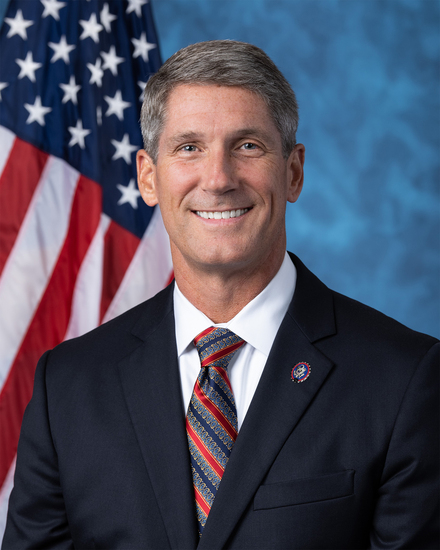
Rep. Scott Franklin
Sponsored bills
Maddy summaryHR 1750 sets a new minimum standard for pasteurized orange juice, requiring finished products to contain at least 10.0% orange juice soluble solids (excluding any added sweeteners) by weight. This rule directly affects manufacturers producing and selling pasteurized orange juice in the U.S. market. The bill revises existing federal regulations to enforce this minimum juice content level, ensuring a more consistent product definition. It does not change the Secretary of Health and Human Services' existing authority to further adjust these standards.
This resolution expresses U.S. support for Israel and its efforts to defend its right to existence. The resolution also declares that the United States and international community must prevent Iran from acquiring or building nuclear weapons.
Maddy summaryThe Employee Rights Act (HR 2700) amends key labor laws to strengthen employee rights in collective bargaining and privacy. It requires employers to use secret ballot elections for selecting bargaining representatives and to provide labor organizations with voter lists containing employee names and one form of contact information (chosen by the employee) within two business days of an election. The bill prohibits employers from using employee personal information for non-organizing purposes and mandates written authorization for using union dues on non-bargaining activities, with authorizations expiring after one year. Additionally, it clarifies joint employment standards to prevent misclassification and adds tribal sovereignty protections to labor law definitions.
Maddy summaryThis bill designates the U.S. Postal Service facility at 2600 Michigan Avenue in Kissimmee, Florida, as the "Robert Guevara Post Office Building." It updates all official references - such as in laws, maps, and documents - to use this new name for the building. The bill directly affects the postal facility and any government records referencing its location. It is a ceremonial naming measure with no policy changes or financial impact.
This joint resolution nullifies a Department of Labor final rule entitled Adverse Effect Wage Rate Methodology for the Temporary Employment of H-2A Nonimmigrants in Non-Range Occupations in the United States and published on February 28, 2023. This rule makes changes to the methodology used to set adverse effect wage rates for H-2A workers (temporary agricultural workers), including by using Bureau of Labor Statistics wage surveys in certain instances. (Generally, the minimum wage for an H-2A worker is the highest of the adverse effect wage rate, the applicable minimum wage, the prevailing wage for that occupation in that area, or any agreed-upon collective bargaining wage.)
Maddy summaryHR 2826, the Save Local Business Act, clarifies when multiple businesses can be held jointly responsible for labor laws. It amends the National Labor Relations Act and Fair Labor Standards Act to state that a business is only a joint employer if it directly controls key employment terms like hiring, pay, schedules, or discipline for another business's workers. This directly affects franchisors, contractors, and similar business models that might previously have been deemed joint employers under broader interpretations. The bill aims to limit joint employer liability to cases where one business has clear, day-to-day control over essential worker conditions.
Maddy summaryHR 1756, the Dairy Pricing Opportunity Act of 2023, requires the U.S. Department of Agriculture to hold national hearings within 180 days of enactment to review the Federal milk marketing system, specifically focusing on the formula used to set the Class I skim milk price (the price for milk used in fluid products like milk and cheese). The bill mandates that the Secretary of Agriculture collect input from dairy producers and the industry on this pricing formula and other related matters during these hearings. It also amends federal law to require dairy processors to report detailed cost and yield information for all products made at their facilities, with the Secretary required to publish reports on this data every two years. This bill directly affects dairy producers, processors, and the regulatory framework governing milk pricing.
Maddy summaryHR 2743 prohibits large financial institutions (over $100 billion in assets) from denying banking services to lawful businesses based on subjective political reasons, industry type, or reputational concerns. It requires these institutions to use objective, risk-based assessments for service decisions and provide written justifications for denials. The law applies to banks, credit unions, and payment networks, with civil penalties for violations including fines up to $10,000 per incident. It specifically ensures businesses operating legally under federal law receive fair access to financial services without discrimination. The bill mandates that denials be based on documented risk factors, not political bias or category-based exclusion.
Homeland and Cyber Threat Act or the HACT Act This bill allows claims in federal or state court against foreign states that conduct or participate in cyberattacks against U.S. nationals.