

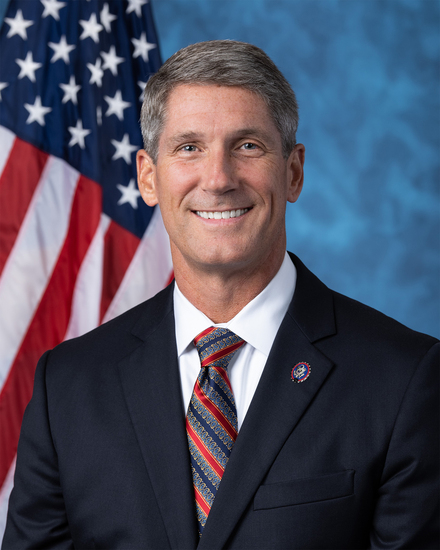
Photo of Scott Franklin
R United States House · District 18 · Florida On the 2026 ballot

Rep. Scott Franklin

Compare
Total votes
2,837
all sessions
Attendance
99%
30 missed
Higher than 78% of chamber peers
With party
96%
of cast votes
Higher than 90% of chamber peers
Bipartisan score
2%
crosses aisle rarely
Lower than 91% of chamber peers
Sponsored
875
bills & resolutions
Near the chamber average
Committees
6
assignments
875 bills and resolutions

Sponsored bills

Total
875
Primary
47
Co-sponsor
828
This page
875
matching current filters
Co-sponsor HR 1823
Signed into law · Indiana House · Co-sponsor
To designate the facility of the United States Postal Service located at 207 East Fort Dade Avenue in Brooksville, Florida, as the "Specialist Justin Dean Coleman Memorial Post Office Building".

Maddy summaryThis bill (HR 1823) officially renames the U.S. Postal Service facility at 207 East Fort Dade Avenue in Brooksville, Florida, as the "Specialist Justin Dean Coleman Memorial Post Office Building." It directly affects the building's official name and all future references to it in government documents, maps, or records. The key provision is a simple name change to honor Specialist Justin Dean Coleman, a U.S. Army veteran. This is a procedural bill with no new policies or funding, solely commemorating an individual through the building's designation.

Signed into law Jan 2, 2025 1 co-sponsor
Co-sponsor HR 562
In committee · Indiana House · Co-sponsor
Improving Veterans Access to Congressional Services Act of 2023

Maddy summaryThis bill allows Members of Congress to use Department of Veterans Affairs (VA) facilities for meetings with veterans who are their constituents. It requires the VA Secretary to create regulations within 90 days, ensuring spaces are visible, accessible during business hours, and rented at rates similar to standard office space in the area. The regulations prohibit campaigning, political discussions, photographing patients without consent, and meetings during the 60 days before federal elections. It directly affects veterans seeking congressional assistance and Members of Congress who can now hold constituent meetings at VA locations. The bill does not change VA benefits or services but streamlines access to representatives for veterans.

In committee Dec 24, 2024 1 co-sponsor
Co-sponsor HR 1097
Signed into law · Indiana House · Co-sponsor
Everett Alvarez, Jr. Congressional Gold Medal Act of 2023

Maddy summaryThis bill, HR 1097 (Everett Alvarez, Jr. Congressional Gold Medal Act of 2023), authorizes the award of a Congressional Gold Medal to Everett Alvarez, Jr., in recognition of his service as a U.S. Navy pilot and Vietnam War prisoner of war. It directly honors Alvarez, who was the first U.S. pilot shot down in the Vietnam War, spent over 8.5 years in captivity, and later served in the Peace Corps and Veterans Administration. The bill’s key mechanism is directing the U.S. Mint to strike a gold medal bearing his name and image, with bronze duplicates available for sale to cover costs. It does not create new policies or affect any group beyond the honoree.

Signed into law Dec 23, 2024 1 co-sponsor
Co-sponsor HR 1209
In committee · Indiana House · Co-sponsor
FOCA Act of 2023

Maddy summaryThe FOCA Act of 2023 requires federal agencies to stop mandating or banning contractor agreements with labor organizations (like union contracts) in construction project bids and contracts. It directly affects federal contractors, subcontractors, and agencies managing construction projects funded by the government. The bill prohibits favoring or penalizing contractors based on their labor affiliation status, aiming to promote fair competition and reduce costs. It also mandates updates to federal contracting rules within 60 days of enactment to implement these changes.

In committee Dec 18, 2024 1 co-sponsor
Co-sponsor HR 8331
In committee · Indiana House · Co-sponsor
Essential Caregivers Act of 2024

Maddy summaryThe Essential Caregivers Act of 2024 requires nursing homes and similar facilities to allow residents to designate essential caregivers who provide emotional support or assistance with daily activities. During emergencies when regular visitation is restricted, facilities must permit at least one essential caregiver access to residents daily and cannot deny access without following specific procedures. Facilities may deny access for a maximum of 7 days during emergencies (or 14 days with state approval), and must provide a written explanation and appeal process if access is denied. The bill establishes a 48-hour appeal process for residents and caregivers to challenge denials, with facilities required to prove violations during appeals. This law applies to Medicare skilled nursing facilities, Medicaid nursing facilities, intermediate care facilities, and certain inpatient rehabilitation facilities.

In committee Dec 17, 2024 1 co-sponsor
Co-sponsor HR 7623
In committee · Indiana House · Co-sponsor
Telehealth Modernization Act of 2024

Maddy summaryThe Telehealth Modernization Act of 2024 extends Medicare's temporary telehealth coverage rules permanently, removing the previous 2024 expiration date. It expands who can provide telehealth services by allowing more healthcare professionals (like certain nurse practitioners) to bill Medicare for these services, and ensures Federally Qualified Health Centers and Rural Health Clinics can continue billing for telehealth under existing payment rules after 2024. The bill also explicitly permits audio-only telehealth calls for Medicare coverage and allows telehealth for hospice face-to-face visits and home dialysis assessments as clinically appropriate, without time limits. These changes directly affect Medicare beneficiaries, healthcare providers, and community health centers offering telehealth services.

In committee Dec 17, 2024 1 co-sponsor
Co-sponsor HR 7476
In committee · Indiana House · Co-sponsor
Countering Communist China Act

Maddy summary# Summary of Proposed Legislation This document outlines a comprehensive U.S. legislative proposal with several key components: 1. **Research Restrictions**: - Requires certification from Federal research grant recipients that they are not Chinese citizens or participants in Chinese talent programs - Prohibits employment of Chinese nationals in federally funded research - Requires institutions receiving Federal assistance to agree not to knowingly employ individuals participating in Chinese talent programs 2. **Foreign Gifts and Contracts Disclosure**: - Mandates disclosure of foreign gifts/contracts over $50,000 to universities - Requires public reporting of restricted/conditional gifts/contracts - Creates a searchable public database of foreign gifts to universities - Requires institutions to maintain policies regarding foreign gifts to faculty and staff 3. **Investment Restrictions**: - Restricts tax-exempt organizations from holding investments in "disqualified Chinese companies" (defined as corporations incorporated in China or with significant Chinese government ownership) - Requires annual reporting on such investments - Allows limited waivers with public disclosure 4. **Taiwan Policy**: - Prohibits U.S. government from recognizing PRC claims to sovereignty over Taiwan without Taiwan's consent - Requires U.S. government to treat Taiwan's democratically elected government as the legitimate representative of the people of Taiwan - Requires a strategy to protect U.S. businesses from Chinese coercion efforts 5. **Additional Provisions**: - Requires participants in Chinese talent programs to register as agents of the Chinese government - Amends economic espionage laws to include education and research - Mandates disclosure of certain funds received by visa holders The legislation represents a significant effort to limit Chinese influence in U.S. academic institutions, research, and business sectors while establishing a more robust policy framework regarding Taiwan.

In committee Dec 17, 2024 1 co-sponsor
Co-sponsor HR 6114
In committee · Indiana House · Co-sponsor
Maximum Pressure Act

Maddy summaryThe Maximum Pressure Act (HR 6114) is a legislative proposal that would maintain and expand U.S. sanctions against Iran. The bill would codify existing sanctions, require Iran to meet 12 specific conditions before sanctions could be lifted (including ending support for terrorism, releasing hostages, and ending nuclear enrichment), and expand sanctions on Iran's Revolutionary Guard Corps and missile programs. It also establishes new reporting requirements for the U.S. government to monitor Iran's activities and the impact of sanctions. The legislation would require congressional review before any sanctions could be lifted or modified, preventing the executive branch from unilaterally easing restrictions.

In committee Dec 17, 2024 1 co-sponsor
Co-sponsor HR 5967
In committee · Indiana House · Co-sponsor
Unemployment Integrity Act of 2023

Maddy summaryHR 5967, the Unemployment Integrity Act of 2023, requires unemployment claimants to participate in job-seeking activities to maintain benefits. Specifically, it mandates that claimants respond to work-related requests, attend reemployment interviews, and comply with reasonable requests like drug testing or skills assessments. The bill also requires states to conduct a study on increasing random audits of unemployment claims and mandates that states adopt these new requirements to receive federal funds for extended unemployment benefits. These changes apply to weeks beginning one year after the bill's enactment, with adjustments for states holding biennial legislative sessions. The law directly affects individuals claiming unemployment benefits by linking eligibility to active job-seeking participation.

In committee Dec 17, 2024 1 co-sponsor
Co-sponsor HR 3852
In committee · Indiana House · Co-sponsor
Create Accountable Respectful Environments (CARE) for Children Act

Maddy summaryThis bill establishes "cottage family homes" as a new foster care placement option under federal law. It defines cottage homes as licensed residences caring for up to 2 children per bedroom (with exceptions), requiring trauma-informed care, prohibiting most restraints, and mandating systems for children to report concerns. The bill directly affects foster children placed in these homes and state child welfare agencies, by making cottage homes eligible for federal foster care maintenance payments without time limits. Key provisions include requiring states to adopt the new definition, allowing states flexibility in how they classify these homes, and ensuring children in cottage homes receive the same care standards as those in traditional foster placements.

In committee Dec 17, 2024 1 co-sponsor
Showing 241 to 250 of 875 bills
Previous 1 … 24 25 26 … 88 Next