

Maddy summaryHR 703, the Main Street Tax Certainty Act, makes a key tax deduction permanent for small business owners. It removes the temporary sunset provision (subsection (i)) from Section 199A of the tax code, ensuring the qualified business income deduction remains available for eligible small businesses. This change directly affects pass-through business owners (like S-corps, partnerships, and sole proprietorships) who currently qualify for this deduction. The permanent change takes effect for tax years starting after December 31, 2025.
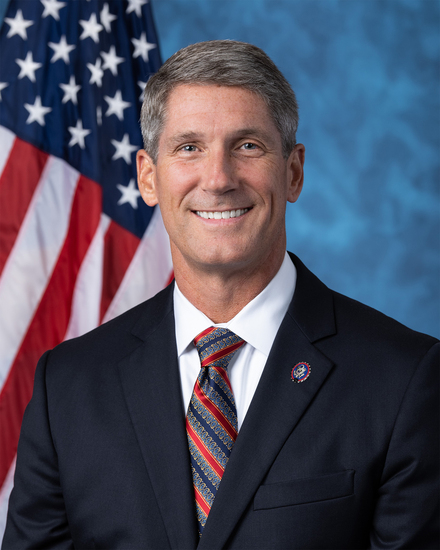
Rep. Scott Franklin
Sponsored bills
Maddy summaryHR 623, the LICENSE Act of 2025, modifies federal commercial driver’s license (CDL) regulations to improve testing flexibility and standards. It requires the Transportation Secretary to revise two key regulations: (1) allowing third-party examiners to administer knowledge tests only if they hold valid certification, complete specific training, and have 1 unit of required instruction (per 49 CFR §384.228), and (2) enabling any state to administer skills tests to CDL applicants regardless of their state of residence or where they received training (per 49 CFR §383.79). These changes directly affect CDL applicants, states administering tests, and third-party examiners. The bill focuses on streamlining testing processes while establishing clearer examiner qualifications and removing geographic barriers for skills testing.
Maddy summaryHJRES 28 proposes a constitutional amendment to permanently fix the number of justices on the U.S. Supreme Court at nine. This would require ratification by 38 state legislatures (three-fourths of states) within seven years to become part of the Constitution. The amendment directly affects the structure of the Supreme Court, which has had nine justices since 1869 but could otherwise be altered by future congressional action. It does not change current court operations or create new laws, but instead seeks to make the nine-justice composition a permanent constitutional requirement.
Maddy summaryHR 7 prohibits federal funds from being used for abortions or health insurance plans covering abortion, with exceptions for pregnancies resulting from rape, incest, or when a woman's life is endangered. It blocks federal premium tax credits under the Affordable Care Act for health plans covering abortion (except in specified cases) and requires clear disclosure of abortion coverage and related surcharges in plan materials. The bill allows individuals or employers to purchase separate abortion coverage using non-federal funds, such as out-of-pocket payments, without affecting federal subsidies. It directly affects federal health programs, ACA marketplace plans, and health insurance issuers offering coverage that includes abortion services.
Birthright Citizenship Act of 2025 This bill limits birthright citizenship by redefining what it means to be subject to the jurisdiction of the United States. Currently, a person born in the United States and subject to U.S. jurisdiction is entitled to citizenship. Under the bill, a person is subject to U.S. jurisdiction if he or she is born to a parent who is (1) a U.S. citizen or national, (2) a lawful permanent resident residing in the United States, or (3) a non-U.S. national ( alien under federal law) with a lawful immigration status who is performing active service in the Armed Forces. The bill does not affect the citizenship or nationality status of any person born before the bill's enactment date.
Maddy summaryHR 477 (MACH Act) establishes a NASA program to facilitate commercial testing of hypersonic aircraft technology. It prohibits NASA from funding technology development (only enabling testing) and restricts partnerships with foreign entities or "entities of concern" per security definitions. NASA must coordinate with the Defense Department and FAA, develop a strategic plan within 60 days, and submit annual reports to Congress on testing activities. This directly affects commercial companies seeking to test hypersonic systems through NASA's framework.
Chiropractic Medicare Coverage Modernization Act of 2025 This bill expands Medicare coverage of chiropractic services to include all services provided by chiropractors, rather than only subluxation corrections through manual manipulation of the spine.
Maddy summaryHR 470, the Red Snapper Act of 2025, blocks the U.S. Secretary of Commerce from implementing area or bottom closures in the South Atlantic for snapper-grouper fisheries until two conditions are met: the completion of the South Atlantic Great Red Snapper Count survey and integration of its data into the next official stock assessment. This directly affects recreational and commercial fishermen in the South Atlantic region, particularly in Florida, where red snapper fishing supports significant economic activity ($14 billion annually). The bill aims to delay management changes pending new scientific data to avoid potential economic harm during a period of record fish stock abundance. It does not alter fishing seasons or quotas but specifically targets the timing of area closure decisions.
Maddy summaryHR 465, the "Old Glory Only Act," requires all U.S. diplomatic and consular posts abroad to fly only the United States flag. The bill directs the Secretary of State to ensure no other flags are displayed over these government facilities. This is a procedural change affecting the physical display of flags at U.S. embassies and consulates worldwide, with no other policy provisions. It mandates a specific practice without altering other diplomatic protocols or affecting citizens or organizations.
Maddy summaryHR 404, the "Hearing Protection Act," reclassifies firearm silencers (devices that reduce gunfire noise) as firearms for federal tax and regulatory purposes. It imposes a 10% federal tax on silencers, requires the destruction of all existing federal silencer registration records within one year, and preempts state laws that tax or regulate silencers. The bill clarifies that silencers are treated as firearms under federal law, including for licensing and marking requirements, and defines "firearm silencer" to include specific components. Note: The bill’s title is misleading - it addresses firearm silencer regulation, not hearing protection for people.