

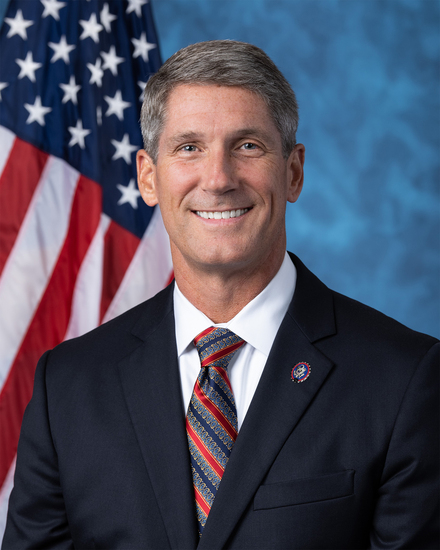
Photo of Scott Franklin
R United States House · District 18 · Florida On the 2026 ballot

Rep. Scott Franklin

Compare
Total votes
2,837
all sessions
Attendance
99%
30 missed
Higher than 78% of chamber peers
With party
96%
of cast votes
Higher than 90% of chamber peers
Bipartisan score
2%
crosses aisle rarely
Lower than 91% of chamber peers
Sponsored
875
bills & resolutions
Near the chamber average
Committees
6
assignments
875 bills and resolutions

Sponsored bills

Total
875
Primary
47
Co-sponsor
828
This page
875
matching current filters
Co-sponsor HJRES 38
In committee · Indiana House · Co-sponsor
Providing for congressional disapproval under chapter 8 of title 5, United States Code, of the rule submitted by the Environmental Protection Agency relating to "Phasedown of Hydrofluorocarbons: Management of Certain Hydrofluorocarbons and Substitutes Under the American Innovation and Manufacturing Act of 2020".

Maddy summaryHJRES 38 is a joint resolution seeking congressional disapproval of an Environmental Protection Agency (EPA) rule implementing the American Innovation and Manufacturing (AIM) Act. The rule manages the phasedown of hydrofluorocarbons (HFCs), potent greenhouse gases used in refrigeration and air conditioning, under the AIM Act of 2020. If approved, this resolution would block the EPA rule from taking effect, preventing its implementation of HFC management requirements. This is a procedural disapproval under the Congressional Review Act, not a new law, and directly affects the EPA’s regulatory authority over HFCs.

In committee Feb 7, 2025 1 co-sponsor
Co-sponsor HR 1131
In committee · Indiana House · Co-sponsor
Family Farm and Small Business Exemption Act

Maddy summaryHR 1131 exempts certain family farms and small businesses from being counted as assets when calculating financial need for federal student aid under the Higher Education Act. Specifically, it amends the law to exclude the net value of a family farm where the family resides and small businesses (with ≤100 employees) owned by the family from need analysis calculations. This change directly affects students from qualifying family farm or small business households when applying for federal financial aid. The exemption applies to need analysis conducted for award years beginning after the bill's enactment date. The bill modifies Section 480(f)(2) of the Higher Education Act of 1965 to implement this policy change.

In committee Feb 7, 2025 1 co-sponsor
Co-sponsor HR 1119
In committee · Indiana House · Co-sponsor
Unemployment Integrity Act of 2025

Maddy summaryHR 1119, the Unemployment Integrity Act of 2025, requires unemployed individuals applying for regular benefits to actively engage with job opportunities by responding to work-related requests, attending required interviews, and complying with reasonable assessments like drug tests or skills evaluations. It also mandates the Secretary of Labor to study increasing random audits of unemployment claims and potentially expand these audits to improve program integrity. Additionally, the bill links federal funding for extended unemployment benefits to states adopting these new requirements, stating that states must include the interview and compliance provisions before receiving federal funds for extended benefits. These changes directly affect unemployed workers seeking benefits and state unemployment programs administering the system.

In committee Feb 7, 2025 1 co-sponsor
Co-sponsor HR 1151
In committee · Indiana House · Co-sponsor
Freedom to Invest in Tomorrow’s Workforce Act

Maddy summaryThis bill expands 529 college savings account flexibility by allowing funds to cover costs for industry-recognized postsecondary credentials, not just traditional degrees. It defines "qualified expenses" to include tuition/fees for recognized credential programs (like certifications or apprenticeships), required testing fees, and continuing education needed to maintain credentials. To qualify, programs must meet specific criteria, such as appearing on state lists under the Workforce Innovation and Opportunity Act or being listed in VA or Defense directories. The change applies to 529 distributions made after the law's enactment, giving families more options to use these accounts for job-focused training.

In committee Feb 7, 2025 1 co-sponsor
Co-sponsor HR 987
In committee · Indiana House · Co-sponsor
Fair Access to Banking Act

Fair Access to Banking Act This bill places restrictions on certain banks, credit unions, and payment card networks if they refuse to do business with a person who complies with the law. Restrictions include prohibiting the use of electronic funds transfer systems and lending programs, termination of an institution's depository insurance, and specified civil penalties. Banks and other specified financial institutions are allowed to deny financial services to a person only if the denial is justified by a documented failure of that person to meet quantitative, impartial, risk-based standards established in advance by the institution. This justification may not be based upon reputational risks to the institution. The bill establishes the right for a person to bring a civil action for a violation of this bill.

In committee Feb 5, 2025 1 co-sponsor
Co-sponsor HR 942
In committee · Indiana House · Co-sponsor
Banning SPR Oil Exports to Foreign Adversaries Act

Maddy summaryHR 942, the "Banning SPR Oil Exports to Foreign Adversaries Act," prohibits the export of petroleum products drawn from the U.S. Strategic Petroleum Reserve to China, North Korea, Russia, Iran, and any entity owned or controlled by these countries or the Chinese Communist Party. The Secretary of Energy may grant a waiver for such exports if certified as serving U.S. national security interests, but must issue implementing rules within 60 days of enactment. This policy directly affects U.S. energy exports and entities seeking to purchase SPR oil from the listed adversaries.

In committee Feb 4, 2025 1 co-sponsor
Co-sponsor HR 943
In committee · Indiana House · Co-sponsor
No User Fees for Gun Owners Act

Maddy summaryHR 943, the "No User Fees for Gun Owners Act," bans states and local governments from requiring insurance, taxes, or user fees as conditions for owning, buying, or selling firearms. It specifically prohibits these fees for firearm manufacture, importation, acquisition, transfer, or continued ownership, except for general sales taxes applied equally to all goods. The bill amends federal law to prevent states from imposing such conditions on gun ownership or commerce, while allowing standard sales taxes to apply uniformly. This directly affects gun owners, dealers, and manufacturers by removing mandatory fees tied to firearm transactions. The law does not restrict general sales taxes but eliminates state-specific fees as a prerequisite for firearm-related activities.

In committee Feb 4, 2025 1 co-sponsor
Co-sponsor HR 925
In committee · Indiana House · Co-sponsor
Dismantle DEI Act of 2025

Maddy summaryHR 925, the "Dismantle DEI Act of 2025," would eliminate diversity, equity, and inclusion (DEI) programs across federal government operations. The bill requires federal agencies to close DEI offices, rescind related executive orders, and prohibit the use of federal funds for DEI training, offices, or initiatives. It defines "prohibited diversity, equity, or inclusion practice" as any activity that discriminates based on race, ethnicity, religion, biological sex, or national origin, or requires employees to complete training asserting that certain groups are inherently superior or inferior. The legislation also prohibits requiring employees to sign statements about race, ethnicity, or gender, and establishes private lawsuits for violations with potential damages of $1,000 per violation per day. This bill would directly affect federal agencies, contractors, grantees, and advisory committees receiving federal funding.

In committee Feb 4, 2025 1 co-sponsor
Primary HR 933
In committee · Indiana House · Lead sponsor
Defending Domestic Orange Juice Production Act of 2025

Defending Domestic Orange Juice Production Act of 2025 This bill requires finished pasteurized orange juice to contain at least 10% by weight of orange juice soluble solids, exclusive of the solids of any added optional sweetening ingredients. (Current regulations require at least 10.5% by weight of orange juice soluble solids.)

In committee Feb 4, 2025 0 co-sponsors
Co-sponsor HR 880
In committee · Indiana House · Co-sponsor
Household Goods Shipping Consumer Protection Act

Household Goods Shipping Consumer Protection Act This bill allows the Federal Motor Carrier Safety Administration (FMCSA) to assess civil penalties against motor carriers, brokers, and freight forwarders for violations related to the interstate transportation of household goods and provides states with additional related authorities. As background, a broker is the “middle person” between a shipper and a motor carrier and arranges for the transportation of household goods. A freight forwarder organizes shipments for individuals or corporations. Unlike a broker, freight forwarders assume responsibility for transportation and may transport the freight itself. The bill expands the FMCSA registration requirements to require motor carriers, brokers, and freight forwarders to designate a principal place of business (i.e., a single physical location where management officials report to work, a significant portion of the transportation business is conducted, and records are maintained). FMCSA may withhold, suspend, amend, or revoke any part of a registration for failure to designate. In addition, brokers and freight forwarders must disclose any common ownership, management, control, or familial relationship with any other carrier, freight forwarder, broker, or applicant in the previous three years. Under current law, motor carriers must disclose this information. Further, states may use certain grant funds to enforce federal household goods statutes and regulations for the interstate transportation of these goods by motor carriers and brokers. This applies to Motor Carrier Safety Assistance Program (MCSAP) grant funds and MCSAP High Priority discretionary grant funds. A state shall retain collected fines that are a result of enforcement.

In committee Feb 1, 2025 1 co-sponsor
Showing 191 to 200 of 875 bills
Previous 1 … 19 20 21 … 88 Next