

Maddy summaryThe End the Vaccine Carveout Act changes the National Vaccine Injury Compensation Program (NVICP) to allow individuals to sue vaccine manufacturers or administrators directly in court for vaccine-related injuries or deaths, without first needing to file a claim under the NVICP. It removes time limits for filing NVICP claims and repeals rules that previously let people choose between the program and a lawsuit for the same injury. The bill also specifically excludes COVID-19 vaccines from the definition of "covered countermeasure," meaning they are no longer protected by the same emergency liability shield that applied to other pandemic vaccines. This affects vaccine manufacturers, providers, and individuals who experience vaccine-related harm, shifting liability from the NVICP to the court system for most cases.
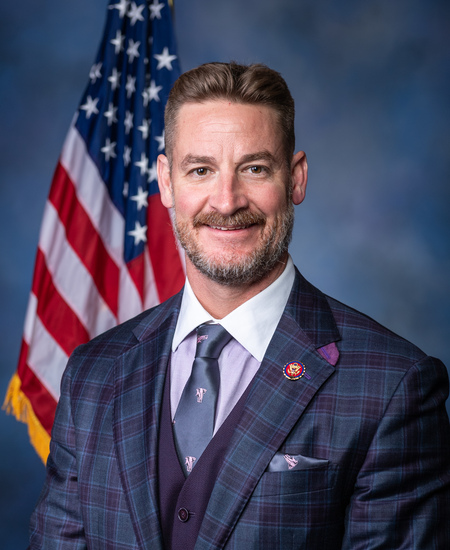
Rep. W. Gregory Steube
Sponsored bills
Maddy summaryHR 4618, the "Jamie Reed Protecting Our Kids from Child Abuse Act," creates legal liability for pediatric gender clinics and medical practitioners who perform gender-transition procedures on minors. It prohibits federal funding for such clinics, affiliated institutions (like hospitals or universities), and any gender-transition procedures performed on minors. Individuals harmed by these procedures can file lawsuits up to 30 years after turning 18, seeking compensatory damages, punitive damages, and attorney fees. The law applies retroactively to procedures performed before, on, or after its effective date. It specifically excludes exceptions for medical conditions like ambiguous biological characteristics or life-threatening illnesses.
Maddy summaryHR 2633 requires the U.S. President to conduct a review of U.S.-South Africa relations within 120 days of enactment. The bill mandates a presidential certification within 30 days confirming whether South Africa's actions undermine U.S. interests, along with a comprehensive report on bilateral relations. It also requires a separate report identifying South African officials who may face sanctions under the Global Magnitsky Act for corruption or human rights abuses. The bill does not change current policy but triggers a formal review process based on findings about South Africa's diplomatic ties with Hamas, Russia, and China. This is a procedural measure focused on assessing and potentially adjusting U.S. engagement with South Africa.
Maddy summaryThe Defending American Property Abroad Act of 2025 protects U.S. property interests in Western Hemisphere countries with U.S. free trade agreements. It requires the Secretary of Homeland Security to identify and list ports, harbors, or marine terminals where a foreign government has nationalized, expropriated, or seized U.S.-owned land (since January 2024) through actions like contract repudiation or forced control. Once listed, the President must prohibit vessels using these sites from importing goods, docking passenger vessels, or conducting maintenance in the United States. This directly affects U.S. persons (citizens or businesses) with property in designated locations.
Maddy summaryThis bill creates new retirement savings credits for small tax-exempt nonprofits (like community centers or charities) that start or maintain retirement plans. It allows these organizations to claim a credit equal to either their calculated credit amount or their payroll taxes paid during the year, whichever is smaller. The credit applies to both startup costs for new plans and auto-enrollment features, capping the credit at the employer's payroll tax liability. The bill takes effect for taxable years after December 2024, with offsetting funds transferred to Social Security Trust Funds to maintain existing revenue streams.
Maddy summaryHR 4554, the Restoring Biological Truth to the Workplace Act, prohibits employers from taking adverse actions (like firing or demoting) against employees who express views about biological sex being binary or use single-sex facilities (such as bathrooms). It directly affects employees who discuss biological sex or request single-sex areas, and employers who might retaliate. Key provisions make it unlawful to punish such expression or requests, explicitly removing the defense that the practice is "job-related" or "necessary for business." The bill aims to protect workplace expression and access related to biological sex under existing civil rights law.
Maddy summaryHRES 594 is a non-binding resolution passed by the U.S. House of Representatives condemning the persecution of Christians in Muslim-majority countries. It cites specific examples like violence against Christians in Nigeria (including attacks on Palm Sunday and Yelewata), restrictions in Egypt (such as limited worship spaces and forced conversions), and blasphemy-related violence in Pakistan. The resolution urges the President to prioritize protecting persecuted Christians in U.S. foreign policy, including through diplomatic engagement and trade negotiations with affected countries. As a symbolic resolution, it does not create new laws or directly affect any individuals, but aims to influence U.S. diplomatic efforts.
Maddy summaryHR 4534 makes Executive Order 14191 legally binding by codifying it into law, directly affecting private, religious, and parochial elementary and secondary schools. The bill's key provision converts the executive order - which aims to expand educational freedom - into permanent law. It explicitly states this change does not alter whether these schools receive federal funding under Title IX or are considered state actors for Fourteenth Amendment liability purposes. The law focuses on establishing the executive order as enforceable policy without modifying existing civil rights protections for schools.
Maddy summaryThis bill prohibits the District of Columbia government from establishing new sister city relationships with jurisdictions in countries designated as "foreign adversaries" under federal law. It requires the District to terminate any existing sister city relationships with such countries within 180 days of the law's enactment or according to the existing agreement's terms. The District must also certify compliance with this law to receive federal funds for diplomatic liaison and outreach services. The bill directly affects the District's international partnerships and its use of federal funding for diplomatic activities.
Maddy summaryHR 4486, the Microplastics Safety Act, requires the FDA (within the Department of Health and Human Services) to study the health impacts of microplastics in food and water. The study must identify major exposure pathways and examine effects on children's health, the endocrine system, cancer, chronic illness, and reproductive health. The FDA must submit a report to Congress within one year of the bill's enactment, detailing the study's findings and recommending potential legislative or administrative actions. This bill does not impose new regulations or bans but mandates a federal study to inform future policy decisions.