Maddy summaryThis bill reinstates a pre-American Rescue Plan Act (ARP) tax reporting rule for gig economy platforms. It requires third-party payment platforms (like Uber or DoorDash) to report transactions to the IRS only if a gig worker earns over $20,000 in total or completes more than 200 transactions in a year. This directly affects gig workers whose income falls below these thresholds, exempting them from the reporting requirement. The provision effectively reverses a change made by the ARP, reducing administrative burden for both platforms and lower-earning gig workers. The bill amends IRS Code Section 6050W to restore these specific de minimis payment thresholds.
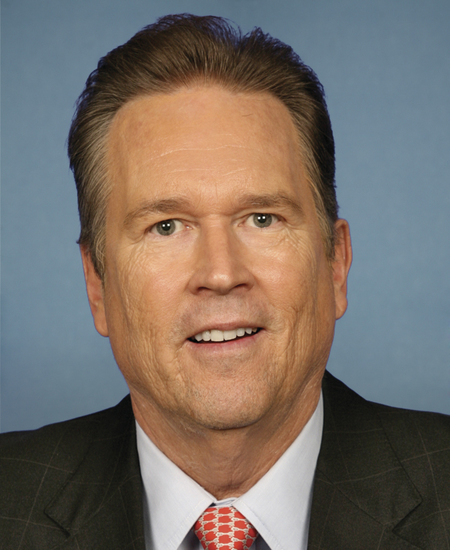
Rep. Vern Buchanan
Sponsored bills
Maddy summaryThis bill requires the Army to create a plan for acquiring horses for the 3rd Infantry Regiment's Caisson Platoon within 30 days and begin holding at least two weekly military funerals using caisson services (horse-drawn carriages) at Arlington National Cemetery. If the Army cannot meet this schedule, it must contract with a private entity to provide the services until the backlog of requested caisson funerals is cleared and the Army can resume weekly services. The bill also mandates monthly reports to Congress on families waiting for these traditional funeral honors and directs the Army to consider land in West Virginia or Virginia for the platoon's training. It directly affects the Army's Caisson Platoon, Arlington National Cemetery operations, and families awaiting traditional military funeral services.
Maddy summaryHR 6751 authorizes the U.S. Mint to produce commemorative coins honoring Roberto Clemente, a Hall of Fame baseball player and humanitarian, including 50,000 $5 gold coins, 400,000 $1 silver coins, and 750,000 half-dollar coins. The coins must feature Clemente's image and inscriptions like "Roberto Clemente" and "2027," with all sales including a surcharge ($5-$35 per coin) paid to the Roberto Clemente Foundation. The foundation, which supports youth sports, education, and disaster relief programs, will use these funds for its mission, while the U.S. Treasury must recover all production costs. The coins will be sold exclusively in 2027, with no net cost to the government.
Maddy summaryThe Whale CHARTS Act of 2024 requires the U.S. Commerce Secretary (via NOAA) to create detailed, high-resolution maps showing where baleen whales and sperm whales live, feed, calve, and migrate in U.S. waters. These maps must include current and future habitat data, using tools like satellite imagery and drones, and be made available in formats that integrate with ship navigation systems to help vessels avoid whale areas. The bill also mandates regular surveys of understudied whale populations and requires annual reports to Congress on progress. It authorizes $2 million yearly for mapping and $1 million for surveys through 2029, with funding to support research on knowledge gaps. The law directly affects commercial and recreational vessels through navigation system updates and marine researchers through data collection requirements.
Maddy summaryThis bill designates the Department of Veterans Affairs medical center in West Palm Beach, Florida, as the "Thomas H. Corey VA Medical Center." The change updates all federal references - including laws, regulations, maps, and documents - to reflect the new name. It directly affects the facility's official identity and veteran services documentation. The bill is procedural and does not alter healthcare services or funding.
Maddy summaryThis bill creates the Critically Endangered Animals Conservation Fund within the existing Multinational Species Conservation Fund, authorizing $5 million annually from 2025-2030. It provides competitive grants to foreign wildlife authorities and qualified organizations to fund on-the-ground conservation projects for species facing severe extinction risk (defined by IUCN Red List categories). Projects must focus on habitat protection, research, anti-poaching enforcement, community engagement, or disease management, while requiring local community consent and matching funds. Grants cannot fund captive breeding except for reintroduction into the wild, and all project reports must be publicly available.
Maddy summaryThis bill provides tax relief for individuals who lived in areas affected by Hurricanes Helene and Milton during September 28-November 2, 2024, and suffered economic losses. It allows taxpayers to use their previous year's income to calculate the Earned Income Credit, increases limits on charitable contributions for disaster relief, and permits penalty-free withdrawals up to $100,000 from retirement accounts with repayment options within three years. The bill also establishes special rules for claiming hurricane-related personal casualty losses. These provisions apply to residents of areas declared disaster zones by the President under the Stafford Act due to these hurricanes.
Maddy summaryHRES 1577 is a resolution expressing congressional support for National Adoption Day (November 23, 2024) and National Adoption Month (November 2024). It highlights that over 108,000 children in U.S. foster care are waiting for adoption and encourages Americans to consider adoption to help provide safety, permanency, and well-being for children. The resolution does not create new laws but formally recognizes the importance of adoption and urges the public to support efforts to place children in permanent families. It directly affects public awareness and encourages citizen engagement during these designated observances.
Maddy summary# Summary of Proposed Higher Education Act Amendments This document outlines significant proposed amendments to the Higher Education Act of 1965, primarily as part of the "College Cost Reduction Act." The key elements include: ## Accreditation Reform - Major overhaul of accreditation standards, requiring accrediting agencies to demonstrate independence from trade associations - New requirements for accrediting agencies to assess student achievement outcomes, including median value-added earnings relative to median total price charged - Introduction of an "Alternative Quality Assurance Experimental Site Initiative" to test non-accredited institutions - Protections for religious institutions, including a new process for appealing accreditation decisions related to religious mission - Removal of "litmus tests" that would require institutions to support specific political viewpoints ## Student Success Initiatives - Establishment of "Postsecondary Student Success Grants" to increase participation, retention, and completion rates for high-need students - Focus on evidence-based practices, with tiered requirements (tier 1, 2, and 3 reforms) - Mandatory inclusion of high-need student populations (low-income, first-generation, military-connected, etc.) - Requirements for institutions to report on completion rates, retention rates, and student demographics ## Regulatory Changes - Repeal of numerous existing regulations including: * Closed school discharges * Borrower defense to repayment * Pre-dispute arbitration * False certification requirements * Ability-to-benefit rules * Financial responsibility regulations - New restrictions on incentive compensation for recruiters - Changes to third-party servicer definitions and regulations ## Transfer and Credit Policies - New requirement that institutions cannot deny transfer credit based solely on the source of accreditation - Requirements for transparent transfer policies - Changes to reverse transfer policies ## Other Key Provisions - Modifications to the National Advisory Committee on Institutional Quality and Integrity (NACIQI) - New definitions for "total price" and "value-added earnings" - Changes to the process for institutions to change accrediting agencies - New requirements for institutions to report on student outcomes The overall focus of these proposed amendments is to reduce regulatory burden on institutions, promote transparency, improve student outcomes (particularly for high-need students), modernize accreditation processes, and protect religious institutions' rights in accreditation decisions.

Maddy summaryThe Sunshine Protection Act of 2023 would end the practice of changing clocks twice a year for daylight saving time (DST) by making DST permanent nationwide, unless a state chooses to remain on standard time. It repeals the requirement to switch clocks back to standard time in the fall, directly affecting all U.S. states and territories that currently observe DST. The bill allows states that previously opted out of DST under the Uniform Time Act (like Arizona and Hawaii) to maintain their current time zone choices without further action. Key provisions include adjusting time zone offset language in existing law and granting states the authority to select either permanent DST or standard time based on their current arrangements. This change would eliminate seasonal time changes for most Americans, though states could still choose to stay on standard time if they prefer.