

Maddy summaryThis bill makes permanent Medicare telehealth services that allow patients to receive care from home, removing temporary pandemic-era restrictions. It eliminates geographic limitations and expands where telehealth can originate, so beneficiaries in rural or remote areas can consistently access virtual care without needing to travel. The key change modifies Medicare rules to remove expiration dates tied to public health emergencies, ensuring home-based telehealth remains covered indefinitely. This directly affects Medicare beneficiaries, particularly seniors and people with mobility challenges in underserved communities. The policy change simplifies access to routine care without requiring in-person visits.
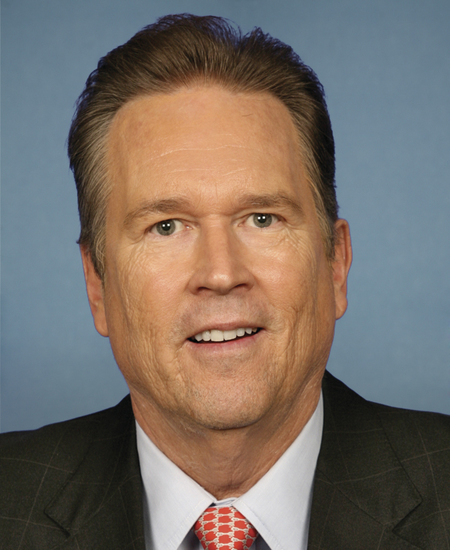
Rep. Vern Buchanan
Sponsored bills
Maddy summaryHR 1405 directs the Comptroller General (GAO) to study regulatory barriers hindering the expansion or siting of new pharmaceutical manufacturing facilities in the U.S. This study specifically examines how environmental and other regulations delay or increase costs for manufacturers compared to other countries, and assesses impacts on supply chain resiliency. The GAO must engage stakeholders to identify barriers, potential technological solutions, and needed policies, then submit a report to Congress within one year. The bill does not change regulations itself but aims to provide data and recommendations to improve U.S. competitiveness in drug manufacturing.
Lung Cancer Screening and Prevention Act of 2025 This bill authorizes Medicare coverage of additional types of lung cancer screening tests that are approved by the Food and Drug Administration, regardless of whether they are recommended by the United States Preventive Services Task Force. The Centers for Medicare & Medicaid Services must set coverage and payment limits for such tests. (Currently, Medicare covers screening tests for the early detection of lung cancer if they are recommended by the task force.)
Goldie's Act This bill expands enforcement provisions under the Animal Welfare Act (AWA). Specifically, the bill directs the Department of Agriculture (USDA) to document and record detailed descriptions of violations of the act observed during inspections and investigations. USDA must provide a copy of all records documenting violations to state, local, and municipal animal control or law enforcement officials within 24 hours of such inspections or investigations. Inspections must be held at least once a year of each research facility, the premises of each animal dealer, and each exhibitor of animals. If violations are found during inspections, then USDA must conduct any necessary follow-up inspections until all the violations are corrected. Inspectors must confiscate or destroy in a humane manner animals found to be suffering physical or psychological harm as a result of failure to comply with the AWA. Violators are subject to civil penalties as outlined in the bill.
This concurrent resolution declares that Congress should not impose any new performance fee, tax, royalty, or other charge relating to the public performance of sound recordings on a local radio station for broadcasting sound recordings over the air, or on any business for such public performance of sound recordings.
Maddy summaryHR 1301, the Death Tax Repeal Act, would eliminate the federal estate tax and generation-skipping transfer tax for estates of individuals dying on or after its enactment date. It directly affects individuals inheriting significant assets, as it removes taxes on estates exceeding $10 million (adjusted for inflation) and repeals taxes on large transfers between generations. The bill modifies the gift tax by establishing a $10 million lifetime exemption with annual inflation adjustments, replacing previous tax brackets. It applies to estates, gifts, and transfers occurring on or after the bill's effective date.
Maddy summaryHR 1347, the AIMM Act, permanently extends a tax provision allowing businesses to deduct depreciation, amortization, or depletion when calculating their business interest expense limit. This change directly affects manufacturers and other businesses that use these deductions for tax purposes. The bill amends the tax code to remove the previous expiration date (which applied only to years before 2022), making the deduction rule permanent for all future taxable years. The key change is eliminating a temporary provision, providing ongoing certainty for business tax calculations.
Maddy summaryHR 1330 establishes the Smithsonian National Museum of the American Latino, authorizing its location within the National Mall's "Reserve" area. The bill requires the Smithsonian Board to coordinate with federal agencies managing potential museum sites, including notifying relevant congressional committees before land transfers. It mandates that the museum's exhibits and programs accurately represent the diverse cultures, histories, and viewpoints of Hispanic and Latino communities in the U.S., seeking input from a broad range of community experts. The Smithsonian must also submit regular reports to Congress detailing compliance with these representation requirements.
Maddy summaryThis bill creates a 40% tax credit for U.S. companies investing in new or upgraded facilities manufacturing critical supply chain goods, including pharmaceuticals, medical devices, semiconductors, and aerospace equipment. It specifically targets facilities located in the U.S., Puerto Rico, or U.S. possessions, with additional incentives for projects in economically distressed areas (poverty rate ≥30% in qualified opportunity zones). The credit excludes investments by foreign entities from "covered nations" or those with significant foreign government control. Companies must meet strict definitions of "qualified property" and facility purpose to qualify, with the credit applying to property placed in service after 2024.
Maddy summaryThis bill creates a new National Center for Alternatives to Animals in Research and Testing within the National Institutes of Health (NIH). It requires NIH to establish incentives for researchers to adopt non-animal methods - such as organoids, AI models, and 3D human cell systems - before approving animal-based studies, and mandates that all federally funded institutions publicly report annual animal usage data by species. Covered entities must also submit biennial plans to reduce animal use and update their reports every two years. The law aims to implement a 1993 congressional mandate for reducing animal research through transparency, new resources, and standardized evaluation of alternatives.