

Maddy summaryThis bill extends duty-free access for Haitian apparel exports to the U.S. until September 30, 2035, under the Caribbean Basin Economic Recovery Act. It increases the minimum percentage of eligible apparel that qualifies for duty-free treatment to 60% or more and adjusts import limits to 1.25% of the U.S. apparel import market. The bill also restores eligibility for specific apparel items that lost duty-free status due to past tariff schedule changes. These changes directly benefit Haitian apparel manufacturers and U.S. importers of Haitian-made clothing by maintaining market access.
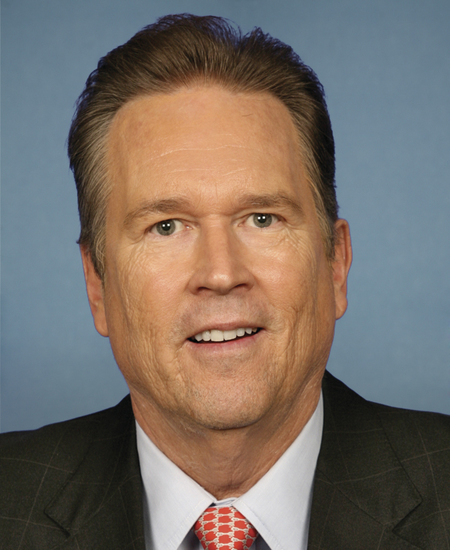
Rep. Vern Buchanan
Sponsored bills
Maddy summaryHR 1622 reclassifies uranium as a critical mineral under federal law, overriding existing exclusions. It retroactively includes uranium on the 2022 critical minerals list published by the U.S. Geological Survey and mandates its inclusion in all future lists under the Energy Act of 2020. This change directly affects federal programs managing critical mineral supply chains, such as defense stockpiling and domestic production incentives. The bill does not create new funding or regulations but alters uranium's regulatory status to prioritize its role in national energy security.
Maddy summaryThe Access Technology Affordability Act of 2025 creates a new tax credit for individuals who purchase technology designed to assist blind people, such as screen readers or braille displays. This credit covers up to $2,000 in expenses per three-year period for qualified access technology used by the taxpayer, their spouse, or a blind dependent. The credit adjusts for inflation after 2026 but does not apply to costs already covered by other tax benefits. The credit expires after 2030, with adjustments for cost-of-living changes starting in 2027.
Maddy summaryThe American Victims of Terrorism Compensation Act amends the Justice for United States Victims of State Sponsored Terrorism Act to increase funding for victims of terrorism. It directs the transfer of approximately $1.5 billion from the Binance Holdings Limited case, plus 50% of excess unobligated balances from Department of Justice and Treasury forfeiture funds, into the Victims Fund. The bill establishes deadlines for agencies to deposit funds (within 30 days of receipt or 15 days after enactment), requires annual reports on fund activity, and authorizes annual payments to eligible claimants starting in 2026. This legislation directly affects terrorism victims who receive compensation from the fund and federal agencies that handle forfeited assets from terrorism-related cases.
Maddy summaryHR 1494, the Sporting Goods Excise Tax Modernization Act, requires online marketplaces (like Amazon or eBay) to collect the federal excise tax on sporting goods sold through their platforms, rather than leaving this responsibility to individual sellers. It specifically targets platforms that host third-party seller listings and facilitate transactions for goods imported from outside the U.S. The bill treats these marketplaces as the "importer" for tax purposes, making them liable for the tax on qualifying sporting goods sales. This change applies to sales after a 60-day grace period following the bill's enactment, with no impact on taxes already owed by other parties.
Maddy summaryThis bill prohibits marijuana businesses from deducting ordinary business expenses on their federal tax returns. It amends federal tax law to deny deductions or credits for any costs related to selling marijuana (which remains illegal under federal law), directly affecting state-legal marijuana businesses operating under state law but subject to federal prohibition. The key provision requires these businesses to pay taxes on their full gross income without subtracting standard business costs like rent or supplies. The rule applies to tax years beginning after the bill's enactment date.
Maddy summaryHR 1502 authorizes the creation of a Congressional Gold Medal to honor the volunteers and communities (primarily from Nebraska, Colorado, and Kansas) who supported the North Platte Canteen during World War II. The bill directs the Treasury Secretary to design and strike the medal, which will be presented to the individuals who contributed to the canteen’s operations and then permanently displayed at the Lincoln County Historical Museum in North Platte, Nebraska. It also permits the sale of bronze duplicates to cover production costs, with proceeds going to the U.S. Mint. This is a commemorative measure recognizing historical service, not a policy change affecting current laws or programs.
Maddy summaryHR 1475, the SBA Disaster Transparency Act, requires the Small Business Administration (SBA) to publish all disaster assistance reports on its website. This bill amends existing law by adding specific language mandating that the SBA "publish on the website of the Administration" reports related to disaster assistance, including those submitted by state and local officials. The key mechanism is a procedural update to existing reporting requirements, ensuring all required reports are publicly accessible online rather than only being submitted internally. This directly affects the SBA (by changing its reporting process) and the public (by providing greater transparency into how disaster aid is distributed). The bill does not alter disaster assistance eligibility or funding levels.
Maddy summaryHR 1492 amends the Social Security Act to extend the negotiation period for standard drug manufacturers under the federal drug pricing program. Specifically, it changes the timeframe from 7 years to 11 years for small-molecule drugs (like traditional pills) to negotiate prices with the government, aligning it with the existing 12-year period for complex biologic drugs (like insulin or monoclonal antibodies). This adjustment directly affects pharmaceutical companies that produce small-molecule drugs, giving them a longer window to negotiate pricing terms. The bill makes this change effective as if it had been part of the 2022 law that established the program.
Maddy summaryThis bill would require states to create a simplified process for out-of-state healthcare providers to join Medicaid and CHIP programs. Qualified providers (those already enrolled in Medicare or another state's program with low fraud risk) could enroll without excessive screening and would be approved for five years. It directly affects children under 21 enrolled in Medicaid or CHIP by expanding access to providers outside their state, particularly in underserved areas. The change applies to all states' Medicaid programs but takes effect three years after enactment.