Medicare Prescription Drug Price Negotiation Act of 2021 This bill requires the Centers for Medicare & Medicaid Services (CMS) to negotiate with pharmaceutical companies regarding prices for drugs covered under the Medicare prescription drug benefit. Current law prohibits the CMS from doing so.
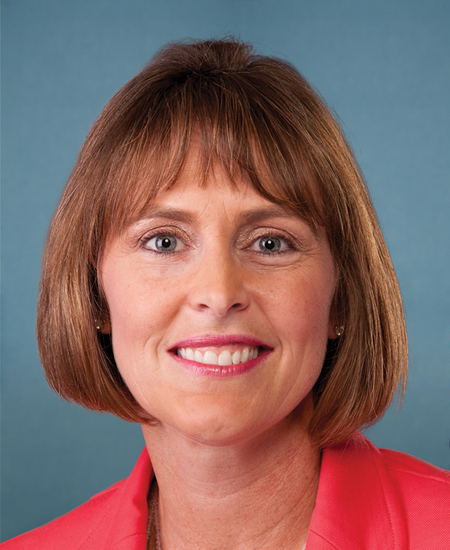
Rep. Kathy Castor
Sponsored bills
Stephanie Tubbs Jones Uterine Fibroid Research and Education Act of 2021 This bill directs the Department of Health and Human Services (HHS) to expand research on, and take other actions to address, uterine fibroids. These are muscular tumors that grow in the wall of the uterus and may cause pain, heavy menstrual bleeding, and reproductive issues. In coordination with the National Institutes of Health and appropriate federal agencies, HHS must undertake research activities on uterine fibroids. In addition, HHS must establish a database of services furnished to individuals diagnosed with uterine fibroids under Medicaid or the Children's Health Insurance Program and must develop a report on federal and state expenditures for such services. Additionally, HHS must disseminate information on uterine fibroids to the public and to health care providers, including information on the elevated risk for minority women and available treatments.
Fostering Postsecondary Success for Foster and Homeless Youth Act of 2021 This bill establishes a program through which the Department of Education (ED) must annually recognize institutions of higher education (IHEs) that offer outstanding services and programs to foster care and homeless youth. Further, ED must establish a Center for Fostering Postsecondary Success for Foster and Homeless Youth to assist IHEs with creating and maintaining their programs for these youth.
Increasing Access to Quality Cardiac Rehabilitation Care Act of 2021 This bill accelerates and expands certain changes that are scheduled to take effect relating to the coverage of cardiac, intensive cardiac, and pulmonary rehabilitation programs under Medicare. Currently, such programs require physician supervision. Effective January 1, 2024, physician assistants, nurse practitioners, and clinical nurse specialists may also supervise these programs. The bill expedites the effective date of these changes to January 1, 2022, and also allows these practitioners to administer programs in their offices, prepare and sign treatment plans, and prescribe exercise.
This bill directs the Speaker of the House and the President pro tempore of the Senate to arrange for the award of three Congressional Gold Medals to the U.S. Capitol Police (USCP) and other law enforcement agencies that protected the U.S. Capitol on January 6, 2021. Following the award of these medals, one medal shall be given to the USCP, one medal shall be given to the Metropolitan Police Department of the District of Columbia, and one medal shall be given to the Smithsonian Institution and displayed with a plaque listing all law enforcement agencies that participated in protecting the Capitol on January 6, 2021.
Equality Act This bill prohibits discrimination based on sex, sexual orientation, and gender identity in areas including public accommodations and facilities, education, federal funding, employment, housing, credit, and the jury system. Specifically, the bill defines and includes sex, sexual orientation, and gender identity among the prohibited categories of discrimination or segregation. The bill expands the definition of public accommodations to include places or establishments that provide (1) exhibitions, recreation, exercise, amusement, gatherings, or displays; (2) goods, services, or programs; and (3) transportation services. The bill allows the Department of Justice to intervene in equal protection actions in federal court on account of sexual orientation or gender identity. The bill prohibits an individual from being denied access to a shared facility, including a restroom, a locker room, and a dressing room, that is in accordance with the individual's gender identity.

Broadband Justice Act of 2021 This bill includes broadband high-speed internet service as a utility subsidized by federally assisted housing programs through utility allowances. The bill also establishes grants and loans for housing providers, public housing agencies, and other public entities to provide access to broadband high-speed internet service to residents of federally assisted housing through the installation of such service and other infrastructure improvements.
Expand Navigators' Resources for Outreach, Learning, and Longevity Act of 20 21 or the ENROLL Act of 20 21 This bill makes several changes to the navigator program for health insurance exchanges (a program through which entities receive funding to provide education and enrollment assistance). Specifically, the bill addresses certain funding decisions and regulatory actions taken by the Centers for Medicare & Medicaid Services (CMS). For example, the bill increases funding for navigators in federally facilitated exchanges (FFEs) beginning in FY2022. (The CMS decreased annual funding for FFE navigators for the 2017-2018 and 2018-2019 program years.) The bill also counters guidance issued by the CMS regarding navigator criteria by requiring FFE navigators to be chosen without regard to how the entity provides information about association health plans or short-term, limited-duration insurance. The bill also reinstates certain requirements that were removed by the CMS in 2018. Specifically, the bill requires (1) at least two navigators in each FFE, including at least one community and consumer-focused nonprofit group; and (2) that navigators be physically present in the state where the exchange is located.
This bill eliminates the exemption of short-term, limited-duration health insurance plans from the federal requirements for individual health insurance coverage beginning on January 1, 2023. Currently, short-term, limited-duration plans may offer coverage for a limited amount of time and are exempt from the market requirements of the Patient Protection and Affordable Care Act (e.g., coverage of individuals with preexisting conditions).
Expand Navigators' Resources for Outreach, Learning, and Longevity Act of 20 21 or the ENROLL Act of 20 21 This bill makes several changes to the navigator program for health insurance exchanges (a program through which entities receive funding to provide education and enrollment assistance). Specifically, the bill addresses certain funding decisions and regulatory actions taken by the Centers for Medicare & Medicaid Services (CMS). For example, the bill increases funding for navigators in federally facilitated exchanges (FFEs) beginning in FY2021. (The CMS decreased annual funding for FFE navigators for the 2017-2018 and 2018-2019 program years.) The bill also counters guidance issued by the CMS regarding navigator criteria by requiring FFE navigators to be chosen without regard to how the entity provides information about association health plans or short-term, limited-duration insurance. The bill also reinstates certain requirements that were removed by the CMS in 2018. Specifically, the bill requires (1) at least two navigators in each FFE, including at least one community and consumer-focused nonprofit group; and (2) that navigators be physically present in the state where the exchange is located.