

Honoring Abbas Family Legacy to Terminate Drunk Driving Act of 2021 This bill directs the Department of Transportation (DOT) to prescribe a motor vehicle safety standard that requires passenger motor vehicles manufactured after the effective date of such standard to be equipped with advanced drunk driving prevention technology. Advanced drunk driving prevention technology means a passive system that (1) monitors a driver's performance to identify impairment of a driver, (2) passively detects a blood alcohol level equal to and exceeding .08 blood alcohol content, or (3) detects impairment and prevents or limits vehicle operation. DOT must work with manufacturers of passenger motor vehicles, suppliers, safety advocates, and other interested parties to accelerate the development of the advanced drunk driving prevention technology and ensure the integration of such technology into the vehicles available for sale at the earliest practicable date.
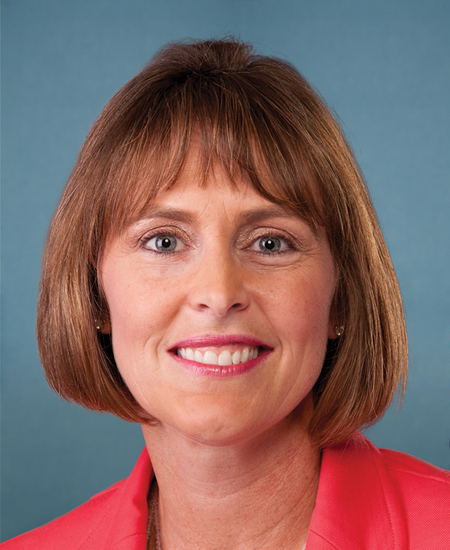
Rep. Kathy Castor
Sponsored bills
Children and Media Research Advancement Act or the CAMRA Act This bill requires the National Institutes of Health to fund research regarding the effects of media on infants, children, and adolescents. Such research must examine the impact of media (e.g., social media, television, video games) on cognitive, physical, and social-emotional development.
This resolution recognizes the disparity between wages paid to men and women, and its impact on women, families, and the nation and reaffirms Congress' commitment to supporting equal pay and to narrowing the gender wage gap.
This joint resolution eliminates the deadline for the ratification of the Equal Rights Amendment, which prohibits discrimination based on sex. The amendment was proposed to the states in House Joint Resolution 208 of the 92nd Congress, as agreed to in the Senate on March 22, 1972. The amendment shall be part of the Constitution whenever ratified by the legislatures of three-fourths of the states.
Neighborhood Homes Investment Act This bill establishes a new business-related tax credit to finance home building and rehabilitation in neighborhoods that meet certain eligibility criteria relating to poverty rates, income, and home values. The credit is limited to 35% of the lesser of the qualified development cost (i.e., the cost of construction, substantial rehabilitation, demolition, and environmental remediation of residential properties) or 80% of the national median sale price for new homes. The credit applies to single family homes containing four or fewer residential units, condominiums, or houses or apartments owned by cooperative housing corporations.
Safe Step Act This bill requires a group health plan to establish an exception to medication step-therapy protocol in specified cases. A medication step-therapy protocol establishes a specific sequence in which prescription drugs are covered by a group health plan or a health insurance issuer. A request for such an exception to the protocol must be granted if (1) an otherwise required treatment has been ineffective, (2) such treatment is expected to be ineffective and delaying effective treatment would lead to irreversible consequences, (3) such treatment will cause or is likely to cause an adverse reaction to the individual, (4) such treatment is expected to prevent the individual from performing daily activities or occupational responsibilities, (5) the individual is stable based on the prescription drugs already selected, or (6) there are other circumstances as determined by the Employee Benefits Security Administration. The bill requires a group health plan to implement and make readily available a clear process for an individual to request an exception to the protocol, including required information and criteria for granting an exception. The bill further specifies timelines under which plans must respond to such requests.
Housing Supply and Affordability Act This bill allows the Department of Housing and Urban Development to award grants to states, local governments, Indian tribes, and Native Hawaiian organizations for the development and implementation of housing policy plans. These plans must increase the housing supply while avoiding resident displacement, increase housing affordability, and reduce barriers to housing development. The amounts provided by the bill are designated as an emergency requirement pursuant to the Statutory Pay-As-You-Go Act of 2010 (PAYGO) and the Senate PAYGO rule. (This excludes the budget effects from being counted for the purposes of enforcing the PAYGO rules.)
Ethan's Law This bill establishes a framework to regulate the storage of firearms on residential premises at the federal, state, and tribal levels. At the federal level, the bill establishes statutory requirements for firearms on residential premises to be safely stored if a minor is likely to gain access without permission or if a resident is ineligible to possess a firearm. An individual who violates the requirements is subject to criminal penalties. A firearm stored in violation of the requirements is subject to seizure and forfeiture. At the state and tribal levels, the bill requires the Department of Justice to award grants to implement functionally identical requirements for the safe storage of firearms.
This resolution provides amounts for the expenses of the House Select Committee on the Climate Crisis for the 117th Congress.
This resolution expels Representative Marjorie Taylor Greene from the House of Representatives.