

Maddy summaryThis bill prohibits the Department of Defense from using funds to pay for or reimburse abortion services, except when the pregnancy endangers the mother's life, results from rape, or results from incest. It directly affects military personnel, civilian DOD employees, and contractors receiving medical care at military facilities by restricting funding for abortion-related expenses. Key provisions include amending federal law to ban reimbursement for travel or licensing costs related to abortion services and repealing a 2022 DOD memo that expanded access to such care. The bill explicitly blocks all funding for abortion services beyond the existing exceptions, with no new exceptions added. It does not change abortion access for civilians outside the military healthcare system.
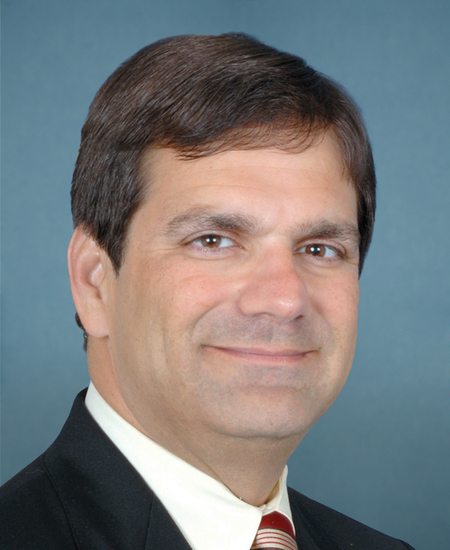
Rep. Gus M. Bilirakis
Sponsored bills
Maddy summaryHR 1228 prohibits the U.S. military and Department of Defense-operated academic institutions from promoting specific anti-American or racist theories in training. It bans military programs that teach ideas such as "the U.S. is fundamentally racist," "the Constitution is fundamentally racist," or that "an individual’s worth is determined by race." The bill explicitly states it does not restrict protected speech, research access, or educational contexts that clearly disavow military endorsement of such theories. This directly affects military training curricula, workshops, and educational materials within the armed forces.
Maddy summaryHR 1218, the Expediting Israeli Aerial Refueling Act of 2023, requires the U.S. Air Force to train Israeli pilots and ground personnel to operate KC-46 aircraft within 60 days of enactment, including participation in the U.S. Military Personnel Exchange Program. The bill mandates the rotational deployment of U.S. KC-46 aircraft to Israel for up to five years or until Israel commissions its own KC-46s, with each deployment lasting at least 270 days annually. It directly affects the Israeli Air Force by enabling their use of U.S. refueling capabilities and the U.S. military through specific training and deployment obligations. The law expires ten years after enactment.
Maddy summaryHR 1202, the REDI Act, amends the Higher Education Act to allow medical and dental residents to temporarily pause federal student loan payments without accruing interest during their internship or residency programs. This directly affects borrowers with federal student loans who are enrolled in qualifying medical or dental training programs. The key provision adds a new rule (paragraph 6) ensuring these borrowers qualify for a deferment period where they don't pay principal and interest accrues at 0%. The change modifies existing loan rules to explicitly include medical/dental residents under the "in-school" deferment category. This policy change provides immediate financial relief during a critical training phase for healthcare professionals.
Maddy summaryHR 1200, the National Right-to-Work Act, prohibits requiring workers to join a union or pay dues as a condition of employment in both private-sector workplaces (covered by the National Labor Relations Act) and railroad industries (covered by the Railway Labor Act). The bill amends key sections of these laws to eliminate provisions that allowed union security agreements, meaning workers in unionized settings would no longer be forced to pay dues to retain their jobs. This directly affects employees in unionized workplaces across the U.S., particularly those in industries with existing union contracts that included mandatory dues. The law changes the legal framework to ensure union membership and dues payment remain voluntary for all workers.
Collecting and Analyzing Resources Integral and Necessary for Guidance for Social Determinants Act of 2023 or the CARING for Social Determinants Act of 2023 This bill requires the Centers for Medicare & Medicaid Services to periodically update specified guidance to help states address social determinants of health (e.g., socioeconomic factors) under Medicaid and the Children's Health Insurance Program (CHIP).
Maddy summaryThis bill requires drug manufacturers to include patient experience data in the U.S. Food and Drug Administration's risk-benefit assessments for new drug approvals. It amends the Federal Food, Drug, and Cosmetic Act to mandate that sponsors submit and describe how patient experience data was considered during the review process. The law directly affects pharmaceutical companies seeking new drug approvals and the FDA during its evaluation. The key provision adds specific language to the approval framework, making patient experience data a formal part of the assessment.
Maddy summaryThe SAFE Hospitals Act of 2023 reforms how federal Disproportionate Share Hospital (DSH) payments are calculated and distributed to hospitals serving high numbers of low-income patients. It replaces the previous formula with one based on state poverty levels, creating a phase-in period from 2026-2035. The bill establishes a tiered system (Tier 1 through Tier 4) for hospitals based on Medicaid inpatient utilization rates and low-income patient percentages, with Tier 1 hospitals (those serving the highest volumes of Medicaid patients) receiving priority for funding. States gain flexibility to adjust payments within certain limits to provide more consistent funding, while hospital qualification requirements change effective October 1, 2025. These changes directly affect hospitals receiving DSH payments and state Medicaid programs that distribute these funds.
Maddy summaryHR 1008 adds harmful algal blooms to the list of qualifying events for federal disaster assistance under the Stafford Act, enabling affected communities to access emergency aid. It also requires the CDC to conduct a study on health effects from airborne toxins during blooms within one year of enactment, to be shared with relevant congressional committees. The bill establishes a framework for federal response but does not provide new funding or directly regulate pollution sources. It primarily affects coastal and lake communities where blooms threaten public health, tourism, and local economies through potential beach closures, fishing restrictions, and property value declines.
Maddy summaryHR 1012, the Cardiac Arrest Survival Act of 2023, creates a uniform federal liability shield for individuals and entities involved in using or managing automated external defibrillators (AEDs) during cardiac emergencies. It protects AED users (including non-professionals), property owners/managers where AEDs are located, and AED owners/acquirers from civil lawsuits - unless harm resulted from gross negligence, willful misconduct, or a licensed professional acting within their scope of practice. The law overrides inconsistent state "Good Samaritan" laws, ensuring consistent protection regardless of AED signage, registration, or user training. This aims to encourage wider AED deployment in public spaces by reducing liability concerns for businesses and property owners.