

Maddy summaryThis bill amends the law governing Basic Allowance for Housing (BAH) for uniformed service members stationed in the U.S. It changes the calculation method so that BAH amounts must equal the actual monthly cost of adequate housing in each location, as determined by the Secretary of Defense. This directly affects active-duty service members and their families who receive BAH for housing. The key provision replaces the previous formula with a requirement that BAH payments match local housing costs for members in the same pay grade and dependency status. The change ensures BAH reflects current housing expenses rather than an older calculation method.
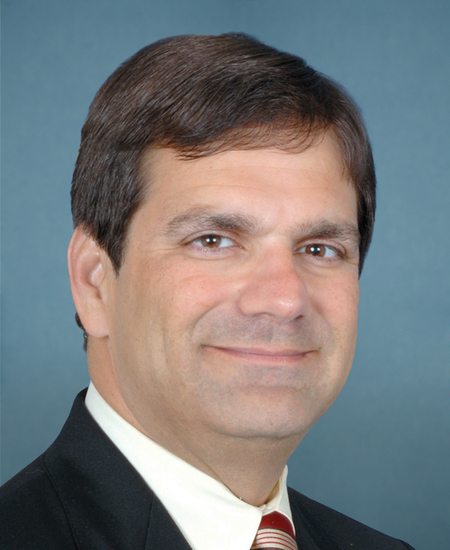
Rep. Gus M. Bilirakis
Sponsored bills
Maddy summaryHR 2469 requires the Secretary of Defense, within 180 days of enactment, to create a new risk assessment for toxic exposure (defined per 38 U.S.C. §101) affecting service members near burn pits and establish an outreach program. This program must inform affected service members about toxic exposure risks, available benefits, eligibility, and timelines through direct mail, email, text, and social media. By one year after enactment, the Department of Defense must publish a website listing resources for service members, veterans, dependents, caregivers, and survivors who experienced toxic exposure during service. The bill directly affects current and former service members who may have been exposed to toxins, ensuring they receive clear information about support programs.
Maddy summaryThis bill requires the Veterans Affairs Secretary to expand or modify an existing national cemetery (under National Cemetery Administration control) before Arlington National Cemetery reaches capacity, ensuring it provides full military honors using the same standards and eligibility criteria that applied to Arlington as of March 31, 2023. It directly affects veterans and their families seeking burial with full military honors at national cemeteries nationwide. The bill also mandates a joint report within one year to Congress on expanding cemetery capacity and assessing whether interment criteria should recognize exceptional service, including impacts on women, non-combat veterans, and other groups. The key mechanism is preserving current military honors standards at alternative cemeteries to prevent Arlington's capacity limits from disrupting existing burial practices.
Maddy summary# Summary of the TAPP American Resources Act This comprehensive legislation, titled the "TAPP American Resources Act" (or "Transparency, Accountability, and Permitting Process for American Resources Act"), is a major overhaul of federal energy and natural resource permitting processes. The key provisions include: 1. **Streamlined Permitting Processes**: - Creates a 50-year term limit for pipeline rights-of-way - Allows oil and gas exploration on non-Federal surface estate without Federal permits - Reduces royalty rates for oil and gas leases from 16.67% to 12.5% - Limits judicial review of permits to cases involving "imminent and substantial environmental harm" 2. **NEPA Reforms**: - Expands categorical exclusions for certain energy projects - Allows use of previously completed environmental assessments for similar projects - Limits environmental reviews to areas directly affected by the proposed action - Reduces consideration of downstream effects of oil and gas consumption 3. **Mining and Mineral Development**: - Designates mining as a "covered sector" for permitting improvement - Creates a memorandum of agreement process for mining projects - Requires mineral resource assessments before land withdrawals - Ensures uranium is considered a critical mineral 4. **Revenue Sharing**: - Changes distribution of Gulf of Mexico revenue to states (37.5% to Gulf states, 62.5% to general fund) - Creates parity in offshore wind revenue sharing with offshore oil and gas - Eliminates administrative fees under the Mineral Leasing Act 5. **Water Quality Certification**: - Limits certification requirements to specific provisions of Clean Water Act sections - Requires states to publish certification requirements within 30 days - Sets 90-day timeline for states to identify additional materials needed The legislation represents a significant shift toward expediting domestic energy production while reducing regulatory burdens, with a focus on oil, gas, and mineral development on federal lands. It includes numerous amendments to existing laws including the National Environmental Policy Act, Mineral Leasing Act, Outer Continental Shelf Lands Act, and Clean Water Act.
This resolution condemns Turkey's continued occupation of Cyprus and calls on Turkey to withdraw all of its troops from the island. It also calls on Turkey to adhere to NATO's democratic principles and mission.
Maddy summaryHR 1154, the Stop Forced Organ Harvesting Act of 2023, targets international trafficking in organs through coercion or abuse of power. It requires annual U.S. reports assessing forced organ harvesting and trafficking in foreign countries, mandates passport denial for convicted traffickers, and authorizes sanctions including asset freezes and visa bans against foreign individuals or entities involved in these activities. The bill specifically defines "forced organ harvesting" as organ removal via coercion, abduction, deception, fraud, or abuse of power, and "trafficking in persons for organ removal" as recruiting or transporting people for that purpose. These sanctions apply to foreign actors (including non-state groups) and cover both financial transactions and entry into the U.S., with limited exceptions for humanitarian aid. The law directly affects foreign governments, entities, and individuals implicated in organ trafficking, while requiring U.S. diplomatic and enforcement mechanisms to address the issue.
Maddy summaryThis bill prohibits public colleges receiving federal funds under the Higher Education Act from denying religious student groups equal access to campus facilities and official recognition that is available to other student organizations. It directly affects public institutions of higher education that receive federal funding, requiring them to treat religious groups the same as secular groups regarding access to spaces and official status. The key provision states that schools cannot withhold these rights based on a group's religious beliefs, practices, speech, leadership standards, or conduct. The law aims to ensure religious student organizations have the same opportunities as non-religious groups on campus.
This resolution congratulates the people of Greece as they celebrate the 202nd anniversary of the War of Greek Independence. The resolution also expresses support for the principles of democracy, human rights, and the rule of law to which the people of the United States and Greece are committed.
Maddy summaryHR 1777 establishes a $50 million annual fund (2024-2028) for collaborative defense research between the U.S. and Israel in emerging technologies like artificial intelligence, cybersecurity, directed energy, and automation. The bill directly supports U.S. and Israeli military forces by enabling joint development of new warfare capabilities to address current and future defense challenges. Key provisions include authorizing $50 million per year for collaborative projects, building on existing U.S.-Israel defense partnerships like counter-tunnel and counter-drone systems. This funding aims to strengthen bilateral defense innovation without altering existing military aid structures.
Maddy summaryHR 1058 streamlines approval for new cross-border energy infrastructure projects in the U.S., directly affecting energy companies seeking to build oil/gas pipelines or electricity transmission lines across U.S. borders with Canada or Mexico. It replaces Presidential permits with a new "certificate of crossing" process managed by FERC (for pipelines) or the Department of Energy (for electricity), requiring decisions within 120 days unless the project lacks public interest. The bill also mandates that natural gas import/export applications be approved within 30 days and repeals a requirement for Federal Power Act approval for electricity projects. Existing facilities and projects with pending permits as of the bill's enactment are exempt from these new rules.