

Maddy summaryThe Federal Lands Amplified Security for the Homeland (FLASH) Act authorizes the construction of navigable roads on Federal lands along the southern border to improve U.S. Customs and Border Protection access, while establishing policies to reduce trash accumulation and address environmental damage from unauthorized border crossings. The bill requires agencies to develop protocols for mitigating wildfire risks through vegetation management, prohibits Federal funds from being used to provide housing for unauthorized immigrants on Federal lands, and includes provisions to address illegal cannabis cultivation and pesticide use. It mandates annual reports on waste collection and environmental impacts, and authorizes $16 million annually for initiatives to address contamination from trespass cannabis cultivation on covered Federal lands. The legislation directly affects land management operations on approximately 50 million acres of Federal lands administered by the National Park Service, Bureau of Land Management, Fish and Wildlife Service, and Forest Service along the southern border.
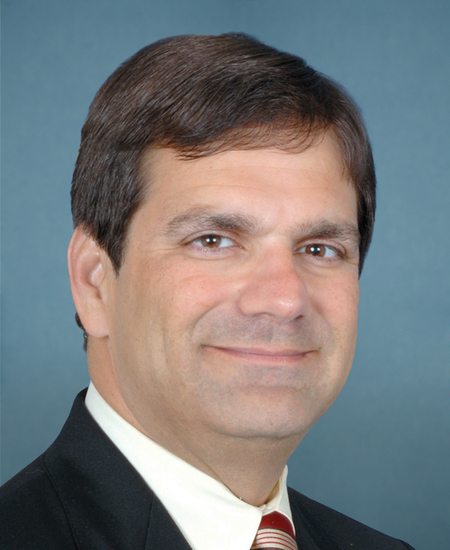
Rep. Gus M. Bilirakis
Sponsored bills
Maddy summaryHR 9675, the Homeward Bound Act, delays and revises federal rules governing dog imports for specific groups. It postpones the application of a 2024 HHS rule for 18 months, directly affecting military personnel stationed abroad, U.S. diplomats/consular staff, their families, and individuals with service animals seeking to import dogs from rabies-low-risk countries. The bill requires the HHS Secretary to revise regulations within 10 days to allow all-age dog imports at any U.S. port of entry from these countries and waive microchipping requirements for dogs born before the law's enactment. These changes aim to simplify import processes for covered individuals while maintaining rabies risk standards.
Maddy summaryThis bill (HJRES 163) is a congressional disapproval resolution targeting an Environmental Protection Agency (EPA) rule finalized on May 9, 2024. The EPA rule established new emissions standards for greenhouse gases from fossil fuel power plants (both new and existing) and repealed a previous rule called the Affordable Clean Energy Rule. The resolution would block this EPA rule from taking effect by invoking the Congressional Review Act (Chapter 8 of Title 5, U.S. Code). If passed, it would prevent the EPA rule from being enforced, directly affecting fossil fuel power plant operators and the EPA’s regulatory authority over emissions.
Maddy summaryH.J. Res. 117 is a joint resolution that would disapprove an Environmental Protection Agency (EPA) rule concerning the reconsideration of National Ambient Air Quality Standards for particulate matter. The EPA rule, published on March 6, 2024, was part of the agency’s process to review these standards, which set limits for harmful air pollutants. This resolution invokes a congressional disapproval procedure under federal law to block the rule from taking effect. If enacted, the rule would have no force or effect, preserving the existing air quality standards for particulate matter.
Maddy summaryThis bill requires states to verify the living status of Medicaid beneficiaries quarterly using the federal Death Master File, starting January 1, 2025. It directly affects Medicaid enrollees and state Medicaid programs by mandating checks to confirm beneficiaries are alive. If a state identifies a deceased enrollee, it must automatically disenroll them and stop future payments (though prior services remain covered). The law aims to prevent continued payments for deceased individuals by creating a standardized, regular verification process.
Maddy summaryThis bill expands online privacy protections under the Children's Online Privacy Protection Act to cover teens aged 12-17, in addition to children under 13. It requires website and app operators to obtain verifiable consent from parents for children and from teens themselves before collecting personal information. The bill restricts operators from using collected data for individual-specific advertising to children or teens and mandates clear notices about data practices. Operators must provide users with the right to access, delete, and correct personal information they've collected. These requirements apply to websites, online services, and mobile applications that collect information from children or teens or have actual knowledge a user is a child or teen.
Maddy summaryThe Kids Online Safety Act (HR 7891) would require major online platforms (with high revenue or user numbers) to implement safety features for children and teens, including default protective settings, parental controls, and age verification. It would mandate platforms to report annually on risks to minors and their safety measures, and prohibit advertising harmful products (like tobacco, alcohol, or gambling) to minors. The bill directly affects social media platforms, online video games, and video streaming services that are used by minors, with the goal of preventing mental health harms, compulsive usage, and cyberbullying.
Maddy summaryThe Veterans Accessibility Advisory Committee Act of 2024 establishes a new advisory committee within the Department of Veterans Affairs (VA) to improve accessibility for veterans and others with disabilities. The committee, composed of 15 voting members including veterans with disabilities, accessibility experts, VA staff, and veterans service organization representatives, will advise the VA Secretary on making services, facilities, information, and technology more accessible. It must meet at least twice yearly, assess accessibility barriers through reviews of complaints and facility assessments, and submit biennial reports to the VA Secretary and Congress detailing progress, unmet needs, and recommendations. These reports will guide the VA in complying with accessibility laws like the Americans with Disabilities Act and Section 508 of the Rehabilitation Act. The committee will operate for 10 years from the bill’s enactment.
Maddy summaryHR 6033, the SPEAK Act of 2024, creates a task force within the Department of Health and Human Services to address telehealth barriers for patients with limited English proficiency (LEP). The task force - comprising healthcare providers, tech vendors, language services, and patient advocates - will assess current obstacles and develop best practices for improving access to telehealth platforms, video interpretation, and digital patient portals. Within 90 days of each annual report, the Secretary must publish a public website sharing these best practices, including guidance on integrating interpreters and making telehealth instructions accessible. The bill directly affects LEP patients and healthcare providers who serve them, aiming to make digital health tools more usable through concrete, evidence-based recommendations.
Maddy summaryThis bill modifies Medicaid and CHIP rules to let eligible out-of-state healthcare providers enroll without extra state screening. It applies to providers already in Medicare or their home state program, with low fraud risk, serving children under 21 with complex medical conditions. Providers would receive 5 years of enrollment under this streamlined process, eliminating state-level barriers. The change directly affects children seeking specialized care across state lines and the providers who serve them.