

Maddy summaryThis bill terminates all federal funding for FEMA's Shelter and Services Program effective upon enactment. It prohibits new appropriations for this program or any similar successor program. Any remaining funds from the program as of the enactment date will be transferred to support disaster relief efforts under the Robert T. Stafford Disaster Relief Act. The change directly affects FEMA's budget operations but redirects existing resources to broader disaster assistance.
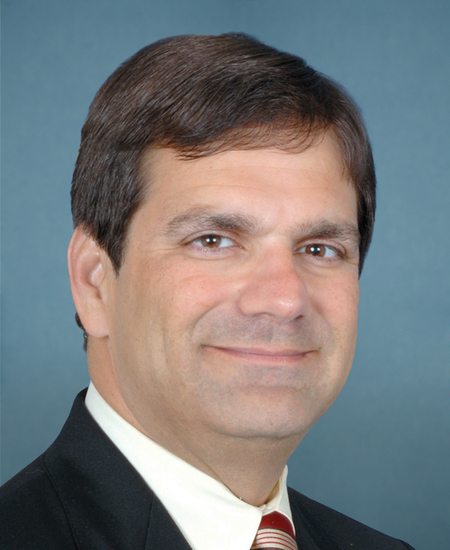
Rep. Gus M. Bilirakis
Sponsored bills
Maddy summaryHR 9898 requires the Department of Energy to lead a federal task force that will analyze U.S. critical materials processing capacity and report to Congress within one year. The report must identify supply chain gaps, assess regulatory barriers (like Clean Air Act compliance), and evaluate opportunities for foreign investment from allied nations. It also mandates a GAO review of how current policies and permitting processes hinder domestic investment in processing critical minerals used in clean energy and technology. The bill directly affects federal agencies, domestic processing industries, and potential foreign investors seeking to build U.S. facilities.
Maddy summaryThis resolution expresses the U.S. House of Representatives' support for designating October 8, 2024, as "National Hydrogen and Fuel Cell Day." It recognizes hydrogen and fuel cell technologies for their role in clean energy, transportation (including vehicles and industrial applications), and grid reliability. The resolution has no legal effect - it is purely symbolic, acknowledging the importance of these technologies without creating new laws or funding. It was introduced by multiple representatives and refers to hydrogen's historical and potential future applications.
Maddy summaryHR 1719, the Honoring Our Fallen Heroes Act of 2023, establishes a presumption that certain cancers diagnosed in public safety officers (like police and firefighters) are work-related if linked to their duties. It defines 22 specific cancers (including lung, mesothelioma, and WTC-related cancers) as "exposure-related," allowing officers or their families to receive benefits without proving direct work connection, provided they were diagnosed within 15 years of leaving active service. The bill also creates a process for adding new cancers to the list based on scientific evidence, requiring the Bureau to review petitions and make decisions within 180 days. This applies to deaths or disabilities occurring on or after January 1, 2023, directly affecting officers who developed covered cancers during service.
Maddy summaryThis bill clarifies Medicare rules to allow doctors to provide certain critical medications directly in their offices without extra administrative hurdles. It specifically amends a Medicare provision (Section 1877(b)(2) of the Social Security Act) to remove a requirement that drugs furnished in-office must follow specific administrative rules, effective May 11, 2023. The bill also directs the removal of conflicting Medicare guidance published in 2021 and 2023, which had previously restricted this practice. This change directly affects Medicare beneficiaries (seniors) and doctors' offices that supply covered medications during patient visits. It streamlines access to necessary drugs by eliminating an unnecessary barrier to in-office medication administration under Medicare.
Maddy summaryHR 3433, the "Give Kids a Chance Act of 2024," requires pharmaceutical companies developing certain cancer drugs to conduct pediatric studies if the drugs target molecular pathways relevant to childhood cancers. It directly affects drug manufacturers submitting new applications for cancer treatments, particularly those combining previously approved adult cancer drugs or containing a single new active ingredient. The bill amends FDA regulations to mandate these pediatric investigations only when specific conditions are met, such as when a drug's molecular target is relevant to pediatric cancer growth. The FDA must issue implementing guidance within 12 months, and reports to Congress will track implementation and effectiveness starting 2 years after enactment.
Maddy summaryHCONRES 129 designates the week of September 22-28, 2024, as "National Fall Prevention Awareness Week" to raise public awareness about falls among older adults. The resolution cites CDC data showing falls cause approximately 14 million incidents, 3 million emergency visits, and $80 billion in annual medical costs for adults aged 65+. It supports existing evidence-based prevention strategies - such as balance exercises, home safety modifications, and medication management - without creating new legal requirements or funding. The bill focuses on awareness and collaboration among government agencies, healthcare providers, and community organizations to reduce fall risks.
Maddy summaryHJRES 136 is a resolution seeking to block an Environmental Protection Agency (EPA) rule that would have set new emissions standards for light and medium-duty vehicles sold in 2027 and later model years. The EPA rule, published in April 2024, aimed to require vehicle manufacturers to meet stricter pollution limits for these vehicles. If passed, this resolution would cancel the rule, preventing the EPA from enforcing the new standards. It uses a congressional process that allows Congress to reject agency rules with a simple majority vote.
Maddy summaryHR 9745, the Lifesaving Gear for Police Act of 2024, removes barriers for state and local law enforcement agencies to access existing federal equipment. It prohibits federal agencies from enforcing any regulations (since May 15, 2015) that limit the transfer of Department of Defense or other federal equipment to police departments, unless Congress passes those rules into law. The bill also requires agencies to return or replace equipment recalled since 2015 under those regulations, provided the agency requests it, meets existing eligibility rules, and the equipment is available. This directly affects police departments that previously had equipment seized or denied under the blocked regulations. The law focuses on restoring access to current equipment-sharing programs, not creating new funding or gear.
Maddy summaryHJRES 144 is a congressional disapproval resolution targeting a specific rule issued by the Bureau of Alcohol, Tobacco, Firearms, and Explosives (ATF) on April 19, 2024. The resolution seeks to block the ATF's rule that redefined the term "engaged in the business" for firearm dealers, which would have affected how federal licensing requirements apply to certain sellers. If enacted, this resolution would nullify the rule, preventing it from taking effect under procedures in Title 5 of the U.S. Code. The bill directly impacts firearm dealers operating under the current regulatory framework and the ATF's enforcement authority.