

Homes for Every Local Protector, Educator, and Responder Act of 2025 or the HELPER Act of 2025 This bill establishes a program administered by the Department of Housing and Urban Development to provide mortgage assistance to law enforcement officers, elementary and secondary school teachers, firefighters, or other first responders. Specifically, these individuals may be eligible for a first-time mortgage on a primary family residence with no down payment. Instead, the mortgage is subject to a one-time, up-front mortgage insurance premium.
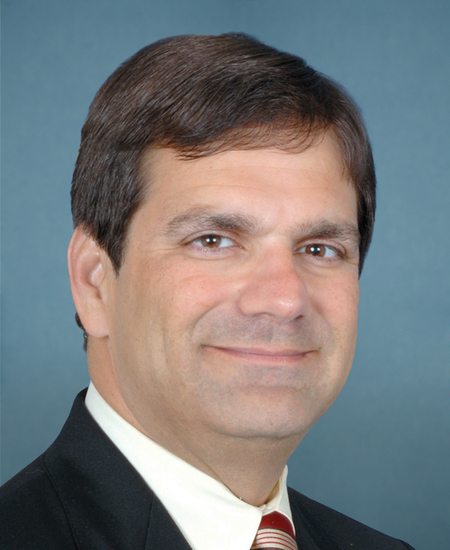
Rep. Gus M. Bilirakis
Sponsored bills
Maddy summaryHRES 215 is a symbolic resolution designating March 15, 2025, as "National Osceola Turkey Day." It directly honors the Osceola turkey subspecies, which is unique to peninsular Florida and considered challenging to hunt due to its habitat. The resolution highlights Florida's Wild Turkey Cost Share Program, which uses permit revenue for habitat conservation, and notes that Florida hunters contributed over $76 million annually to turkey management since 1985. It has no legal effect or funding changes - only encouraging public observance of the day. The resolution was introduced by Florida representatives and connects to Florida's spring turkey hunting season opening.
Maddy summaryThis resolution urges the U.S. Secretary of State to designate Nigeria as a Country of Particular Concern (CPC) under the International Religious Freedom Act of 1998, citing ongoing violence against religious minorities. It specifically calls for Nigeria to protect religious minorities, prosecute perpetrators of attacks, and address displacement of millions caused by religiously motivated violence. The resolution also recommends increased U.S. diplomatic engagement with Nigeria and targeted sanctions against those responsible for religious freedom violations. This follows the State Department's omission of Nigeria from its CPC list in 2021-2023 and its 2024 failure to release an annual report.
Maddy summaryThe Credit for Caring Act of 2025 creates a federal tax credit for family caregivers of elderly or disabled relatives. It allows eligible caregivers (with over $7,500 in earned income) to claim a credit equal to 30% of qualified caregiving expenses exceeding $2,000, capped at $5,000 per year. Qualified expenses include human assistance, home modifications, respite care, counseling, lost wages for unpaid time off, and transportation, all requiring certification from a licensed healthcare provider that the care recipient has long-term needs. The credit phases out for higher earners (over $75,000 single/$150,000 joint) and requires documentation of expenses and care recipient certification.
Resident Education Deferred Interest Act or the REDI Act This bill allows borrowers in medical or dental internships or residency programs to defer student loan payments until the completion of their programs.
Maddy summaryThis bill protects three specific state programs that handle permits for dredged or fill material in waterways under the Clean Water Act. It prohibits the EPA from withdrawing approval of Michigan's, New Jersey's, and Florida's existing programs without new congressional authorization, preventing the EPA from revoking them through standard administrative processes. The bill also creates a 90-day transition period for Florida to continue issuing permits during a program review and allows other states to seek similar approval if their programs are deemed comparable. It does not change environmental standards but ensures these cooperative state-federal arrangements remain intact unless Congress acts.
Maddy summaryHR 2080, the "Crucial Communism Teaching Act," requires high schools to teach students about communism's historical and current impacts. The bill mandates that students learn communism caused over 100 million deaths globally, understand its dangers, and recognize that 1.5 billion people "still suffer under communism." It directs the Victims of Communism Memorial Foundation to develop a high school curriculum and oral history resources ("Portraits in Patriotism") featuring victim stories, with specific focus on modern examples like Xinjiang human rights abuses and China's actions in Hong Kong and Taiwan. The curriculum must be integrated into social studies, government, history, and economics classes, and updated to cover both historical and current communist regimes.
Maddy summaryThe FLASH Act authorizes construction of navigable roads along federal border lands to improve U.S. Customs and Border Protection access and operational control. It requires federal agencies to develop protocols for reducing trash accumulation and environmental degradation from unauthorized border crossings, while targeting illegal cannabis cultivation sites with environmental response initiatives. The bill prohibits using federal funds to provide housing for undocumented immigrants on federal lands and establishes criminal penalties for illegal pesticide use. The legislation affects how federal land management agencies (National Park Service, Bureau of Land Management, etc.) operate along the southern border, with specific reporting requirements for environmental impacts and trash collection.
Maddy summaryThis resolution (HRES 209) designates April 5, 2025, as "Barth Syndrome Awareness Day" to raise public awareness about Barth syndrome, a rare genetic disorder primarily affecting males. It directly supports patients, families, and caregivers of the estimated fewer than 150 diagnosed individuals in the U.S. who face challenges with diagnosis, limited treatments, and high mortality rates. The bill’s key mechanism is a symbolic House resolution expressing support for the awareness day, recognizing the need for improved diagnosis, research, and treatment development for this ultrarare condition. It does not create new programs or funding but aims to foster greater attention to Barth syndrome through official recognition.
Maddy summaryThis bill amends the calculation method for the Basic Allowance for Housing (BAH) for uniformed service members living off-base in the United States. It requires the Secretary of Defense to set BAH amounts based directly on the actual monthly cost of adequate housing in each area, matching the member's pay grade and dependency status. This change ensures BAH rates more accurately reflect local housing expenses rather than using a previous formula. The bill directly affects all service members receiving BAH for off-base housing across the U.S., particularly those in high-cost areas where current rates may not cover actual rent.