

Maddy summaryThis bill, HR 3232 (Respect for Grieving Military Families Act), requires the military to automatically forgive overpayments of retired pay sent to a joint account after a service member’s death but before the end of the month of death. It directly affects military retirees’ families who have joint accounts with designated beneficiaries, preventing them from having to repay these accidental payments. The bill also adjusts Survivor Benefit Plan payments: if forgiveness doesn’t occur, the first 12 monthly annuity payments to the beneficiary will each be reduced by one-twelfth of the overpayment amount. This ensures grieving families aren’t burdened with repaying funds they weren’t meant to receive.
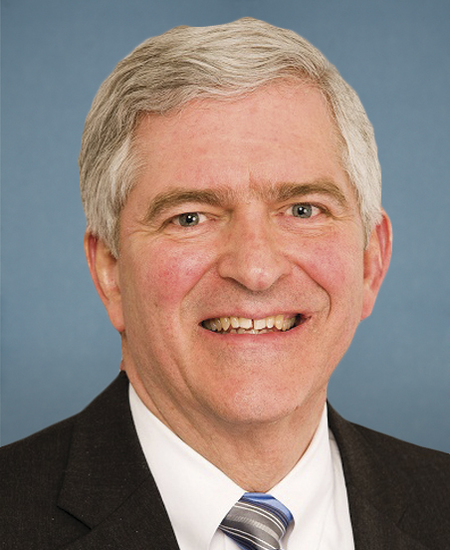
Rep. Daniel Webster
Sponsored bills
Maddy summaryThe Pay Our Correctional Officers Fairly Act adjusts pay for Bureau of Prisons employees currently assigned to the "Rest of U.S." pay locality. It directs that if an employee's worksite is within 200 miles of another pay locality, they will be paid according to the nearest locality with the highest pay rate - replacing the lower "Rest of U.S." rate. This applies to correctional officers and other Bureau of Prisons staff, but excludes employees whose worksite is more than 200 miles from any other locality. The change takes effect 180 days after the bill is enacted.
Maddy summaryThis bill modifies how federal clean water funds are distributed to states, Indian tribes, and U.S. territories for fiscal years 2024-2028. It sets minimum funding levels: 2% for tribes, 1.5% for territories, and 0.1% for oversight activities, with states receiving base funding from 2023 plus population-based additional amounts. Starting in 2029, funding will shift to a new formula based on the latest "clean watersheds needs survey" to reflect current infrastructure priorities. The bill ensures states receive at least 1% of funds annually and requires the Administrator to update the formula after each new survey.
Maddy summaryHR 1750 sets a new minimum standard for pasteurized orange juice, requiring finished products to contain at least 10.0% orange juice soluble solids (excluding any added sweeteners) by weight. This rule directly affects manufacturers producing and selling pasteurized orange juice in the U.S. market. The bill revises existing federal regulations to enforce this minimum juice content level, ensuring a more consistent product definition. It does not change the Secretary of Health and Human Services' existing authority to further adjust these standards.
This resolution urges transatlantic unity on a robust deterrence policy to maintain peace and stability across the Taiwan Strait. The resolution also (1) encourages NATO allies to work with their partners in the Indo-Pacific to address shared global security challenges; and (2) commends the people of Taiwan for their commitment to democracy, civil liberties, and human rights.
Maddy summaryHR 2370, the Access to AEDs Act, authorizes $25 million in federal funding (2024-2028) to help public elementary and secondary schools improve access to automated external defibrillators (AEDs) and CPR training. The bill directs the Secretary of Health and Human Services to award grants to school districts and partners for developing AED programs, training staff and students, purchasing and maintaining AEDs, and creating cardiac emergency response plans. It specifically targets schools to address sudden cardiac arrest (SCA), which is a leading cause of death among student athletes and youth, with 90% of SCA victims dying without immediate CPR and defibrillation. The law requires grantees to report on their activities and establishes a clearinghouse to collect data on school AED access and costs.
Maddy summaryHR 734, the Protection of Women and Girls in Sports Act of 2023, amends Title IX to prohibit federally funded schools and athletic programs from allowing individuals assigned male at birth to participate in women's or girls' sports teams. The bill defines "sex" for this purpose as "reproductive biology and genetics at birth," making it a violation of federal law to permit such participation in designated women's or girls' programs. It allows males to train with women's teams only if no female is deprived of a roster spot, competition opportunity, scholarship, or other benefit tied to the team. This law directly affects public and private schools receiving federal financial assistance that operate athletic programs.
Maddy summaryHR 2808, the Arnold Daniel Palmer Commemorative Coin Act, authorizes the U.S. Mint to produce three commemorative coins in 2029 honoring golfer Arnold Palmer: $5 gold coins (50,000 max), $1 silver coins (400,000 max), and half-dollar clad coins (750,000 max). The bill requires coin designs to feature Palmer's image and includes surcharges ($35 for gold, $10 for silver, $5 for half-dollar) that fund the Arnold & Winnie Palmer Foundation. All surcharge revenue must support the Foundation's work in youth health, character development through golf, and nature wellness programs. The coins are legal tender but will only be issued in 2029, with all funds covering minting costs before surcharges are directed to the Foundation.
Stop the Invasion Act This bill requires the President to bar the entry of certain non-U.S. nationals (aliens under federal law) into the United States if U.S. Customs and Border Protection (CBP) encounters a certain number of inadmissible non-U.S. nationals. Specifically, this bar shall apply if CBP detains or finds on average more than 30,000 such inadmissible individuals each month over the most recent 12-month period. The bar shall cease when the average drops below 30,000 encounters. Such encounters shall include non-U.S. nationals who seek entry into the United States when the President has suspended entry to prevent the spread of a communicable disease. While this bar is in effect, the President must prohibit the entry of non-U.S. nationals who are inadmissible for specified reasons related to illegal entry, violation of immigration law, or lack of documentation.
Maddy summaryHJRES 27 is a congressional resolution seeking to block a federal rule that redefined which waterways fall under the Clean Water Act's protections. It targets a rule submitted by the Army Corps of Engineers, Department of Defense, and Environmental Protection Agency (EPA) on January 18, 2023, which aimed to revise the "Waters of the United States" definition. The resolution would formally disapprove this rule under a specific federal procedure (Chapter 8 of Title 5), preventing it from taking effect. This would directly affect how federal agencies regulate pollution and development near water bodies, including wetlands and smaller streams.