

Maddy summaryThis bill prohibits legislative branch offices (like congressional offices) from using federal funds to acquire or display any flag or pennant other than the U.S. flag, a state/territory/possession flag, or the POW-MIA flag. It allows displays of state flags, government department flags, and military flags under specific exceptions. The rule applies to all legislative branch offices starting in fiscal year 2024 and does not restrict the use of non-federal funds for other displays. This is a procedural rule affecting flag displays in federal legislative offices, not a substantive policy change.
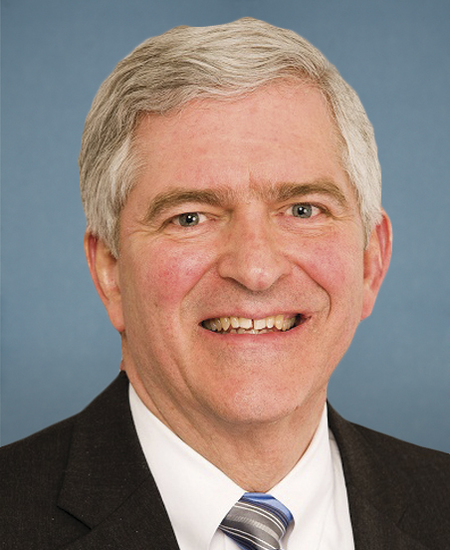
Rep. Daniel Webster
Sponsored bills
Maddy summaryThe BOP Direct-Hire Authority Act (HR 6628) allows the Bureau of Prisons to hire qualified candidates for positions that would normally require competitive hiring without following standard federal hiring procedures, such as public announcements or competitive exams. This directly affects the Bureau of Prisons' ability to fill vacancies at its facilities more quickly. The authority expires once 96% of competitive service positions across all Bureau of Prisons facilities are filled. The bill changes the hiring process for existing positions but does not alter the total number of positions available.
Maddy summaryHR 6625, the Chinese Spy Balloon Assessment Act, requires the Secretary of Defense to submit a report to Congress within 90 days of the bill's enactment. The report must detail the national security effects of surveillance conducted by China via a high-altitude balloon shot down in U.S. airspace in February 2023, including impacts on military installations and an analysis of recovered technology's country of origin. This bill directly affects the Department of Defense and Congress by mandating a specific, time-bound assessment of a single incident. It does not create new policies or funding but establishes a procedural requirement for transparency about the 2023 balloon event. The report must be unclassified, though it may include a classified annex.
Maddy summaryHR 6131, the Commercial Space Act of 2023, establishes a new certification system for U.S. commercial space companies to operate spacecraft, replacing some existing licensing requirements. The bill requires companies to submit space debris mitigation plans and liability insurance as part of their certification application, with the Department of Commerce's Office of Space Commerce handling the process within 60 days. The law aims to reduce regulatory burdens while maintaining U.S. compliance with international space law obligations. This certification system directly affects commercial entities seeking to launch or operate spacecraft in outer space.
Maddy summaryHRES 793 is a resolution passed by the U.S. House of Representatives calling on Hamas to immediately release all 199 hostages taken during Hamas' October 7, 2023 attack on Israel. The resolution condemns Hamas for the attack, the taking of hostages, and threats against hostages, while stating that holding hostages violates international humanitarian law under the Geneva Conventions. It demands the immediate release of all hostages and expresses sympathy for victims and their families. As a symbolic resolution, it does not create legal obligations but formally expresses the House's position.
Maddy summaryHR 6300, the Veterans Education is Timeless Act of 2023, removes expiration dates for all Department of Veterans Affairs (VA) education benefits. It directly affects veterans and their dependents who use programs like the Post-9/11 GI Bill, Survivors' Benefits, and others, allowing them to access education benefits at any time without a deadline. The bill amends multiple sections of Title 38 to state that benefits "shall be afforded... at any time and are not subject to any delimiting date." It also requires the VA to refund veterans for contributions if they apply for a refund, and applies retroactively to all eligible individuals.
Maddy summaryThe Veteran Improvement Commercial Driver License Act of 2023 modifies rules for veterans' educational benefits to streamline approval of commercial driver education programs at branch locations. It allows a branch of an educational institution to be exempt from full approval requirements if it is appropriately licensed and uses the same curriculum as an approved main location. Schools must submit an annual report to the Department of Veterans Affairs verifying curriculum consistency, and the VA may withhold this exemption if needed. The changes will take effect 180 days after the VA establishes reporting rules, which must be finalized within 180 days of the bill's enactment.
Maddy summaryThis resolution (HRES 859) is a ceremonial House measure honoring U.S. veterans on Veterans Day 2023. It formally recognizes veterans' service and sacrifice, calling on the American public to observe Veterans Day to acknowledge their role in protecting U.S. freedoms. The resolution does not create new policies, allocate funds, or affect specific groups - it is purely symbolic. It was introduced by 33 bipartisan House members and passed by the House without committee action.
Maddy summaryThe SHIP Act imposes sanctions on foreign entities that knowingly handle Iranian petroleum, targeting those involved in port operations, transportation, refining, or ship-to-ship transfers of Iranian oil. Starting 90 days after enactment, the President must block assets, deny visas, and impose penalties on individuals or companies engaging in these activities, including family members or owners of sanctioned entities. It requires annual reports tracking Iran's oil exports, revenues, and key players like shipping companies and ports. The sanctions terminate if the President certifies Iran has stopped supporting terrorism and dismantled weapons programs.
Maddy summaryHR 6212, the PROTECT Florida Act, extends the existing moratorium on oil and gas leasing and exploration in the Gulf of Mexico until 2032 and adds a new ban on such activities off Florida's Atlantic coast until June 2029. The bill blocks federal permits for oil and gas exploration, leasing, and seismic testing in two specific areas: the Straits of Florida and the southern portion of the South Atlantic Planning Area south of Florida's coastline. These restrictions apply to all related activities, including preleasing and seismic testing, directly affecting federal agencies and companies seeking to conduct offshore drilling operations in those regions. The legislation aims to prevent new oil and gas development in Florida's coastal waters for the specified periods.